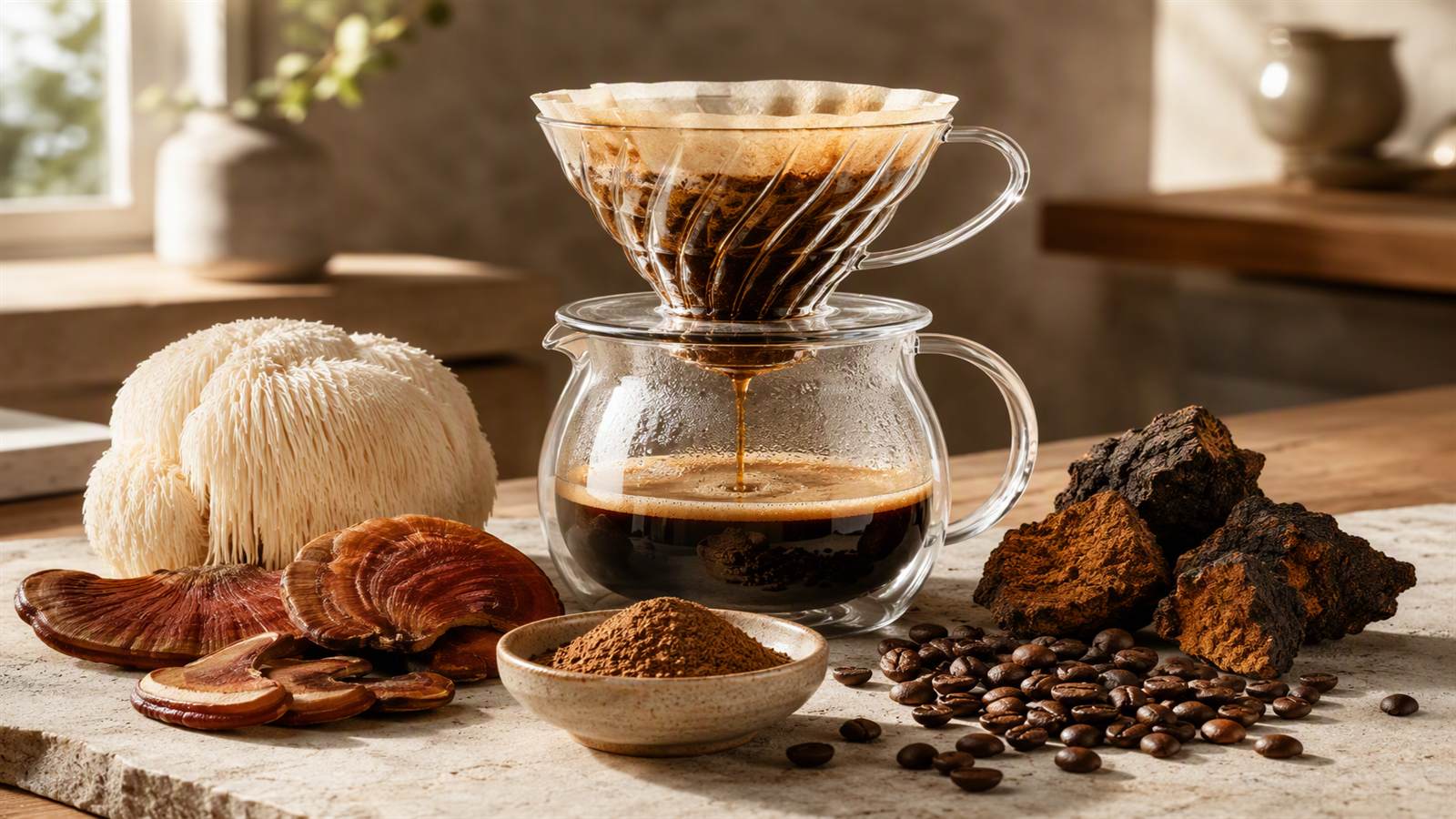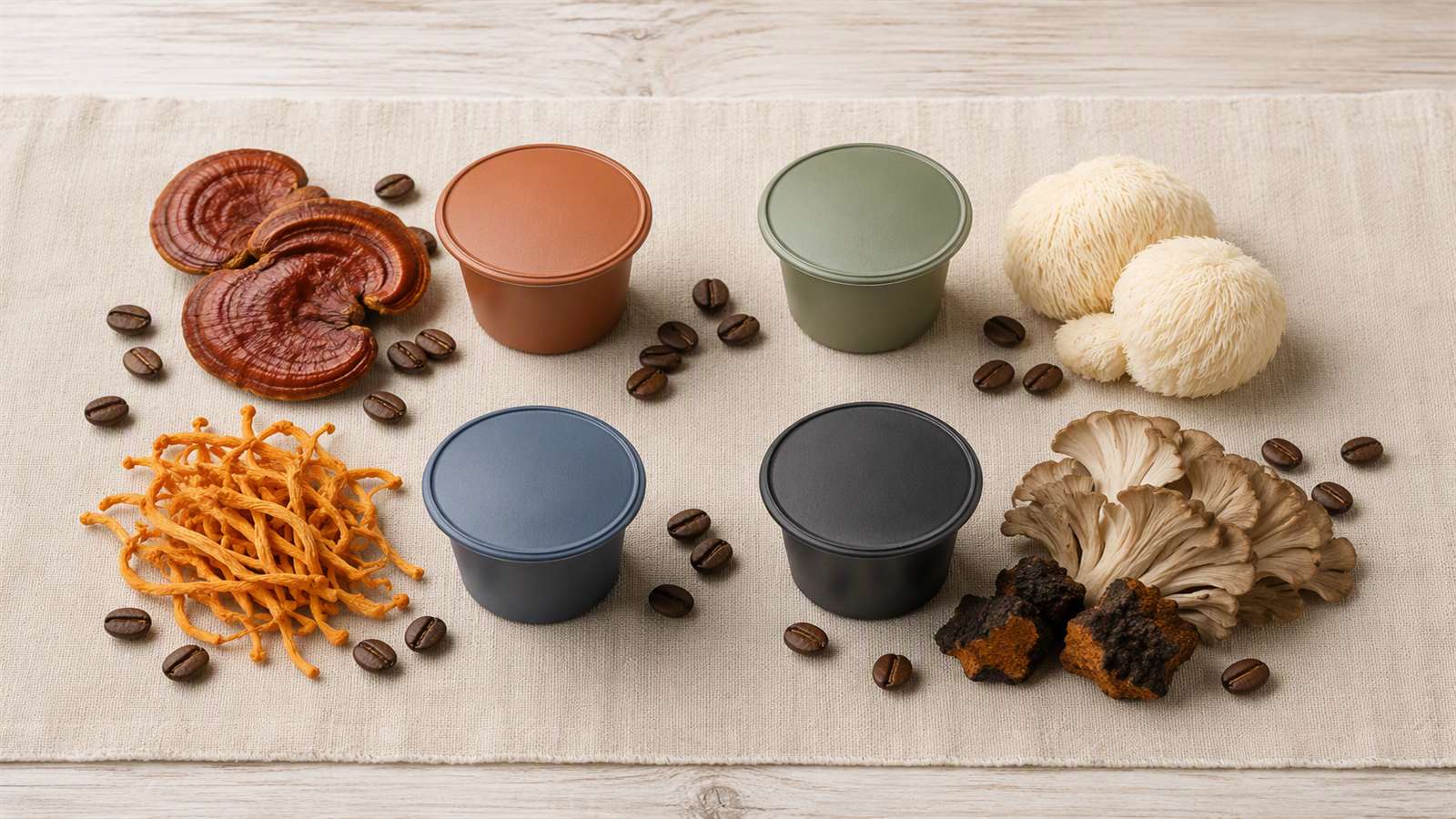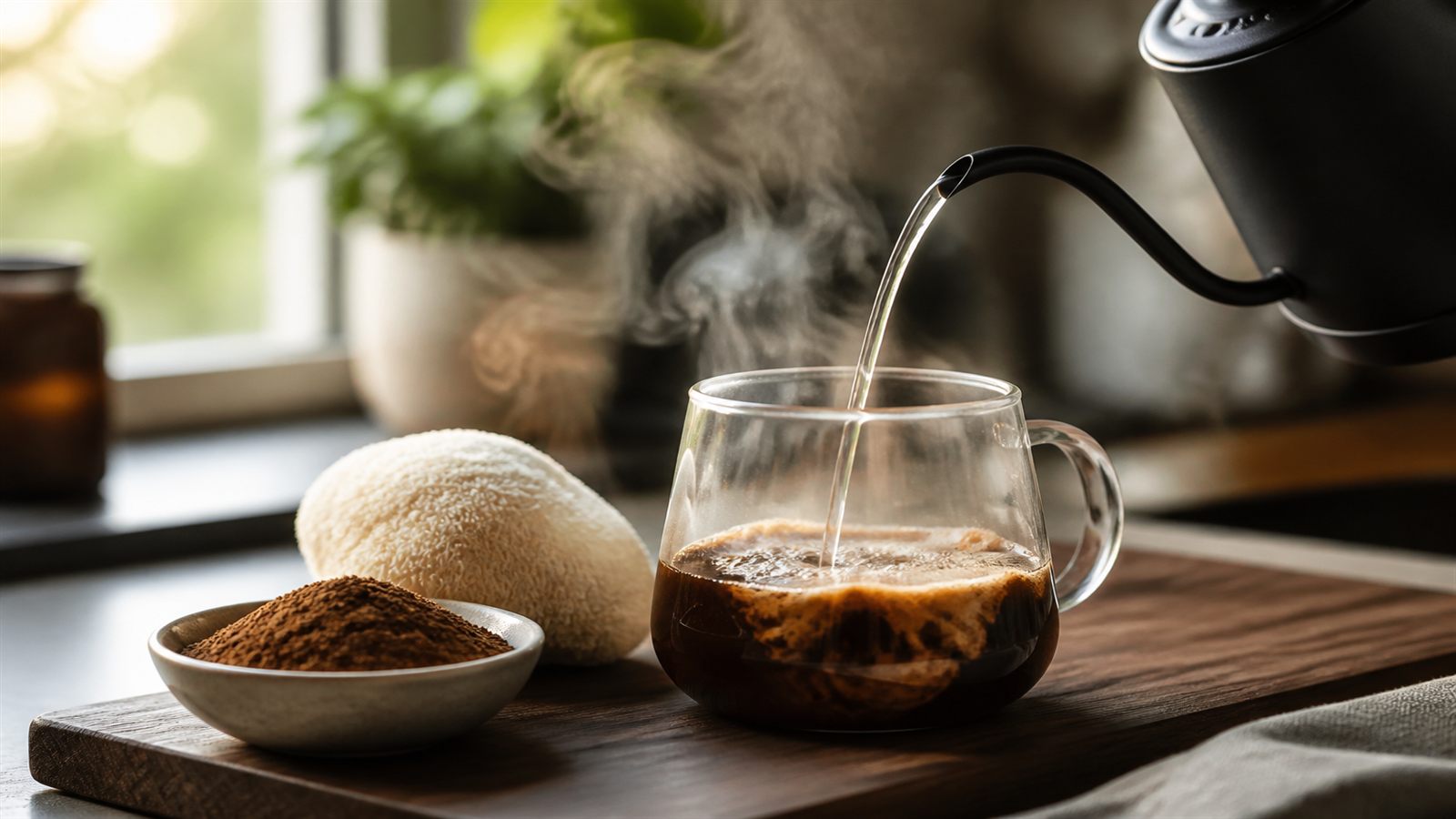


Mushroom coffee has moved from a niche functional beverage into a more widely available category, with many products now offering different mushroom varieties, coffee styles, and ingredient combinations. However, comparing mushroom coffee products can be confusing because similar-looking packages may contain very different formulas.
A product labeled as mushroom coffee may use Lion’s Mane, Reishi, Chaga, Cordyceps, or a combination of several mushrooms. Some products contain mushroom powder, while others use mushroom extracts. Coffee type, caffeine content, serving size, and additional ingredients can also vary significantly.
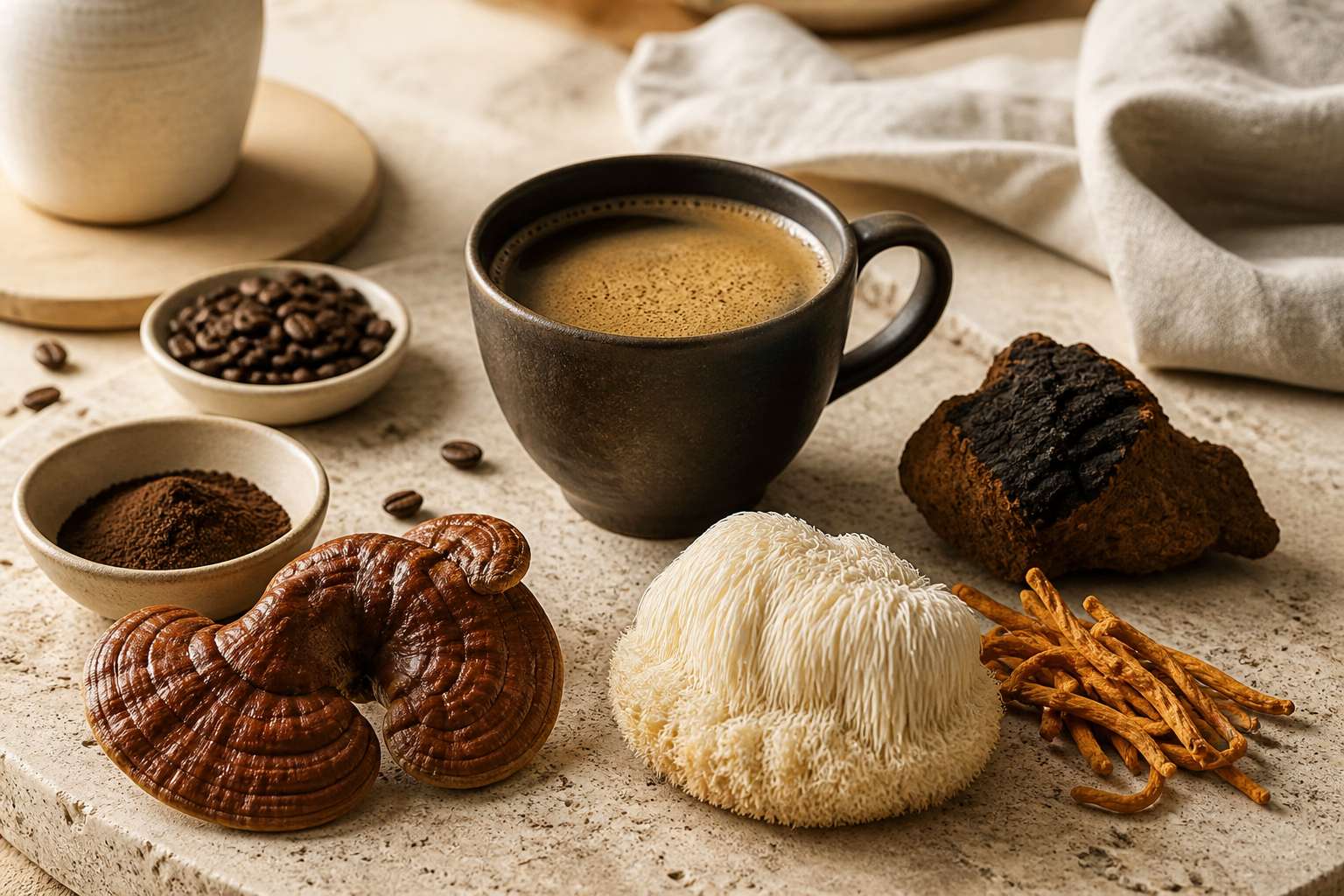
This mushroom coffee comparison chart explains the key differences between mushroom coffee products, including ingredients, processing methods, product formats, and commonly discussed benefits. Understanding these factors can help consumers compare products based on their actual labels rather than marketing claims alone.
Mushroom Coffee Comparison Chart: Key Product Differences
Before choosing a mushroom coffee product, it helps to understand the main factors that separate one formula from another.
| Comparison Factor | Common Options | Why It Matters |
|---|---|---|
| Mushroom Type | Lion’s Mane, Reishi, Chaga, Cordyceps, Blends | Different mushrooms have different characteristics and research backgrounds |
| Mushroom Form | Powder or Extract | Processing method can influence formulation and flavor |
| Coffee Type | Ground coffee, instant coffee, pods | Determines preparation method and convenience |
| Caffeine Level | Regular coffee, reduced caffeine, decaffeinated options | Important for personal caffeine preferences |
| Additional Ingredients | Creamers, flavors, sweeteners, plant-based ingredients | Changes taste and nutritional profile |
| Product Format | Bags, jars, sachets, capsules, pods | Affects storage and daily use |
There is no single formula that defines all mushroom coffee products. Differences in ingredients and manufacturing approaches create a wide range of products within this category.
What Should You Compare in Mushroom Coffee?
Mushroom Types Used in the Formula
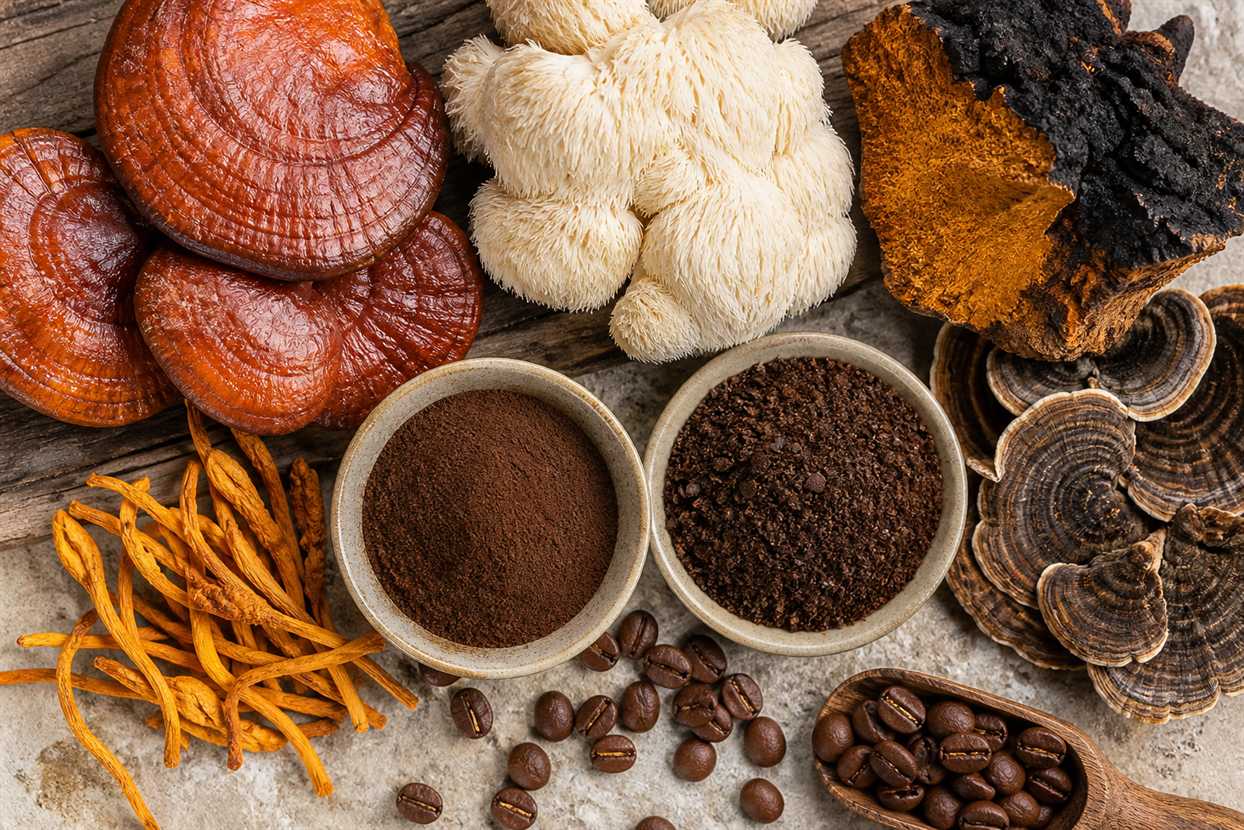
One of the biggest differences between mushroom coffee products is the type of mushroom ingredient included.
Lion’s Mane Mushroom Coffee
Lion’s Mane (Hericium erinaceus) is one of the most common mushrooms used in coffee blends.
It is often selected because it has a relatively mild flavor profile and can blend easily with roasted coffee. Many products designed for first-time mushroom coffee users include Lion’s Mane because it does not typically create a strong earthy taste.
Research has investigated Lion’s Mane and its naturally occurring compounds. For example, a randomized controlled trial published in Phytotherapy Research examined Lion’s Mane supplementation in adults with mild cognitive impairment. However, research on a specific mushroom ingredient should not automatically be considered evidence for the effects of every finished mushroom coffee product.
Reishi Mushroom Coffee
Reishi (Ganoderma lucidum) is another commonly used mushroom ingredient.
Compared with Lion’s Mane, Reishi often has a more noticeable earthy and bitter flavor. For this reason, it is frequently combined with stronger coffee roasts or other flavor ingredients.
Reishi has been studied for its naturally occurring compounds, including polysaccharides and triterpenes. Research interest continues, but the effects of individual mushroom extracts may differ depending on preparation, dosage, and product formulation.
Chaga Mushroom Coffee
Chaga (Inonotus obliquus) is often included in mushroom coffee blends because of its traditional use and interest in mushroom-derived compounds.
Chaga-based products may have earthy or woody flavor notes, which can influence the overall taste of a coffee blend.
Cordyceps Mushroom Coffee
Cordyceps is another mushroom commonly found in functional beverage formulas.
It is often combined with other mushroom ingredients rather than used alone. Its relatively mild flavor allows it to work well in multi-mushroom blends.
Mushroom Powder vs. Mushroom Extract: What Is the Difference?
Another important comparison factor is whether a product uses mushroom powder or mushroom extract.
Mushroom Powder
Mushroom powder is generally produced by drying mushrooms and grinding the dried material into a fine powder.
Characteristics may include:
- More direct use of mushroom material
- A more noticeable earthy flavor in some products
- A simple ingredient format
Because the whole processed mushroom material is present, powder-based products may have different taste and formulation characteristics compared with extracts.
Mushroom Extract
Mushroom extract is produced through an extraction process that concentrates certain compounds from mushroom material.
Extract-based ingredients are commonly used in formulations where manufacturers want a more concentrated ingredient format.
When comparing products, consumers should not assume that extract is always better than powder or that powder is always more natural. They represent different processing approaches and should be evaluated based on the complete product formula.

Mushroom Coffee Product Formats Compared
Mushroom coffee is available in several formats, and each format offers a different user experience.
Instant Mushroom Coffee
Instant mushroom coffee is designed for convenience.
Typical characteristics include:
- Quick preparation
- Easy storage
- Consistent serving size
Many instant products come in jars or individual sachets, making them suitable for consumers who want a simple preparation method.
Ground Mushroom Coffee
Ground mushroom coffee is closer to traditional coffee preparation.
Characteristics include:
- Brewed using standard coffee equipment
- More control over brewing strength
- Coffee flavor influenced by roast and grind size
For consumers who already enjoy brewing coffee, ground mushroom coffee may feel more familiar.
Mushroom Coffee Pods
Single-serve mushroom coffee pods provide convenience and portion control.
Important factors include:
- Pod compatibility
- Coffee grind size
- Brewing performance
- Ingredient consistency
The pod format is especially appealing to consumers who prefer single-cup coffee machines.

Mushroom Coffee Ingredients Compared
Beyond mushrooms and coffee, additional ingredients can significantly change the final product.
Coffee Ingredients
The coffee component may differ based on:
- Coffee bean origin
- Arabica or Robusta varieties
- Roast level
- Ground or instant processing
A darker roast may create stronger roasted flavors, while lighter roasts may highlight different coffee characteristics.
Additional Ingredients
Some mushroom coffee products include:
- Plant-based creamers
- Cocoa
- Natural flavors
- Sweeteners
- Adapted beverage blends
Consumers comparing products should review the complete ingredient list instead of focusing only on the mushroom name displayed on the package.

Mushroom Coffee Caffeine Comparison
A common misunderstanding is that all mushroom coffee products contain the same caffeine level.
In reality, caffeine content depends mainly on:
- Amount of coffee used
- Coffee type
- Serving size
- Brewing method
Mushroom ingredients themselves do not automatically make a coffee product caffeine-free or low-caffeine.
Consumers who monitor caffeine intake should check the nutrition label or product information for caffeine details when available.
Mushroom Coffee Benefits Compared: What Does Research Say?
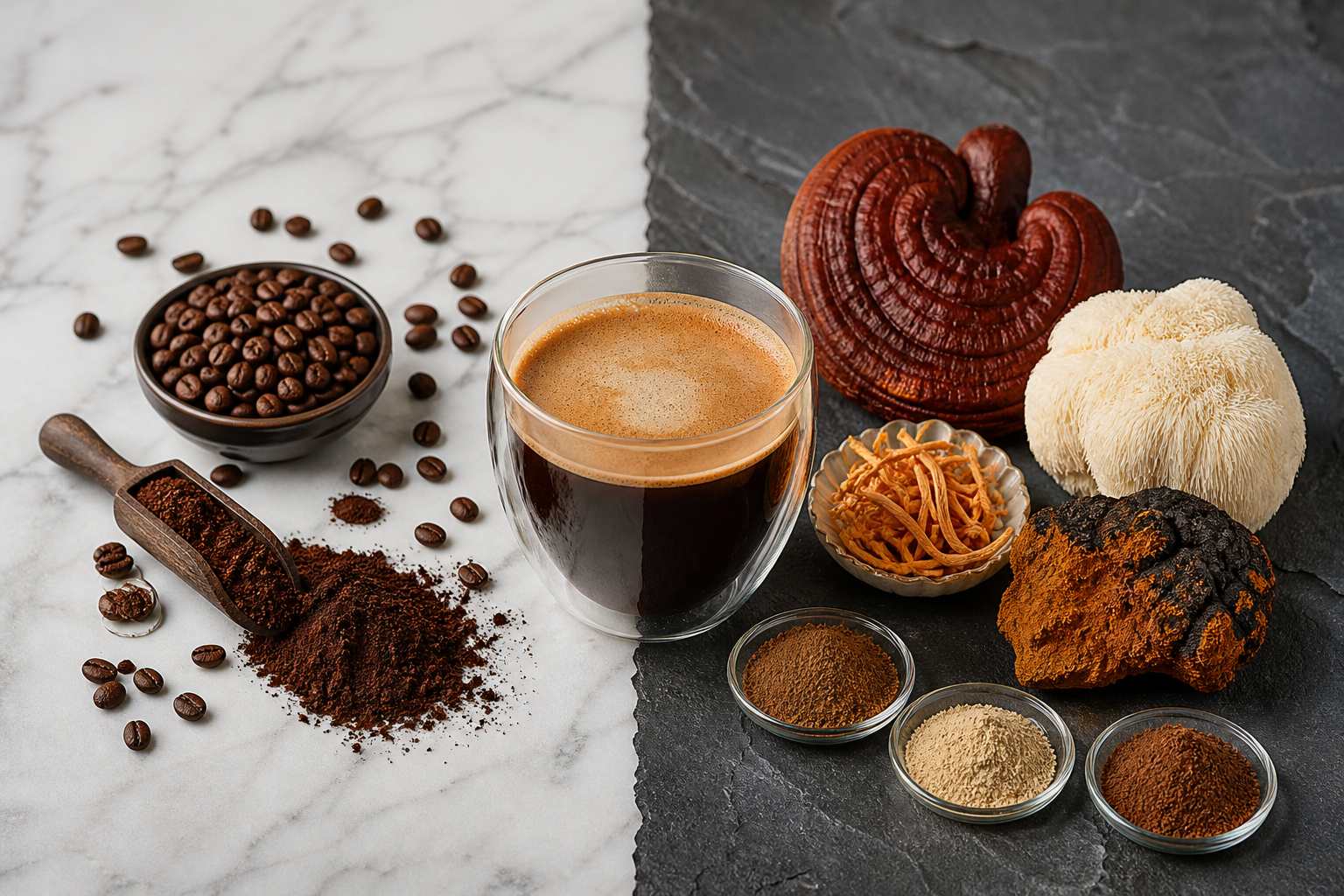
Mushroom coffee products are often marketed around functional mushroom ingredients. However, it is important to separate research on individual mushrooms from claims about finished beverages.
Lion’s Mane
Research has explored Lion’s Mane compounds and their potential biological activities. Human studies exist, but more research is needed to understand how different formulations perform.
Reishi
Studies have examined Reishi-related compounds, including polysaccharides and triterpenes. Research continues to investigate their biological properties.
Chaga
Chaga research has focused on antioxidant-related compounds and other naturally occurring components. Much of the available evidence relates to mushroom extracts rather than coffee products.
Cordyceps
Cordyceps has been studied in areas related to exercise and metabolism, although research outcomes depend on the specific species and preparation used.
Overall, consumers should evaluate mushroom coffee as a beverage containing mushroom ingredients rather than assuming it provides the same effects as isolated mushroom extracts studied in scientific research.
How to Read a Mushroom Coffee Label
A product label provides important information when comparing mushroom coffee.
Check the Mushroom Species
Look for specific names such as:
- Lion’s Mane
- Reishi
- Chaga
- Cordyceps
A clearly listed ingredient profile makes comparison easier.
Check Mushroom Form
Determine whether the product uses:
- Mushroom powder
- Mushroom extract
This can affect formulation and flavor.
Check Serving Information
Compare:
- Serving size
- Ingredient amounts
- Caffeine information
Products should be compared based on equivalent serving sizes whenever possible.
Check Additional Ingredients
Review:
- Sweeteners
- Creamers
- Flavorings
- Other additives
These ingredients can significantly influence the overall product.

How to Choose a Mushroom Coffee Based on Your Preferences
Different consumers may prefer different types of mushroom coffee.
For Convenience
Instant mushroom coffee or single-serve pods may be suitable for people who want quick preparation.
For Traditional Coffee Experience
Ground mushroom coffee may be a better choice for consumers who enjoy brewing coffee at home.
For Specific Mushroom Ingredients
Consumers interested in a particular mushroom should check the ingredient list rather than relying only on product names.
For Caffeine Preferences
Always check caffeine information rather than assuming mushroom coffee has less caffeine than regular coffee.
Frequently Asked Questions
What is the best mushroom coffee brand?
The best choice depends on individual preferences, including ingredients, flavor, caffeine level, product format, and personal taste.
What mushrooms are commonly used in mushroom coffee?
Common varieties include Lion’s Mane, Reishi, Chaga, and Cordyceps.
Is mushroom extract better than mushroom powder?
Neither form is automatically better. They represent different processing methods and should be evaluated based on the complete formulation.
Does mushroom coffee contain caffeine?
Most mushroom coffee products made with traditional coffee contain caffeine. The amount depends on the coffee content and serving size.
Does mushroom coffee taste like mushrooms?
Flavor varies by formula. Many products have a coffee-forward taste with subtle earthy notes.
Research Sources
- Mori K, Inatomi S, Ouchi K, Azumi Y, Tuchida T. Improving effects of the mushroom Yamabushitake (Hericium erinaceus) on mild cognitive impairment: a double-blind placebo-controlled clinical trial. Phytotherapy Research. 2009.
- Poole R, et al. Coffee consumption and health: umbrella review of meta-analyses of multiple health outcomes. BMJ. 2017.
- EFSA Panel on Dietetic Products, Nutrition and Allergies. Scientific Opinion on the safety of caffeine. EFSA Journal. 2015.
- Wasser SP. Medicinal mushroom science: Current perspectives and future directions.
Conclusion
Comparing mushroom coffee products requires looking beyond the front label. Mushroom type, ingredient form, coffee style, caffeine content, and additional ingredients all influence the final product experience.
A detailed mushroom coffee comparison chart can help consumers understand how different products are formulated and choose options that better match their personal preferences.