


Understanding Organic Mushroom Coffee Blends
In recent years, organic mushroom coffee blends have gained attention as part of the growing functional beverage market. Consumers who are interested in natural ingredients, plant-based nutrition, and wellness-focused products are increasingly exploring alternatives to traditional coffee.
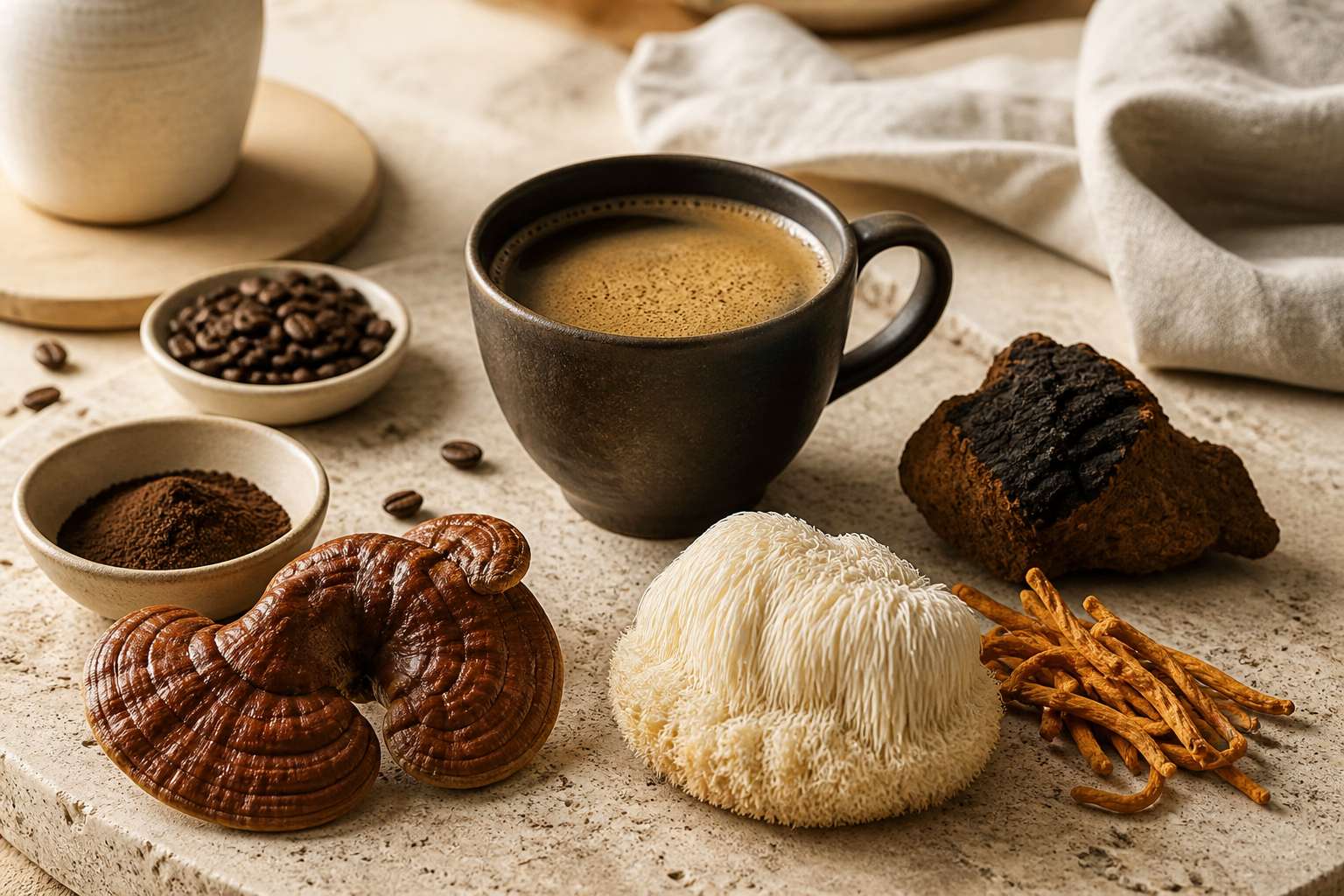
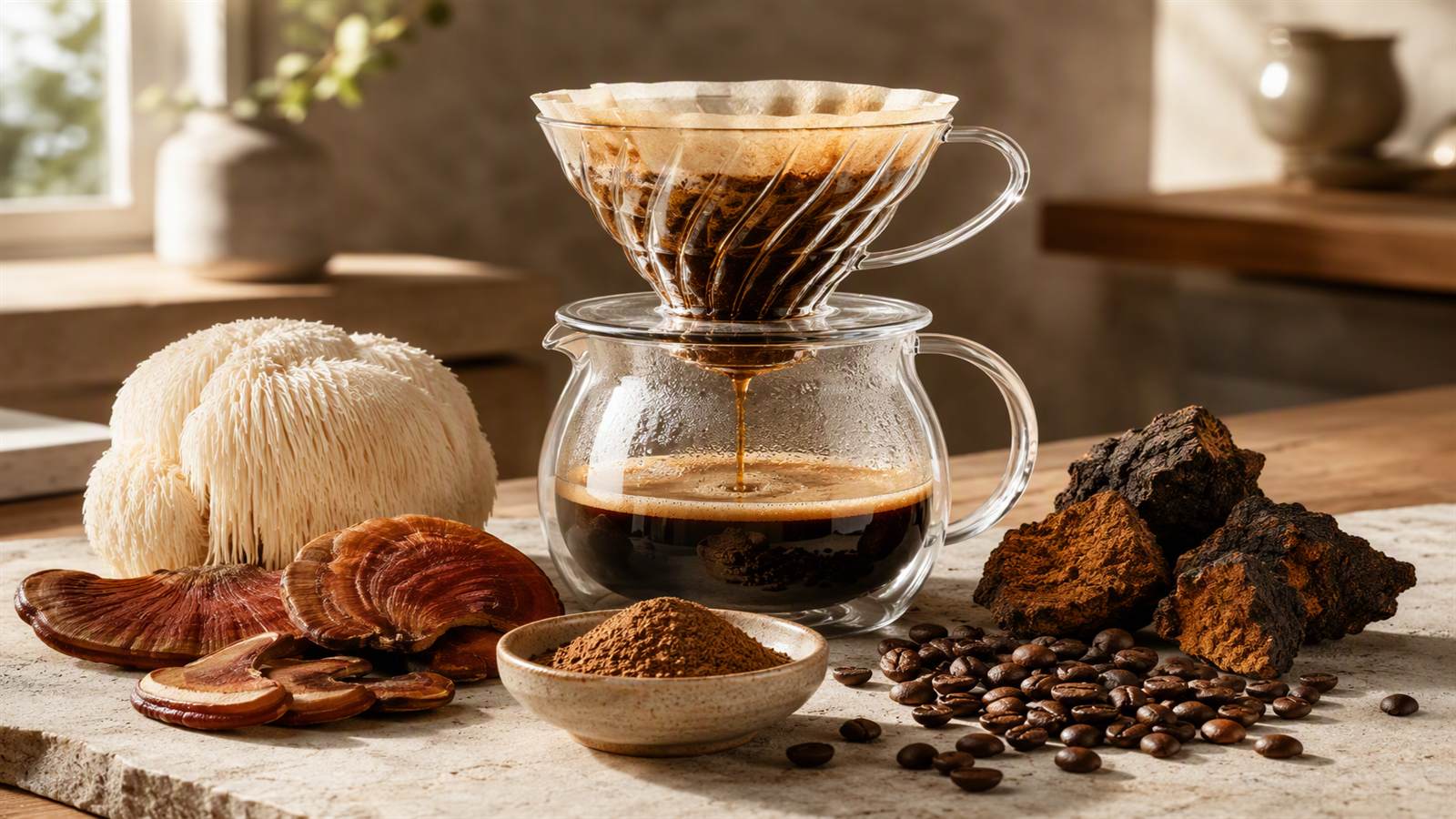
An organic mushroom coffee blend combines coffee with functional mushroom ingredients, creating a beverage that offers the familiar taste and caffeine experience of coffee while incorporating mushroom-derived compounds.
Unlike some people assume, mushroom coffee is not made entirely from mushrooms. Most products contain coffee as the primary ingredient, with mushroom powders or extracts added to create a functional beverage formulation.
The quality and characteristics of these products can vary depending on coffee sourcing, mushroom species, extraction methods, and ingredient transparency. Understanding the ingredients, nutritional profile, research background, and quality considerations can help consumers make more informed choices.
What Is an Organic Mushroom Coffee Blend?
Definition of Mushroom Coffee Blend
An organic mushroom coffee blend is a beverage made by combining coffee ingredients with functional mushroom components.
Common formulations include:
- Organic coffee beans or instant coffee
- Mushroom powder
- Mushroom extracts
- Additional natural ingredients
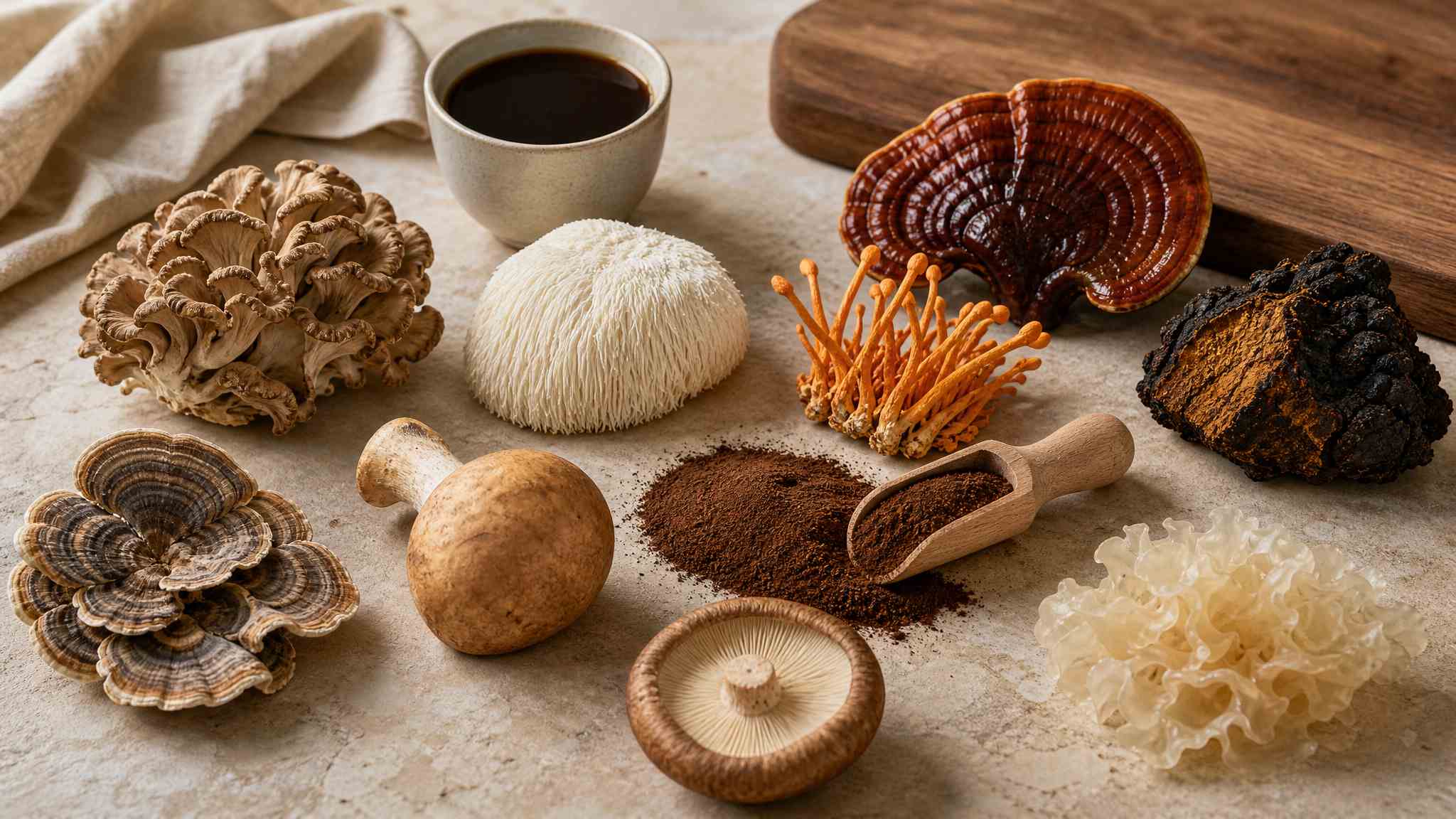
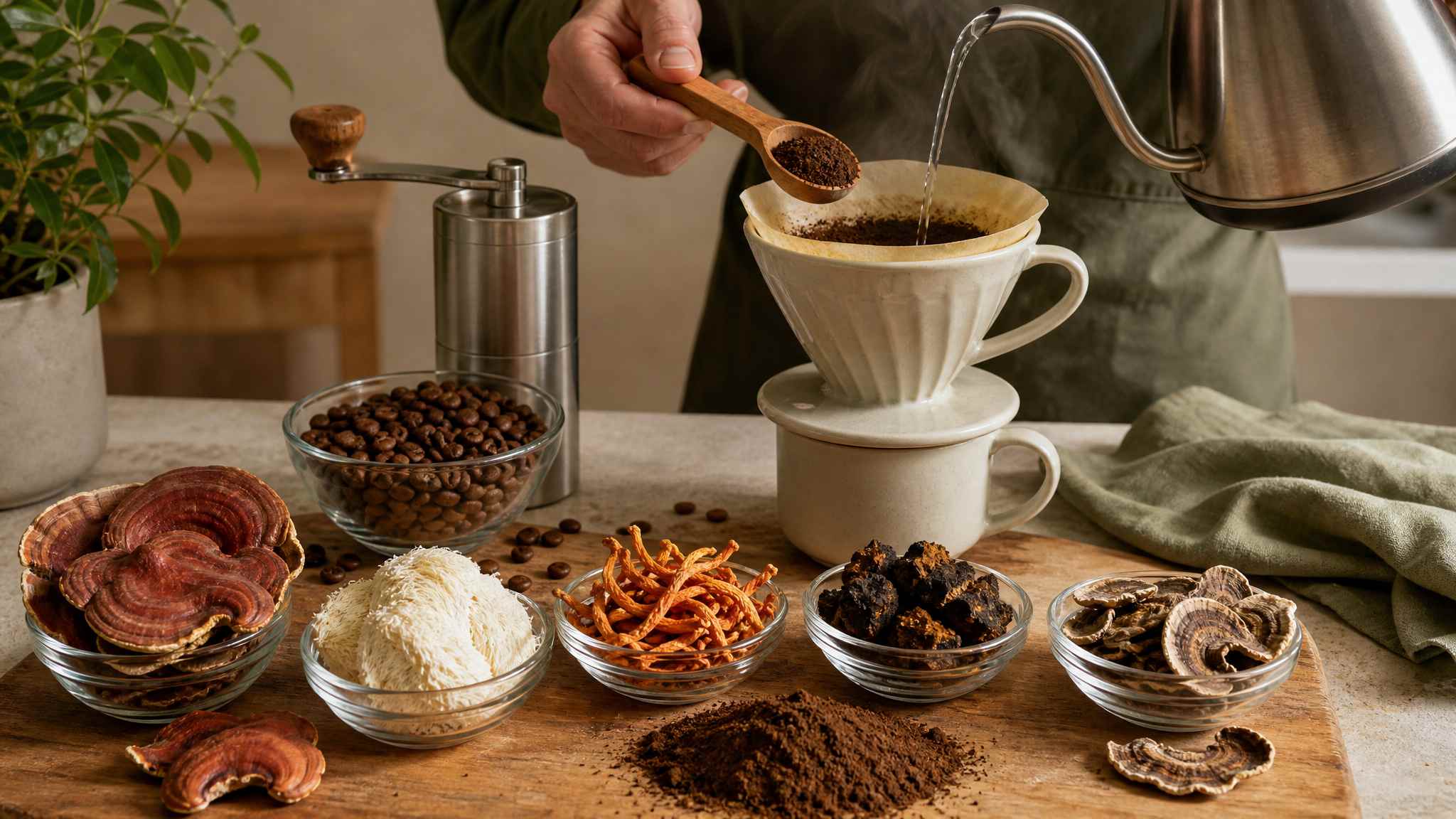
Popular mushroom varieties used in these blends include:
- Lion’s Mane
- Reishi
- Chaga
- Cordyceps
The purpose of adding mushrooms is not to replace coffee but to create a product that combines coffee culture with the growing interest in functional nutrition.
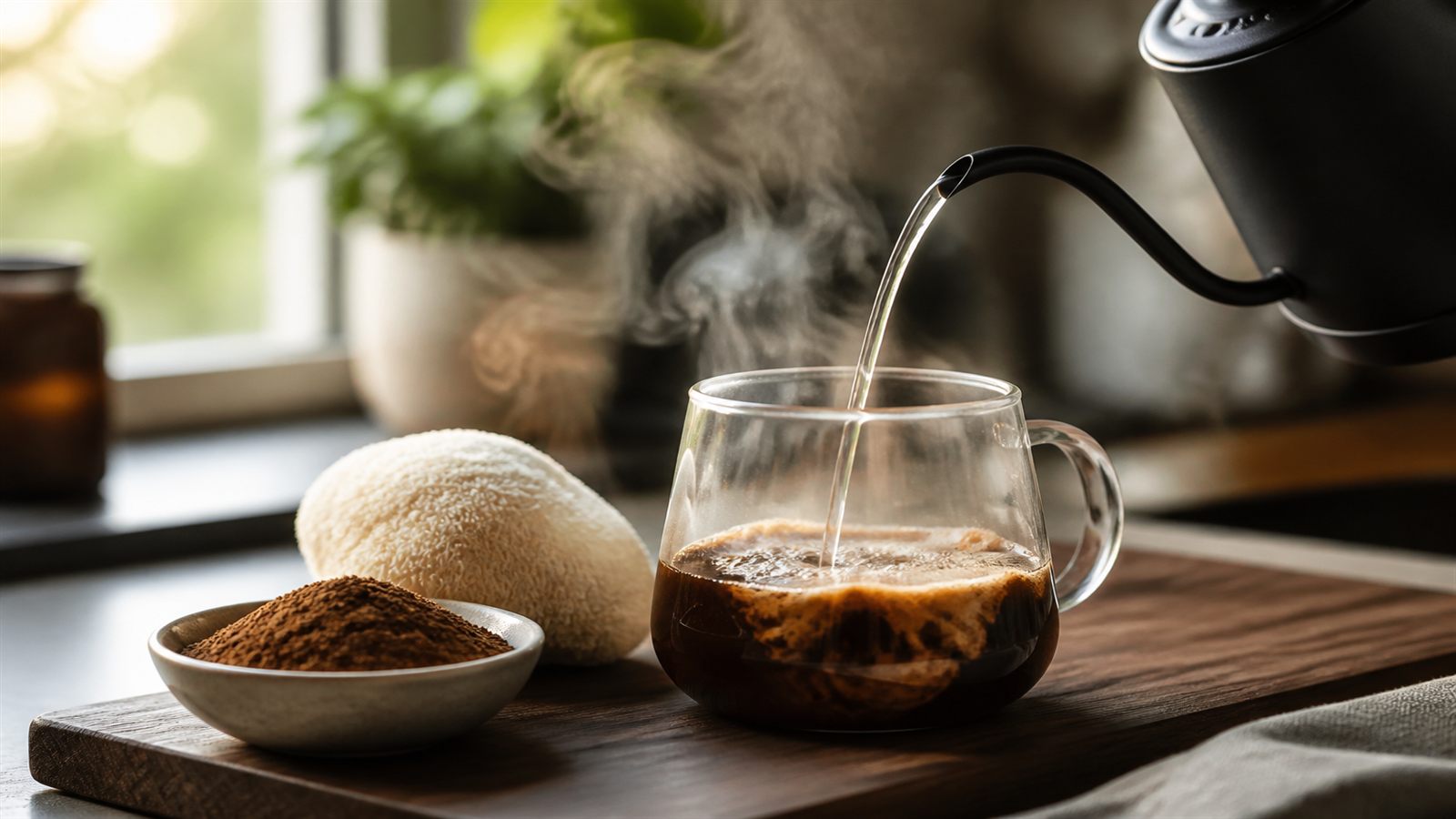
Depending on the formulation, mushroom coffee can be available as:
- Instant powder
- Ground coffee blends
- Coffee pods
- Ready-to-mix beverages
What Makes a Mushroom Coffee Blend Organic?
The term “organic” generally refers to how agricultural ingredients are grown, processed, and certified according to specific organic standards.
For organic mushroom coffee, this may involve:
- Organic coffee cultivation practices
- Organic mushroom ingredient sourcing
- Restrictions on certain agricultural inputs
- Certification requirements depending on the market
For example, USDA Organic certification in the United States follows specific production standards established by the National Organic Program.
However, organic certification and product quality are not exactly the same thing. Organic status focuses mainly on farming and processing methods, while other quality factors such as testing, ingredient transparency, and manufacturing practices also influence the final product.
Common Ingredients in Organic Mushroom Coffee
The formulation of mushroom coffee varies between products, but several ingredients appear frequently.
Organic Coffee Beans
Coffee is usually the main ingredient in mushroom coffee blends.
Coffee naturally contains:
- Caffeine
- Chlorogenic acids
- Polyphenols
- Other plant compounds
Caffeine is one of the most studied natural stimulants and is associated with increased alertness and reduced feelings of fatigue.
The coffee origin, roast level, and preparation method can influence the final flavor and chemical composition of the beverage.
Lion’s Mane Mushroom
Lion’s Mane (Hericium erinaceus) is one of the most recognized functional mushrooms used in mushroom coffee products.
This mushroom has attracted scientific interest because of its naturally occurring compounds, including polysaccharides and other bioactive substances.
Research has explored Lion’s Mane in relation to cognitive function and neurological mechanisms.
A clinical trial published in Phytotherapy Research investigated the effects of Lion’s Mane supplementation in individuals with mild cognitive impairment. The study suggested potential cognitive-related effects, although more research is needed to understand the broader applications.
When included in mushroom coffee, Lion’s Mane is usually added as a powder or extract ingredient.
Reishi Mushroom
Reishi (Ganoderma lucidum) has a long history of traditional use in Asian cultures.
It contains naturally occurring compounds such as:
- Polysaccharides
- Triterpenes
- Other fungal metabolites
Scientific research has examined Reishi for its biological activities, although many studies focus on isolated compounds or concentrated extracts rather than finished beverages.
In mushroom coffee blends, Reishi is often selected as part of multi-mushroom formulations.
Chaga Mushroom
Chaga (Inonotus obliquus) is another commonly used functional mushroom.
It contains various naturally occurring compounds, including polyphenols and antioxidant-related components.
Research has examined Chaga extracts in laboratory settings, particularly regarding antioxidant activity.
However, laboratory findings do not automatically mean that drinking mushroom coffee produces identical effects, as product formulation, dosage, and absorption can vary.
Cordyceps Mushroom
Cordyceps species are frequently included in functional beverages and sports nutrition products.
Research has explored Cordyceps in areas related to:
- Exercise performance
- Energy metabolism
- Physical activity
Like other functional mushrooms, results depend on the specific species, preparation method, and dosage used.
Other Functional Ingredients
Some organic mushroom coffee blends include additional ingredients designed to improve flavor or nutritional positioning.
Examples include:
- Cocoa
- Cinnamon
- Coconut milk powder
- MCT powder
- Natural flavors
These additions can influence taste, texture, and overall product composition.
Nutritional Profile of Organic Mushroom Coffee
Coffee-Based Nutrients
The nutritional profile of mushroom coffee starts with coffee itself.
Coffee contains several naturally occurring compounds, including:
- Caffeine
- Polyphenols
- Chlorogenic acids
Research on coffee has explored associations between coffee consumption and various health outcomes. However, many studies are observational, meaning they can identify relationships but cannot always prove direct cause and effect.
Mushroom-Derived Compounds
Functional mushrooms contain compounds that have attracted scientific interest.
Common mushroom-derived components include:
- Beta-glucans
- Polysaccharides
- Triterpenes
The concentration of these compounds depends on:
- Mushroom species
- Growing conditions
- Processing methods
- Extraction techniques
This is why two mushroom coffee products containing the same mushroom name may have different nutritional profiles.
Why Ingredient Transparency Matters
Consumers evaluating mushroom coffee blends should pay attention to:
- Mushroom species identification
- Ingredient amounts
- Extract or powder format
- Additional ingredients
- Testing information
Clear labeling allows consumers to better understand what they are purchasing.

Potential Benefits of Organic Mushroom Coffee
Supporting Daily Energy and Focus
Because mushroom coffee contains coffee, it typically provides caffeine.
Caffeine is widely studied for its effects on:
- Alertness
- Attention
- Mental performance
The amount of caffeine varies depending on the coffee content and serving size.
Functional Mushroom Research
Functional mushrooms are being studied for their unique compounds.
Lion’s Mane Research
Studies have investigated Lion’s Mane in relation to cognitive function and nerve-related mechanisms.
Reishi Research
Research has examined Reishi compounds, including polysaccharides and triterpenes.
Chaga Research
Studies have explored Chaga’s naturally occurring antioxidant-related compounds.
Cordyceps Research
Research has investigated Cordyceps in areas related to exercise and metabolism.
It is important to distinguish between research on mushroom ingredients and evidence on finished mushroom coffee products. A study involving a concentrated mushroom extract does not necessarily prove the same result from a standard cup of mushroom coffee.
Organic Mushroom Coffee vs Regular Coffee
| Feature | Organic Mushroom Coffee | Regular Coffee |
|---|---|---|
| Main ingredients | Coffee + mushroom ingredients | Coffee beans |
| Caffeine source | Coffee | Coffee |
| Additional compounds | Mushroom-derived compounds | Coffee compounds |
| Flavor | Coffee with earthy notes | Traditional roasted coffee |
| Product positioning | Functional beverage | Traditional beverage |
The main difference is the addition of mushroom ingredients. Consumers who enjoy coffee but are interested in functional ingredients may find mushroom coffee appealing.
Organic Mushroom Coffee vs Mushroom Supplements
Although both products use functional mushrooms, they serve different purposes.
Mushroom Coffee Format
Advantages include:
- Easy integration into daily routines
- Familiar coffee experience
- Convenient preparation
Mushroom Supplement Format
Advantages include:
- Often higher ingredient concentration
- Designed specifically around mushroom intake
Neither format is automatically better. The choice depends on personal preferences and intended use.

How Organic Mushroom Coffee Blends Are Made
Ingredient Selection
Manufacturers typically consider:
- Mushroom species
- Ingredient sourcing
- Coffee quality
- Supplier documentation
Reliable ingredient identification is important because different mushroom species have different characteristics.
Mushroom Processing
Mushrooms may be processed as:
- Powders
- Extracts
Extraction methods can influence the concentration of naturally occurring compounds.
Blending and Quality Control
Production quality may involve:
- Batch consistency checks
- Ingredient verification
- Microbial testing
- Heavy metal testing
Quality control helps ensure that products meet expected standards.

How to Choose a High-Quality Organic Mushroom Coffee Blend
Check Mushroom Ingredients
Look for:
- Clearly listed mushroom species
- Transparent ingredient information
- Extract or powder details
Look for Organic Certification
If organic certification is important, check whether the product provides relevant certification information.
Examples include:
- USDA Organic
- EU Organic
Review Testing Information
Quality indicators may include:
- Certificate of Analysis (COA)
- Third-party testing
- Safety testing information
Testing may cover areas such as:
- Microbial quality
- Heavy metals
- Ingredient verification
Avoid Excessive Marketing Claims
A reliable product usually focuses on:
- Transparent ingredients
- Clear labeling
- Evidence-based information
Consumers should be cautious of products making broad health claims that are not supported by research.

Frequently Asked Questions
Is organic mushroom coffee healthier than regular coffee?
There is currently no evidence proving that mushroom coffee is universally healthier than regular coffee. They are different products with different ingredients.
Does organic mushroom coffee contain caffeine?
Yes, most mushroom coffee blends contain caffeine because coffee is usually the main ingredient.
What mushrooms are commonly used in mushroom coffee?
Common varieties include Lion’s Mane, Reishi, Chaga, and Cordyceps.
Is mushroom coffee made entirely from mushrooms?
No. Most mushroom coffee products are made primarily from coffee combined with mushroom ingredients.
Are organic mushroom coffee blends tested for safety?
Quality-focused products often use testing programs to evaluate ingredient safety and consistency.
Scientific References
- Mori K, et al.
Improving effects of the mushroom Yamabushitake (Hericium erinaceus) on mild cognitive impairment: A double-blind placebo-controlled clinical trial.
Phytotherapy Research. 2009. - Friedman M.
Chemistry, Nutrition, and Health-Promoting Properties of Hericium erinaceus Mushroom.
Journal of Agricultural and Food Chemistry. - Wasser SP.
Medicinal mushroom science: Current perspectives and future directions. - European Food Safety Authority (EFSA).
Scientific Opinion on the Safety of Caffeine. - United States Department of Agriculture (USDA).
National Organic Program Standards.
Final Thoughts
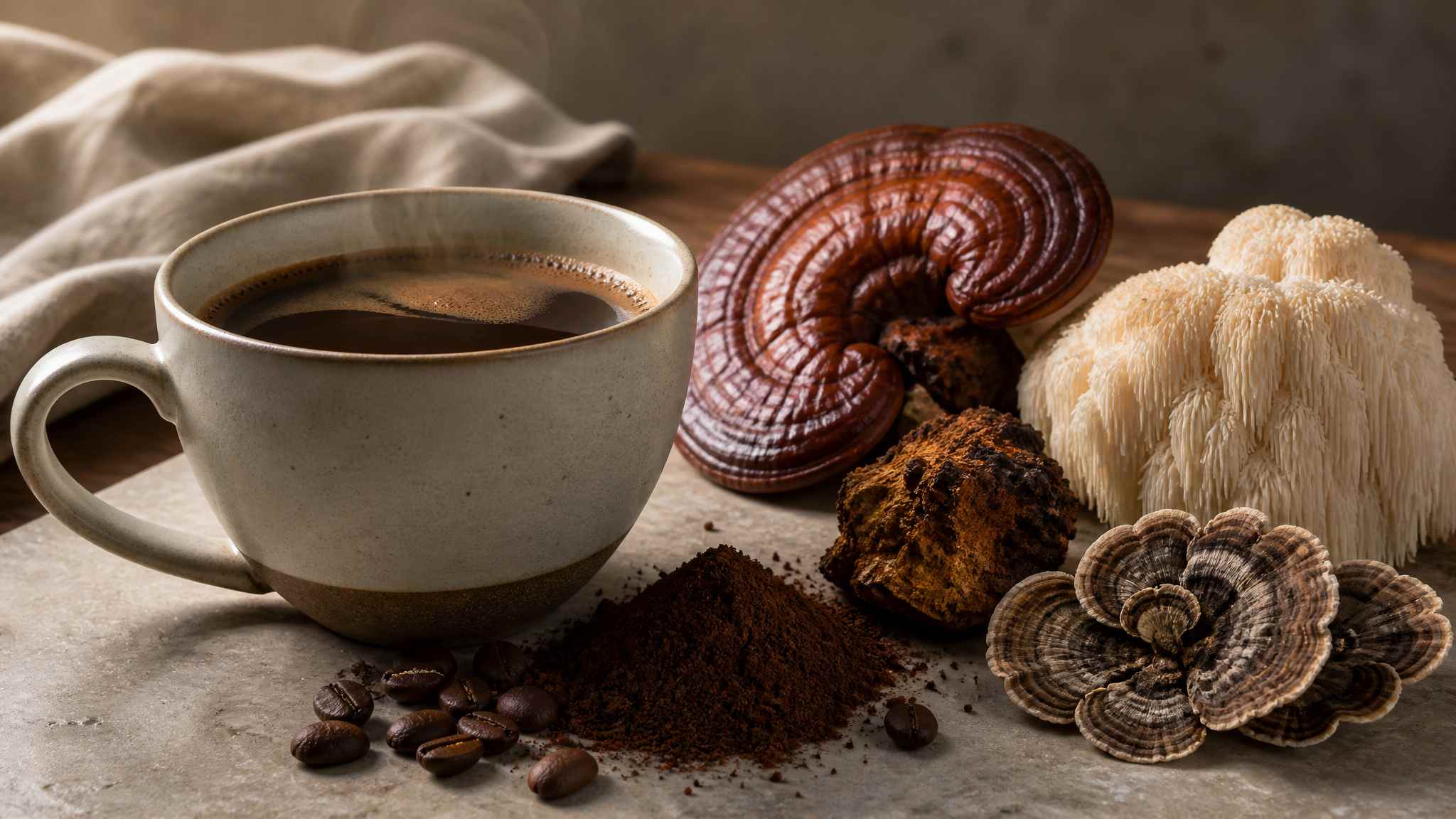
Organic mushroom coffee blends represent the combination of traditional coffee culture and the growing interest in functional nutrition. By adding mushroom ingredients such as Lion’s Mane, Reishi, Chaga, or Cordyceps, these beverages offer consumers another option within the expanding functional beverage market.
The quality of an organic mushroom coffee blend depends on more than the mushroom name on the label. Ingredient sourcing, processing methods, transparency, and testing practices all contribute to the overall product profile.
Understanding these factors allows consumers to evaluate mushroom coffee products based on reliable information rather than marketing claims.