
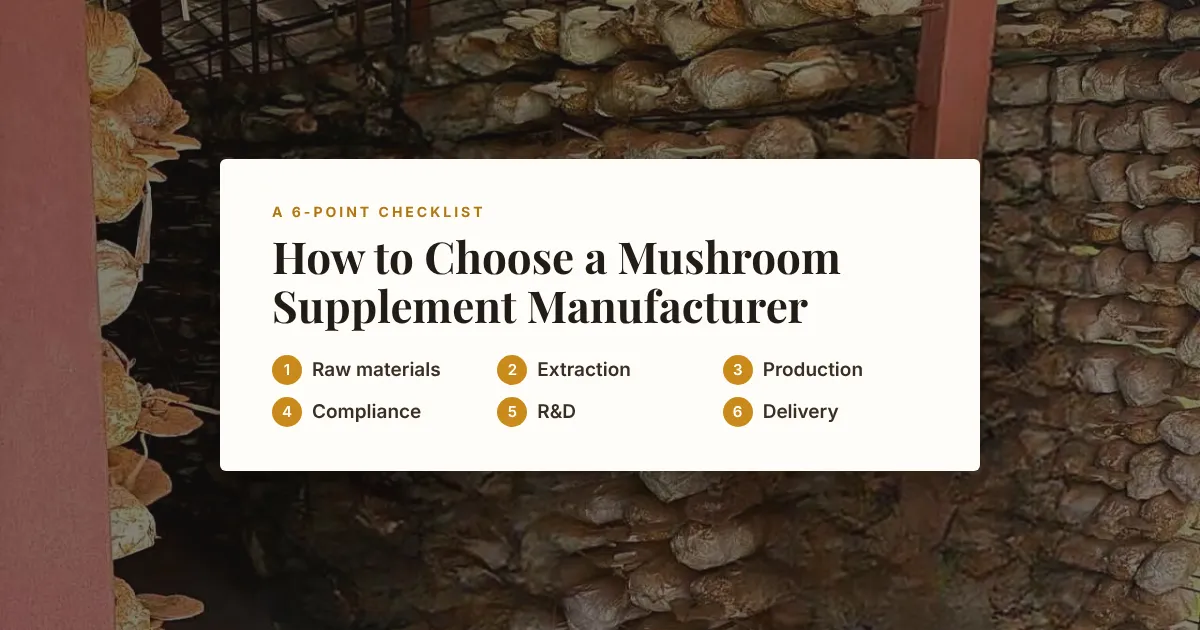
To choose a mushroom supplement manufacturer, check six things: where its raw materials come from, how it extracts them, which dosage forms it can produce, which certifications it holds, how strong its R&D is, and how it handles delivery. A partner that covers all six under one roof saves you from coordinating several suppliers.
That last point matters more than many brands expect. Building a mushroom product often means working with a cultivation base, an extraction plant, a finished-product factory, and someone to assemble export documents. Each hand-off adds cost and delay. This checklist shows what to ask at each step.
Why the Choice of Manufacturer Matters So Much
For brands selling on Amazon or their own websites, supply chain pain points tend to be scattered: one supplier for mushrooms, another for extracts, another for capsules, and a separate scramble for compliance paperwork. Coordinating them all is slow and inefficient.
The ideal partner doesn’t just manufacture a product. It offers a complete solution for selling internationally. Use the six questions below to find out whether a manufacturer can do that.
The 6-Point Checklist for Choosing a Mushroom Supplement Manufacturer
1. Raw Materials: Can They Trace Every Mushroom to Its Source?
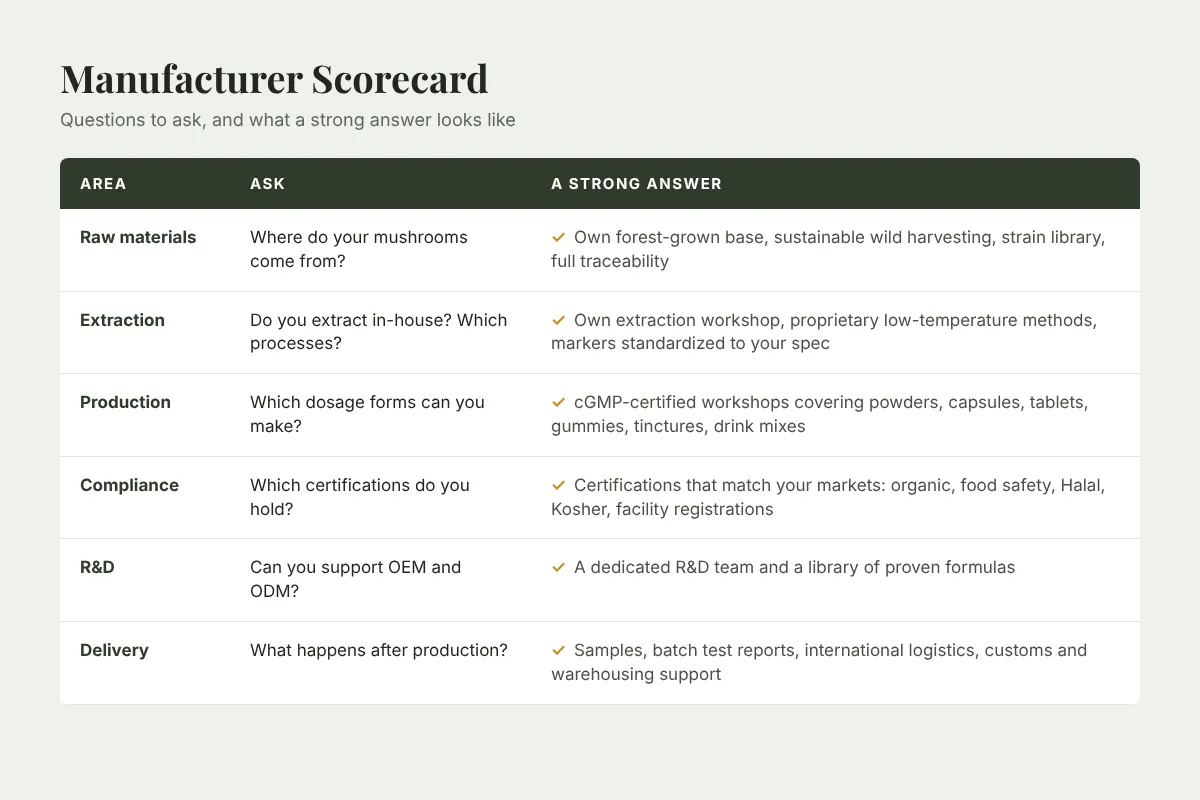
Ask whether the manufacturer has its own cultivation base, and how it sources mushrooms it does not grow. A strong answer includes a company-owned, forest-grown base, sustainable wild harvesting across several regions, a strain library, and full traceability for every raw material.
2. Extraction: Do They Run Their Own Extraction Workshop?
Many factories buy extracts from third parties and only blend and package them. Ask whether extraction happens in-house and which processes are used. Look for proprietary methods such as low-temperature cell-wall disruption, jet-flow cell-wall disruption, and membrane concentration, along with the ability to standardize active markers to your specification.
3. Production: Can They Make the Formats You Need?
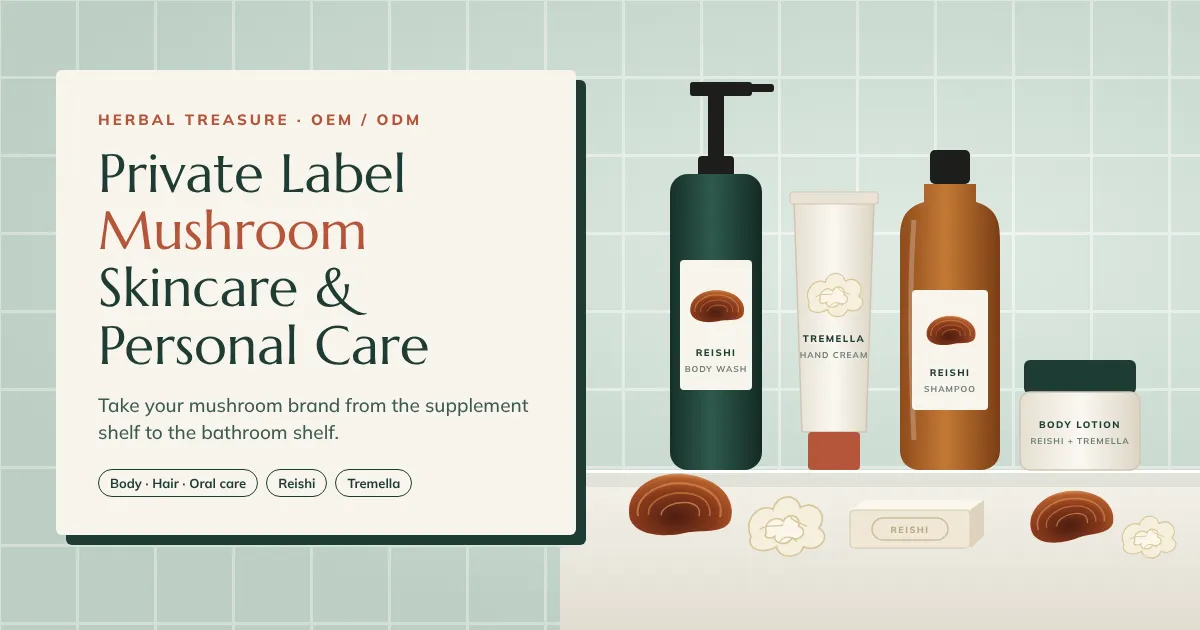
Your product line may start with capsules and later expand into gummies or drink mixes. Check that the manufacturer has modern, cGMP-certified production space and covers the dosage forms you plan to sell, from powders, capsules, tablets, and gummies to tinctures, powdered drink mixes, and personal care products.
4. Compliance: Do Their Certifications Match Your Markets?
Every market has its own requirements. Ask for a list of certifications and check that they fit the regions you sell in, whether that is North America, Europe, the Middle East, or Southeast Asia. Organic, food safety, Halal, and Kosher certifications, together with facility registrations, should all be part of the conversation.
5. R&D: Can They Support Both OEM and ODM?
If you have your own formula, you need a partner that can manufacture it faithfully (OEM). If you don’t, you need one that can provide proven formulas and adapt them to your brand (ODM). Ask about the size of the R&D team and the formula library.
6. Delivery: What Happens After Production?
The job isn’t finished when the product comes off the line. Ask about sample service, test reports for each batch, international logistics, and support with customs clearance and warehousing.
How Herbal Treasure Measures Up
Here is how Herbal Treasure answers each point on the checklist:
- Raw materials:our own forest-grown cultivation base in the southern Wuyi Mountains of Fujian, plus sustainable wild harvesting across several regions, a strain library, and full traceability
- Extraction:an in-house extraction workshop using proprietary low-temperature cell-wall disruption, jet-flow cell-wall disruption, and membrane concentration, with active markers standardized to your specification
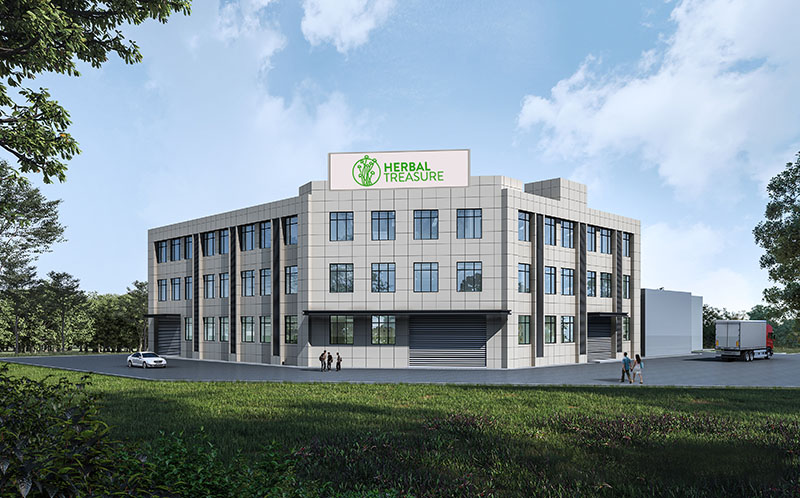
- Production:a modern facility of more than 10,000 m² (about 108,000 sq ft), with over 8,000 m² (about 86,000 sq ft) of cGMP-certified workshops, covering powders, capsules, tablets, gummies, tinctures, powdered drink mixes, and personal care products
- Compliance:FDA-registered facility; USDA Organic, EU Organic, and Canada Organic; NSF cGMP, HACCP, and FSSC 22000; Halal and Kosher; and a Health Canada Foreign Site Reference Number (FSRN), supporting markets in North America, Europe, the Middle East, and Southeast Asia
- R&D:a team of more than 100 people and more than 5,000 proven formulas, supporting OEM private label production and custom ODM blends
- Delivery:samples, test reports for every batch, international logistics, and customs clearance and warehousing support, reaching shelves in more than 40 countries and regions
Founded in 2003 and located in the southern foothills of the Wuyi Mountains, Herbal Treasure has focused on medicinal mushrooms for more than 20 years and has served more than 1,000 brand clients worldwide.
Choosing a Partner That Covers the Whole Chain
A manufacturer that can answer all six questions well gives you a single, accountable partner from forest to shelf. Working with one full-chain source manufacturer can significantly cut the cost of managing your supply chain and help you launch new products faster.
Frequently Asked Questions
What should I ask a mushroom supplement manufacturer before ordering?
Ask where its raw materials come from, whether it extracts in-house, which dosage forms it produces, which certifications it holds, whether it supports OEM and ODM, and how it handles samples, test reports, and shipping.
Why does in-house extraction matter?
When a manufacturer controls its own extraction, it can standardize active markers to your specification and keep them consistent from batch to batch, instead of relying on extracts bought from third parties.
Which certifications should a mushroom supplement manufacturer have?
It depends on where you sell. Common ones include cGMP, FSSC 22000, HACCP, organic certifications for the US, EU, and Canada, and Halal and Kosher for brands serving those consumers.