
When you choose a reishi extract manufacturer, three things decide product quality: how the reishi is grown, how much polysaccharide and triterpene the extract contains, and whether the supplier has the compliance credentials for your export markets. Miss any one of them, and a reishi product will struggle overseas.
Reishi (ling zhi) is one of the best-known medicinal mushrooms in the world. On cross-border platforms, demand is strong for reishi spore powder, reishi spore oil, reishi coffee, and reishi gummies. Fujian is one of China’s important reishi-growing regions, so how well can a manufacturer at the source support your brand? Here is what to look for.
Why Fujian’s Wuyi Mountains Suit Log-Grown Reishi
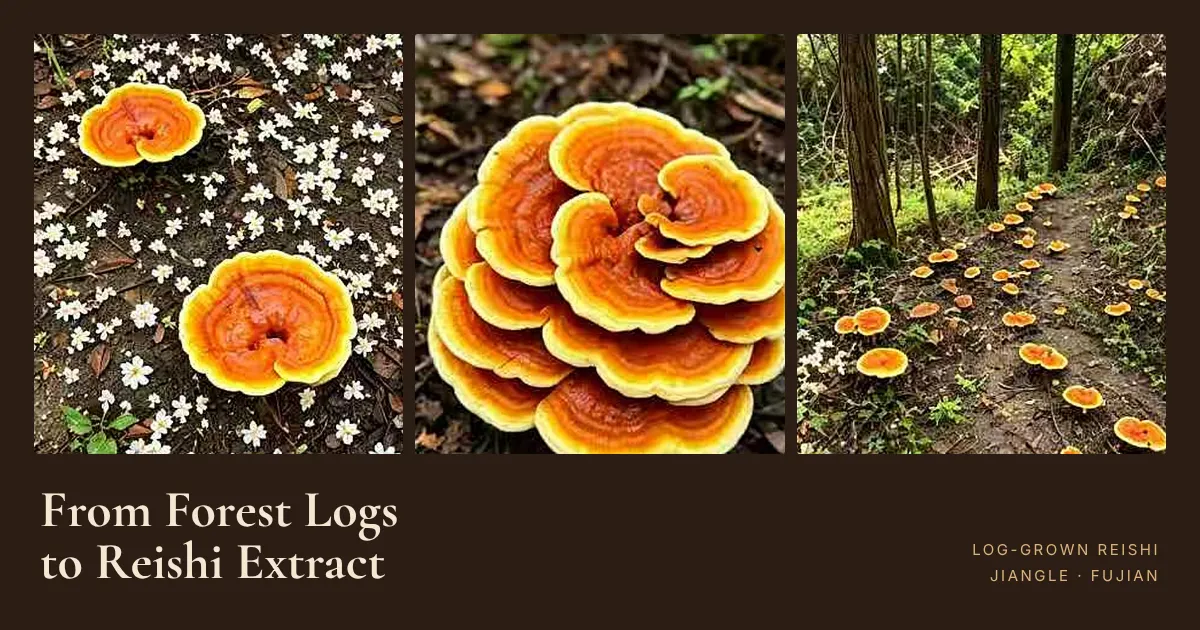
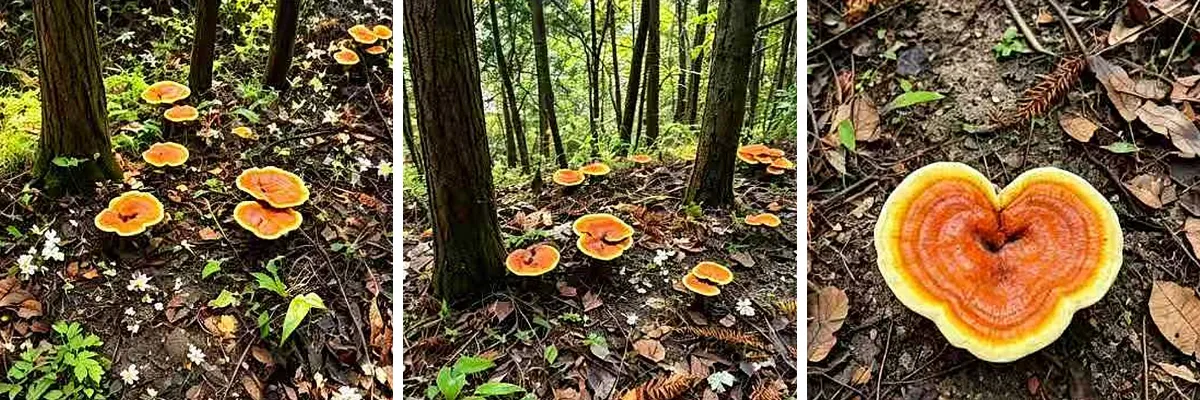
Jiangle County in Sanming, Fujian, sits in the southern foothills of the Wuyi Mountains. Its high forest cover makes it a quality region for growing reishi under the forest canopy.
Here, reishi is grown on logs, a method known in Chinese as duanmu cultivation. Hardwood logs such as oak and maple serve as the growing base, under conditions that closely mimic the wild. This environment favors the build-up of active compounds in reishi, including polysaccharides and triterpenes.
The Quality Markers Overseas Buyers Check in Reishi Products
For reishi products sold internationally, the key quality markers are:
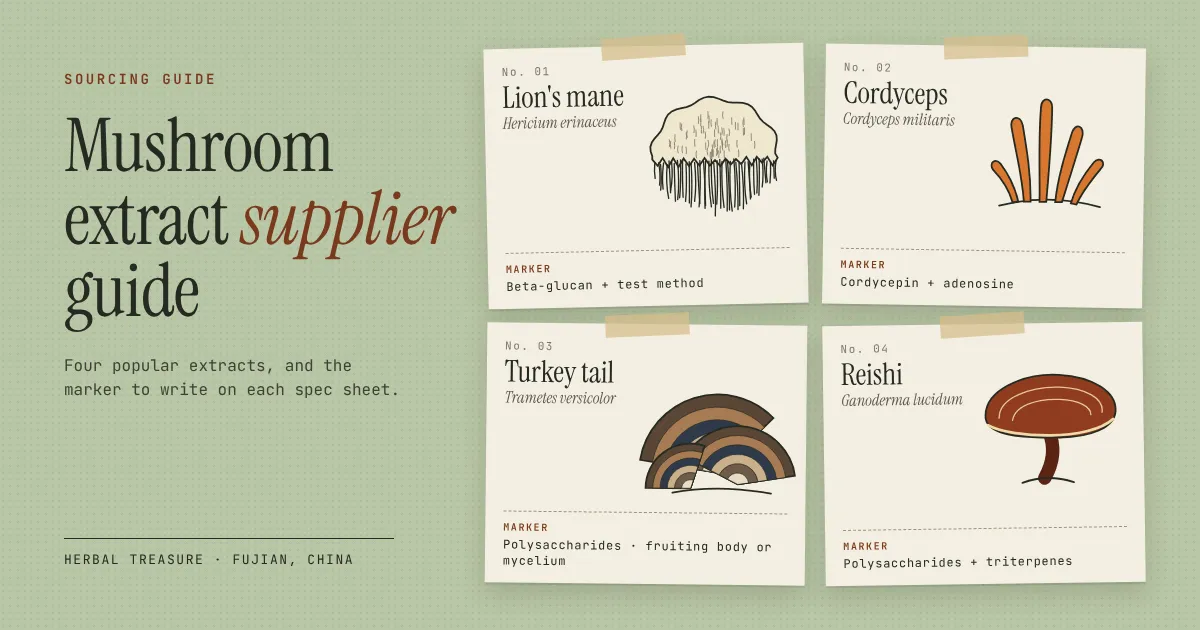
- Polysaccharides and triterpenesfor reishi extracts
- Total triterpenesfor reishi spore oil
Best-selling reishi formats overseas include reishi capsules, reishi spore oil softgels, reishi gummies, reishi coffee drink mixes, reishi tinctures, and even reishi personal care products.
A Common Sourcing Trap: Mycelium vs Fruiting Body
Many cross-border sellers have run into the same two problems: mycelium sold as log-grown fruiting body extract, and overstated triterpene content.
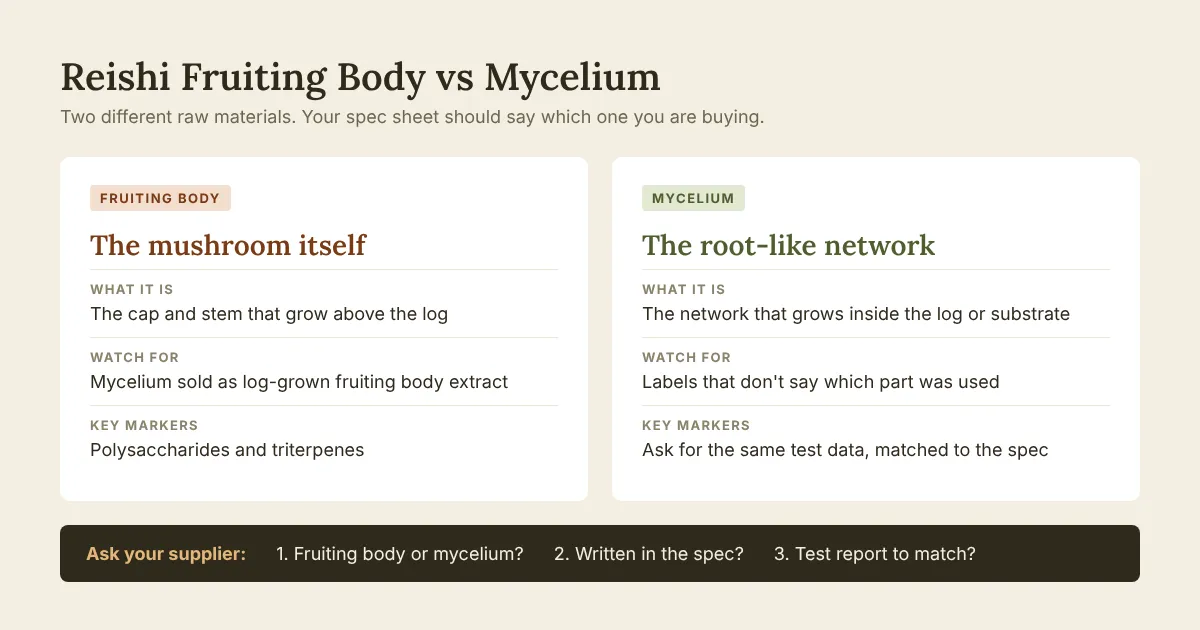
The fruiting body is the mushroom itself, the cap and stem that grow above the log. Mycelium is the root-like network that grows inside the substrate. They are different raw materials, and the price and specification should reflect that.
When you buy reishi extract, protect yourself in three ways:
- Confirm whether the raw material is fruiting body or mycelium.
- Write that clearly into your product specification.
- Get a test report that matches the specification.
How Herbal Treasure Supports Reishi Brands
Herbal Treasure is based in Jiangle County, Sanming, Fujian. Here is what we offer reishi brands:
- Cultivation:a forest-grown base of more than 200 mu (about 13 hectares, or 33 acres), where reishi is log-grown under conditions close to the wild, alongside our organic reishi greenhouses
- Extraction:an in-house extraction workshop that can standardize polysaccharides at 20–50% and triterpenes at 4–10%
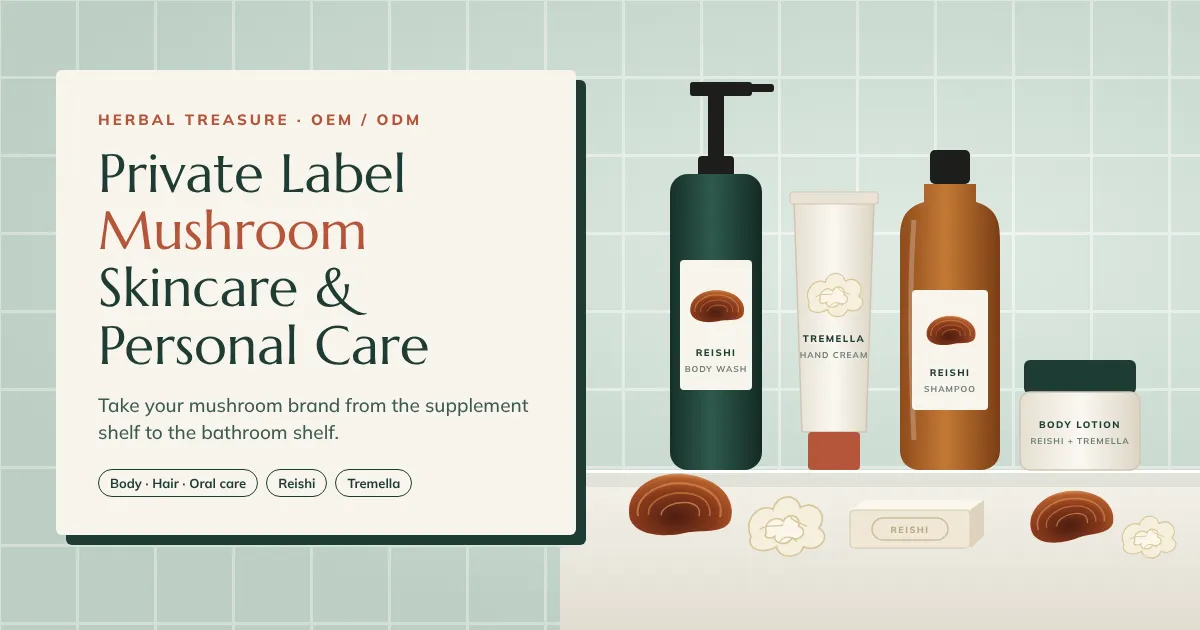
- Product range:reishi raw materials, cracked-wall reishi spore powder, and reishi spore oil, plus finished capsules, gummies, coffee, tinctures, and reishi personal care products. We also manufacture skincare products that combine reishi with tremella (yin er) extract
- Compliance:a full set of international export certifications
Many of our reishi products already supply brands that sell on Amazon and on their own websites.
Getting Reishi Right for International Markets
To succeed with reishi overseas, you need all three: the right cultivation method, verified polysaccharide and triterpene content, and full export compliance. A source manufacturer that controls each of these makes it far easier to build a reishi product customers trust.
Frequently Asked Questions
What is log-grown reishi?
Log-grown reishi is cultivated on hardwood logs, such as oak and maple, often under a forest canopy. The method, called duanmu cultivation in Chinese, closely mimics how reishi grows in the wild.
What is the difference between reishi fruiting body and mycelium?
The fruiting body is the visible mushroom, the cap and stem. Mycelium is the root-like network that grows inside the substrate. They are different raw materials, so your specification should state which one you are buying.
What polysaccharide and triterpene levels are available in reishi extract?
At Herbal Treasure, reishi extracts can be standardized to polysaccharides of 20–50% and triterpenes of 4–10%, depending on your product’s needs.
What should I check in reishi spore oil?
Total triterpene content is the key quality marker for reishi spore oil. Ask for it on the specification and on every batch test report.