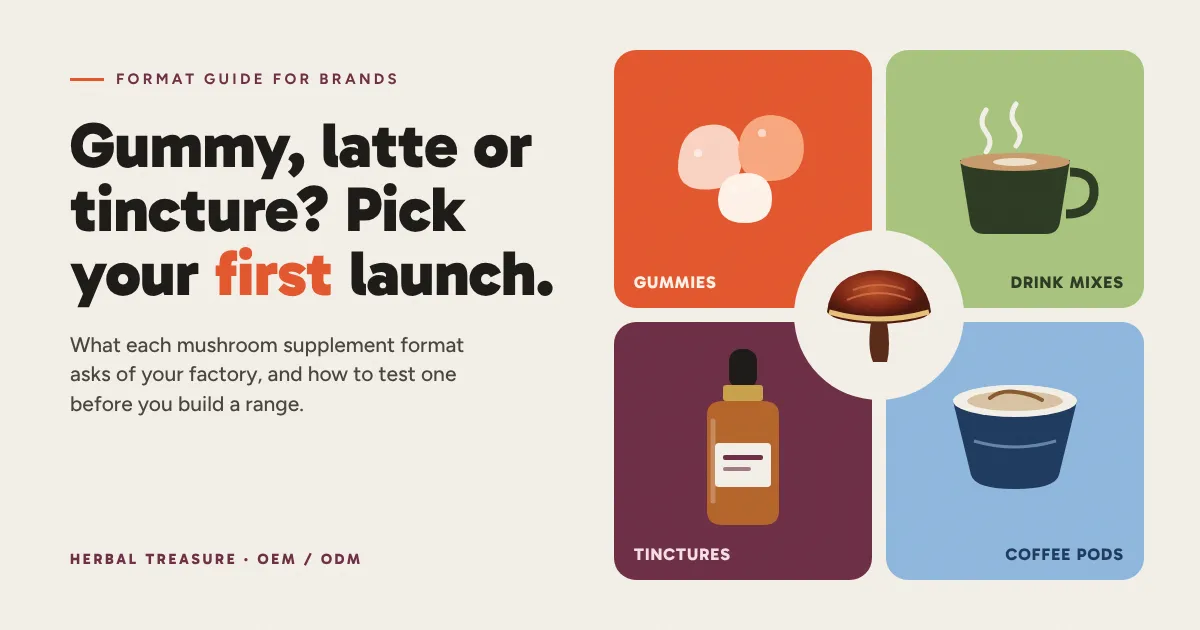

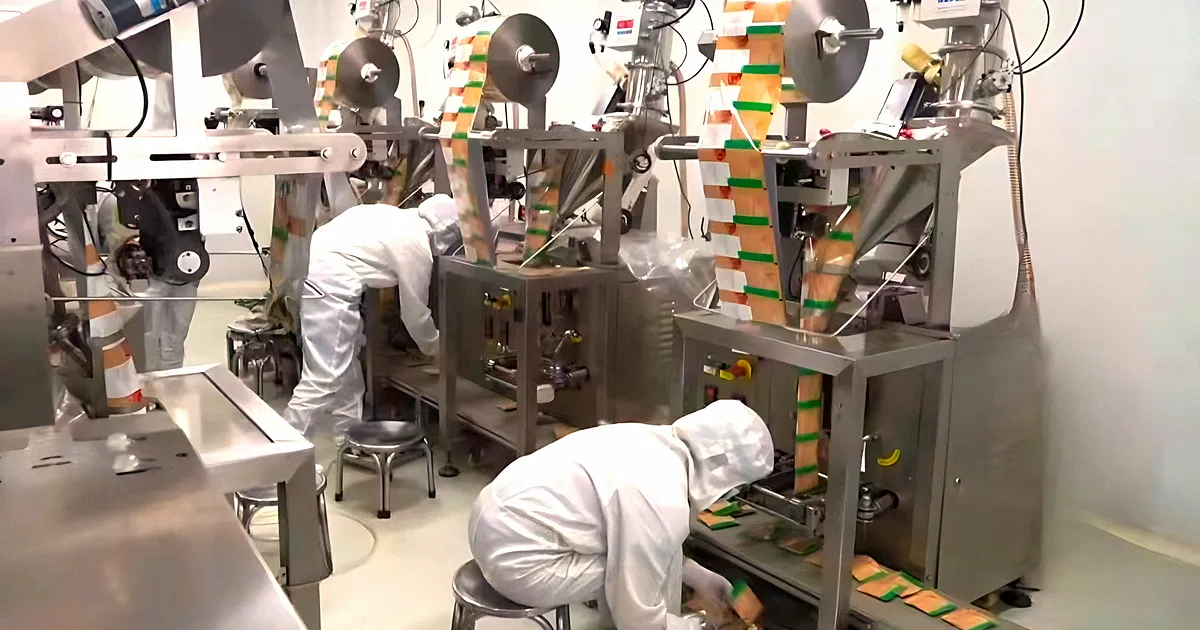
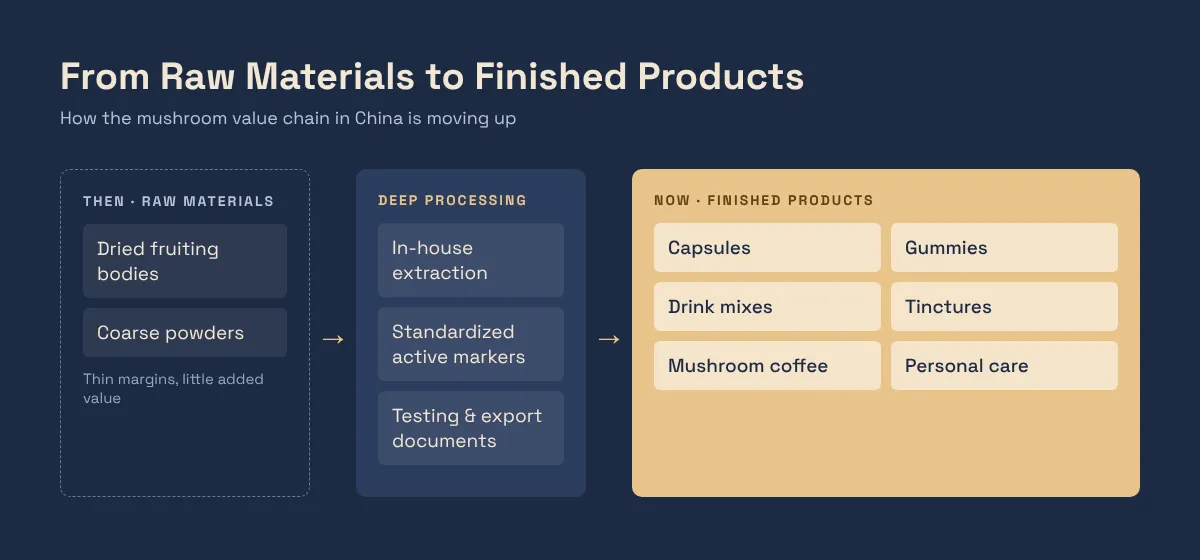
Mushroom supplement manufacturers in China are moving from selling raw materials to delivering finished products. For years, the industry mainly exported dried mushrooms and coarse powders. Today, driven by cross-border e-commerce, more and more overseas brands are ordering finished capsules, gummies, drink mixes, and tinctures through OEM and ODM manufacturing.
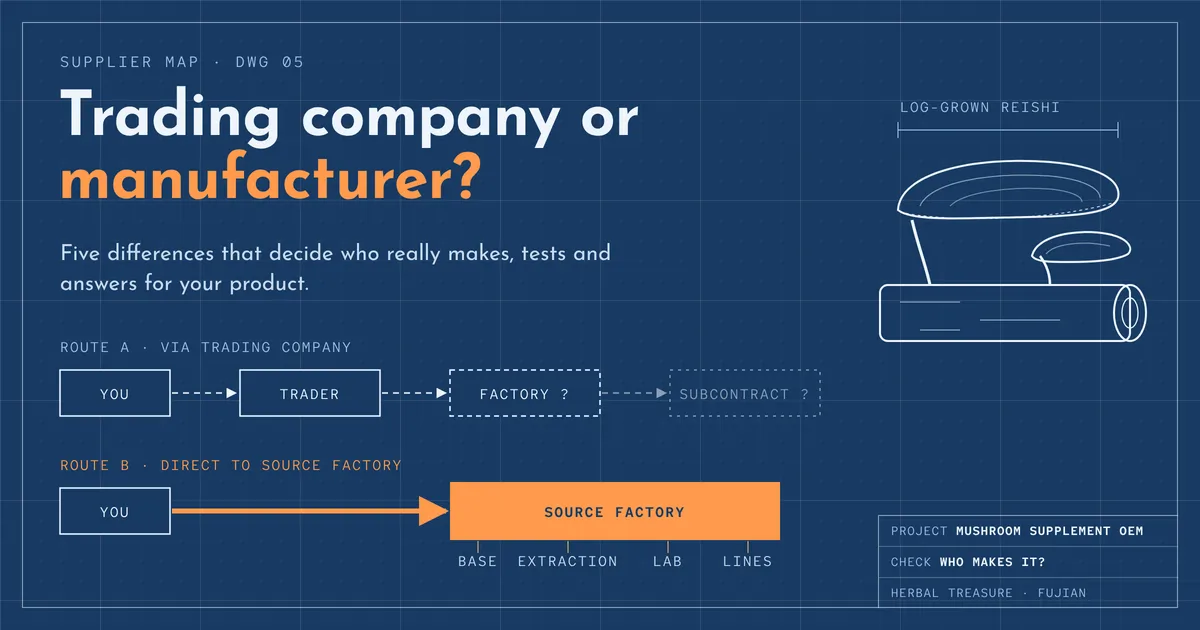
For brands that source from China, this shift changes what a good partner looks like. Below, we explain where the industry started, what is driving the change, and the three capabilities that set a finished-product manufacturer apart.
Where China’s Mushroom Industry Started: Exporting Raw Materials
China grows the majority of the world’s cultivated mushrooms and is the largest producer of medicinal mushroom raw materials. For a long time, however, most exports were basic ingredients, such as dried whole mushrooms (fruiting bodies) and coarse powders.
That model had clear limits. Raw materials are sold on thin margins and add little value, and the more profitable work of turning them into branded products happened elsewhere.
Why Overseas Brands Now Want Finished Mushroom Supplements
The rapid growth of Amazon, independent brand websites, and cross-border B2B platforms has changed what overseas brands ask for. Many are no longer satisfied with buying powder by the kilogram. They want a factory in China to handle the formula, the finished dosage form, the testing, and the export documents as a complete service.
As a result, demand for OEM and ODM manufacturing of mushroom supplements has grown sharply.
3 Capabilities That Separate Finished-Product Manufacturers
Not every mushroom ingredient supplier can make this shift. There are three main thresholds.
1. Control Over Raw Materials
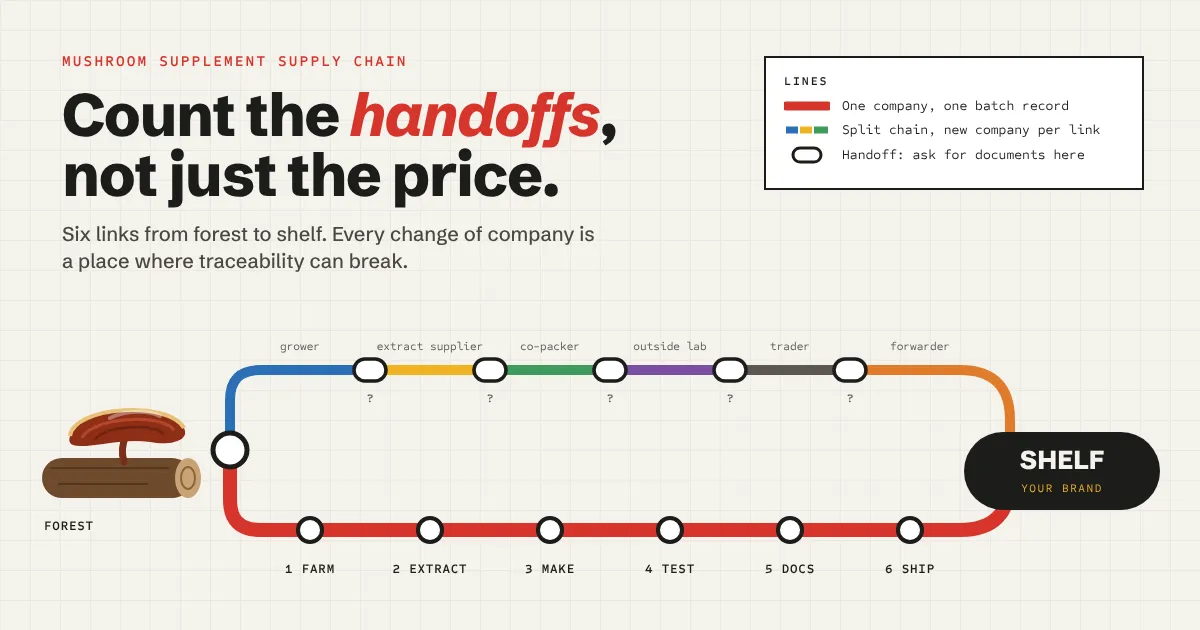
A finished-product manufacturer needs a reliable, traceable source of mushrooms. That means its own forest-grown cultivation base, supported by a sustainable wild-harvesting network, so every ingredient can be traced back to where it came from.
2. Deep Processing and Extraction Capability
Turning mushrooms into consistent supplements requires an in-house extraction workshop and proprietary processes such as low-temperature cell-wall disruption and membrane concentration. These help keep active markers stable from batch to batch, including polysaccharides, beta-glucan, and cordycepin.
3. Export Compliance Credentials
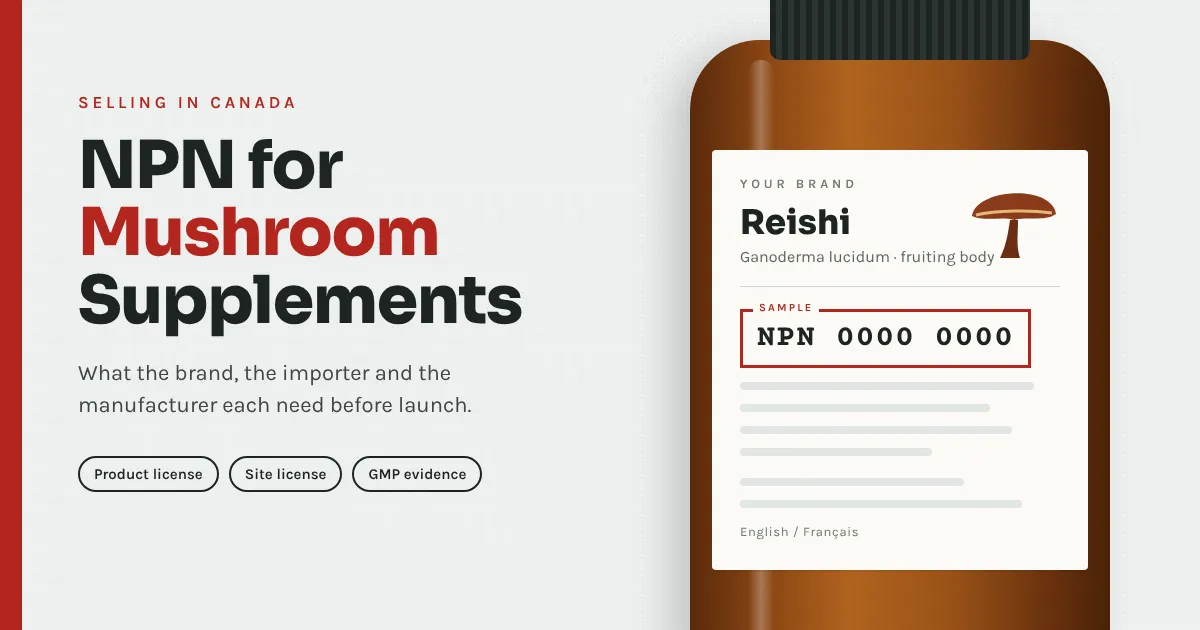
Selling into North America, the European Union, and Southeast Asia requires the right paperwork. A manufacturer needs a full set of organic, food safety, Halal, and Kosher certifications that match each target market.
Herbal Treasure: One Example of the Shift
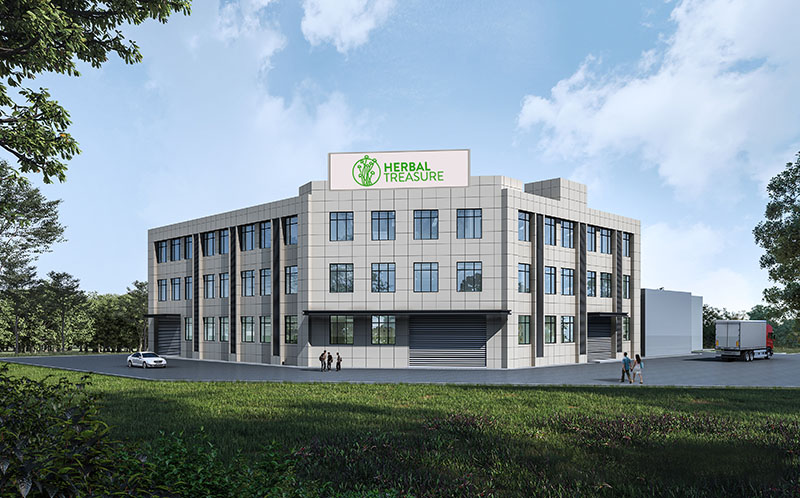
Herbal Treasure is one example of how a Chinese mushroom manufacturer has made this transition. Alongside base ingredients such as mushroom powders and extracts, we manufacture a wide range of finished formats:
- Capsules
- Gummies
- Tinctures
- Mushroom coffee
- Personal care products
With more than 5,000 proven formulas and an R&D team of more than 100 people, we support both OEM (your formula, our production) and ODM (our formulas, adapted to your brand). International delivery typically takes 7–14 days, with customs clearance and warehousing support.
What This Means for Brands Sourcing Mushroom Supplements
Cross-border e-commerce is pushing the whole supply chain to upgrade. The manufacturers that can deliver standardized active compounds, finished products in multiple formats, and complete export documentation are the ones winning global orders.
For brands, that means you can now ask more of your Chinese partner. Deep processing, compliance, and customization have become the core strengths to look for.
Frequently Asked Questions
Can Chinese manufacturers produce finished mushroom supplements?
Yes. Many mushroom manufacturers in China now go beyond raw materials and produce finished capsules, gummies, drink mixes, tinctures, and mushroom coffee under OEM or ODM agreements.
What should I look for in a mushroom supplement manufacturer in China?
Look for three things: traceable raw materials from the manufacturer’s own cultivation base, in-house extraction that keeps active markers consistent, and certifications that match your target markets.
How long does international delivery take from China?
At Herbal Treasure, international delivery usually takes 7–14 days, with customs clearance and warehousing support available.