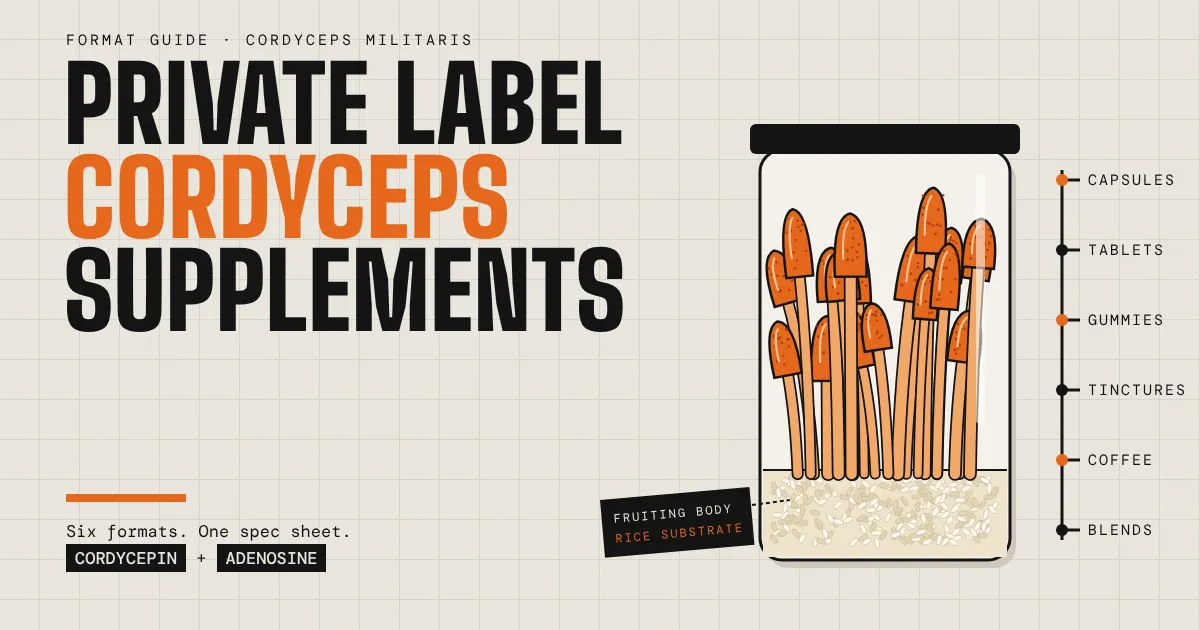



If you are sourcing cordyceps militaris extract for a supplement brand, two numbers decide its quality: cordycepin and adenosine. Color and appearance tell you very little. Two powders that look identical can differ widely in these compounds, so write both into your specification before you place an order.
Cordyceps militaris (yong chong cao) is one of the most popular ingredients in the sports nutrition and energy category overseas, and many brands now sell cordyceps capsules and cordyceps coffee. This guide explains what to look for, where buyers go wrong, and how to set a specification that holds up batch after batch.
What Is Cordyceps Militaris, and Why Is It So Popular?
Cordyceps militaris is the mainstream species behind commercial cordyceps products sold internationally, and the global market for cordyceps extracts is growing fast, especially for standardized extract powders. Capsules, powdered drink mixes, and tinctures made with cordyceps are seeing steady sales growth through cross-border e-commerce in North America and Europe, where they are mainly positioned in the sports nutrition and energy category.
The Most Common Mistake When Buying Cordyceps Powder
Many buyers check only the product name, “cordyceps powder”, and never confirm the cordycepin and adenosine content. The result is inconsistency between batches: one shipment meets expectations, the next does not.
For a brand selling on Amazon or its own website, that inconsistency becomes a business problem. Customers notice when a product changes, and negative reviews and complaints soon follow.
3 Things to Check When Sourcing Cordyceps Extract
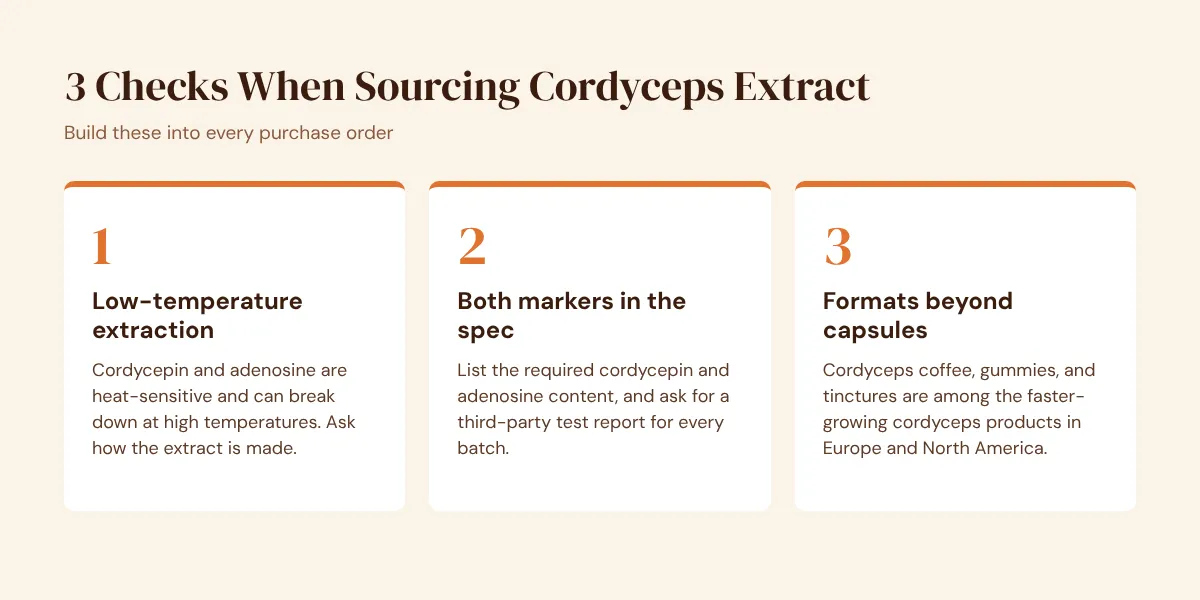
1. Insist on Low-Temperature Extraction
Cordycepin and adenosine are heat-sensitive compounds that can break down easily at high temperatures. Ask your supplier how the extract is produced, and look for a low-temperature extraction process that protects these compounds.
2. Put Cordycepin and Adenosine in Your Specification
Your purchasing specification should list a required content for both cordycepin and adenosine. Then ask for a third-party test report for every batch, so you can confirm each shipment meets the specification before it reaches your customers.
3. Look Beyond Capsules
Capsules are the classic format, but they are not the only option. Cordyceps coffee, cordyceps gummies, and cordyceps tinctures are among the faster-growing cordyceps products in Europe and North America, and they can help a brand stand out on a crowded marketplace.
How Herbal Treasure Produces Cordyceps Militaris Extract
At Herbal Treasure, our cordyceps militaris is grown in greenhouses under standardized cultivation conditions, which supports consistency from one harvest to the next. We then use low-temperature extraction to protect the cordycepin and adenosine in the raw material.
What we offer:
- Ingredients:cordyceps powder and cordyceps extract
- Finished products:capsules, gummies, powdered drink mixes, and coffee
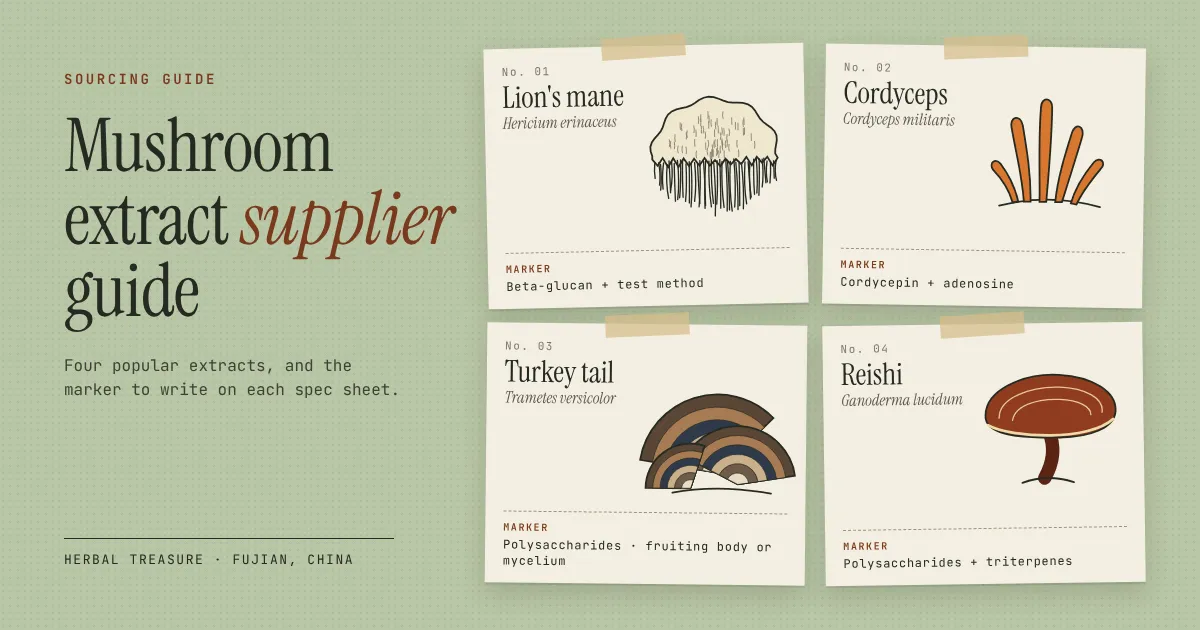
- Blends:multi-mushroom formulas, such as cordyceps with lion’s mane (hou tou gu) and reishi (ling zhi)
- Certifications:USDA Organic and EU Organic, in an FDA-registered facility
Our products are exported to more than 40 countries and regions across Europe, North America, and Southeast Asia.
Make Cordycepin and Adenosine Part of Every Order
When you develop a cordyceps product for international markets, cordycepin and adenosine are the markers that count. Write them into your purchasing specification, and check them on every batch.
Frequently Asked Questions
What should I look for in a cordyceps militaris extract?
Look for a specified cordycepin and adenosine content, a low-temperature extraction process, and a third-party test report for every batch. Appearance and product name alone tell you little about quality.
Why is low-temperature extraction important for cordyceps?
Cordycepin and adenosine are heat-sensitive and can break down at high temperatures. Low-temperature extraction helps preserve them in the finished extract.
What products can be made with cordyceps extract?
Besides capsules, cordyceps extract is used in coffee, gummies, powdered drink mixes, and tinctures. It is also often blended with other mushrooms such as lion’s mane and reishi.