

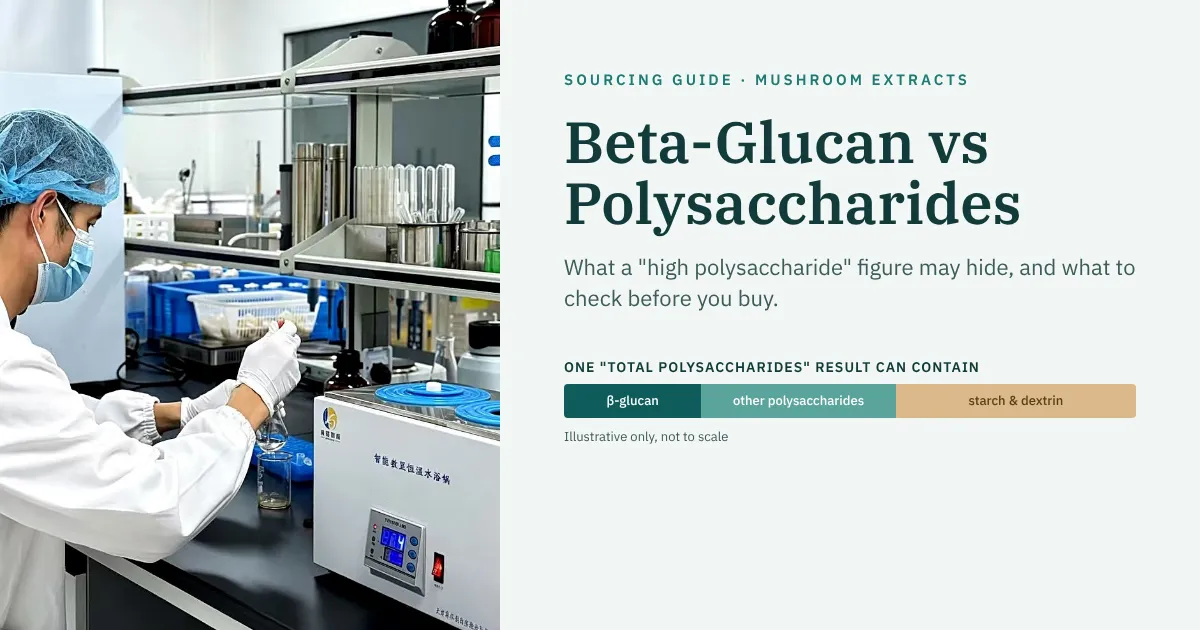
When you compare beta-glucan vs polysaccharides on a mushroom extract spec sheet, the short answer is this: beta-glucan is the number that matters most. “Total polysaccharides” is a broad measurement that can include ordinary carbohydrates such as starch and dextrin, so a high polysaccharide figure does not guarantee a high beta-glucan content.
This is one of the most common technical traps in cross-border sourcing. A supplier may label an extract “40% polysaccharides” while its beta-glucan content is low. Below, we explain the difference, why it matters for brands selling overseas, and three practical steps to protect yourself when you buy.
What Is the Difference Between Beta-Glucan and Polysaccharides?
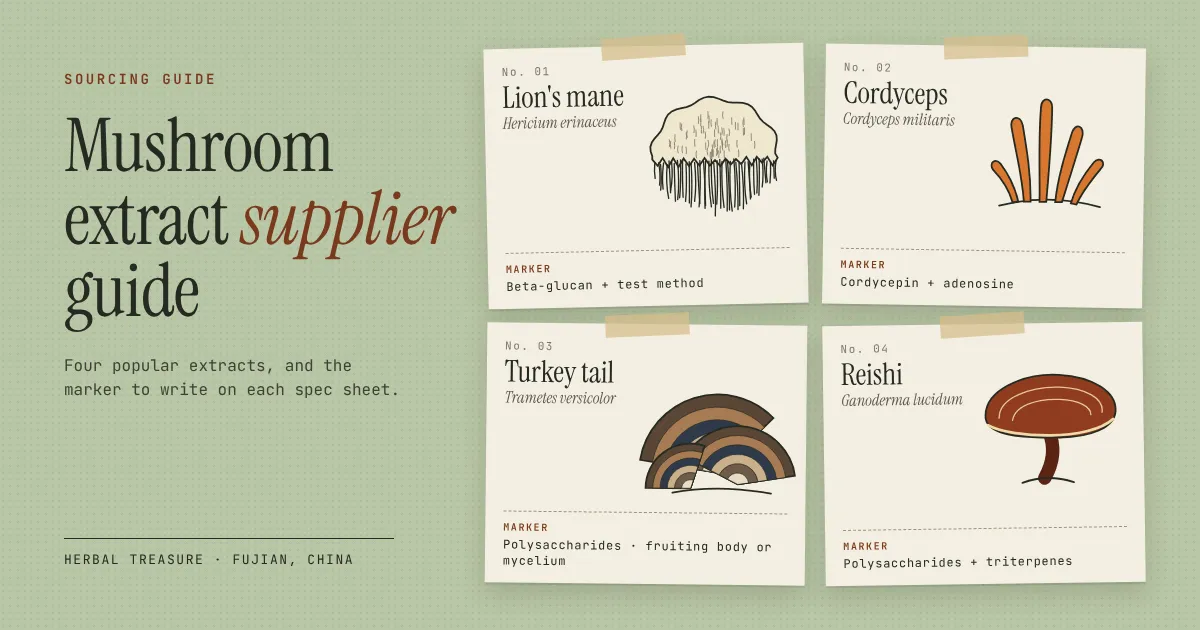
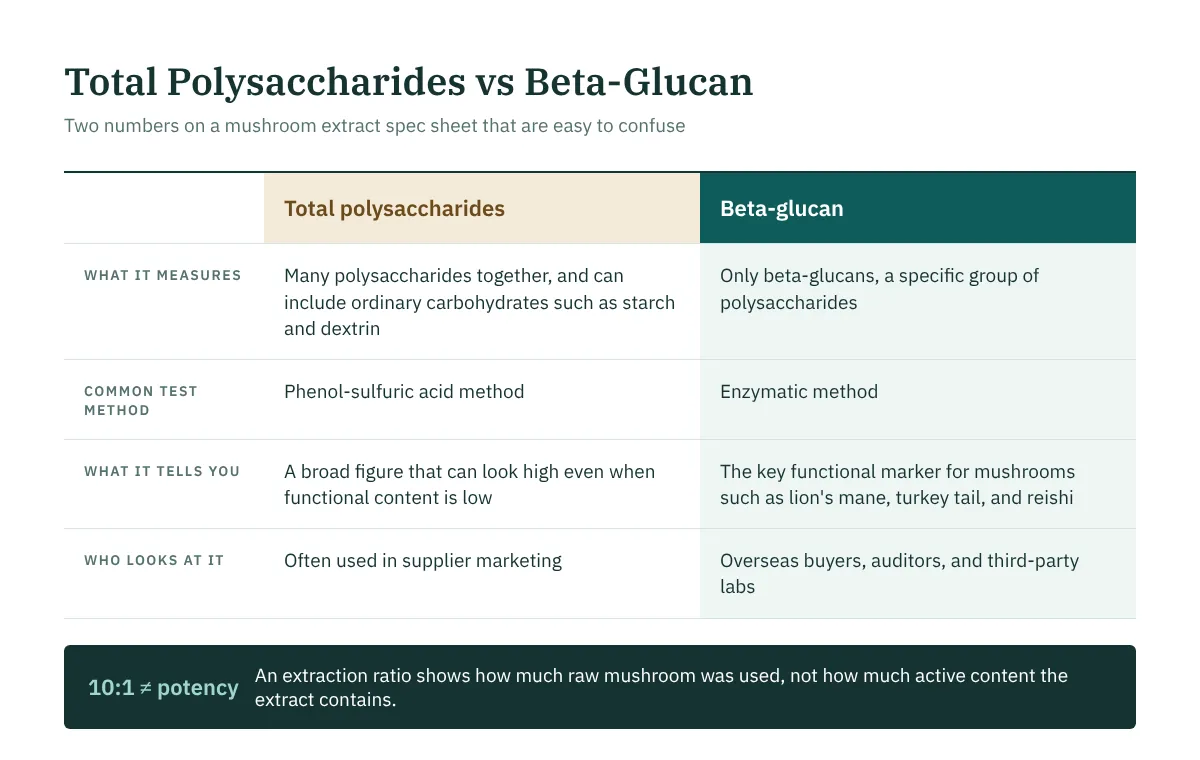
Polysaccharides are a large family of long-chain carbohydrates. A general polysaccharide test measures all of them together, including common carbohydrate fillers. Beta-glucans are one specific group of polysaccharides, and they are the key functional marker for mushrooms such as lion’s mane (hou tou gu), turkey tail (yun zhi), and reishi (ling zhi).
Think of it this way: every beta-glucan is a polysaccharide, but not every polysaccharide is a beta-glucan. When overseas buyers, auditors, and third-party labs review a mushroom supplement, they generally give more weight to beta-glucan data than to a total polysaccharide figure.
Why a High Polysaccharide Number Can Be Misleading
Some suppliers promote a high polysaccharide percentage because it looks impressive. But if the total includes starch or dextrin, the beta-glucan content may be far lower than the headline number suggests.
For a brand, that gap creates real risk:
- Lab results that don’t match your label.When an independent lab tests your product overseas, the measured values may not match what you advertised.
- Negative reviews and listing problems.More and more buyers, and the third-party labs that marketplaces rely on, look at beta-glucan. A mismatch between label and lab result can lead to complaints, poor reviews, and the risk of a listing being removed.
- Inconsistent batches.Without a beta-glucan specification, there is nothing to hold each new batch to.
How to Buy Mushroom Extracts With Confidence: 3 Practical Steps
You don’t need to be a chemist to avoid this trap. Build these three checks into every purchase.
1. Specify Both Numbers, and the Test Method, in Your Contract
Write both total polysaccharides and beta-glucan into your contract and product specification, and state the test method for each. Total polysaccharides are commonly measured with the phenol-sulfuric acid method, while beta-glucan is usually measured with an enzymatic method. If the method isn’t written down, two labs can produce very different numbers from the same powder.
2. Ask for a Third-Party COA With Every Shipment
Require a certificate of analysis (COA) from a third-party laboratory for every batch you receive. A one-time test on a sample is not enough, because what matters is whether each production batch meets the specification.
3. Don’t Rely on Extraction Ratios Alone
Ratios such as “10:1” or “20:1” describe how much raw mushroom went into a given amount of extract. They do not tell you how much active content the extract contains. Always ask for measured compound data.
How Herbal Treasure Standardizes Its Mushroom Extracts
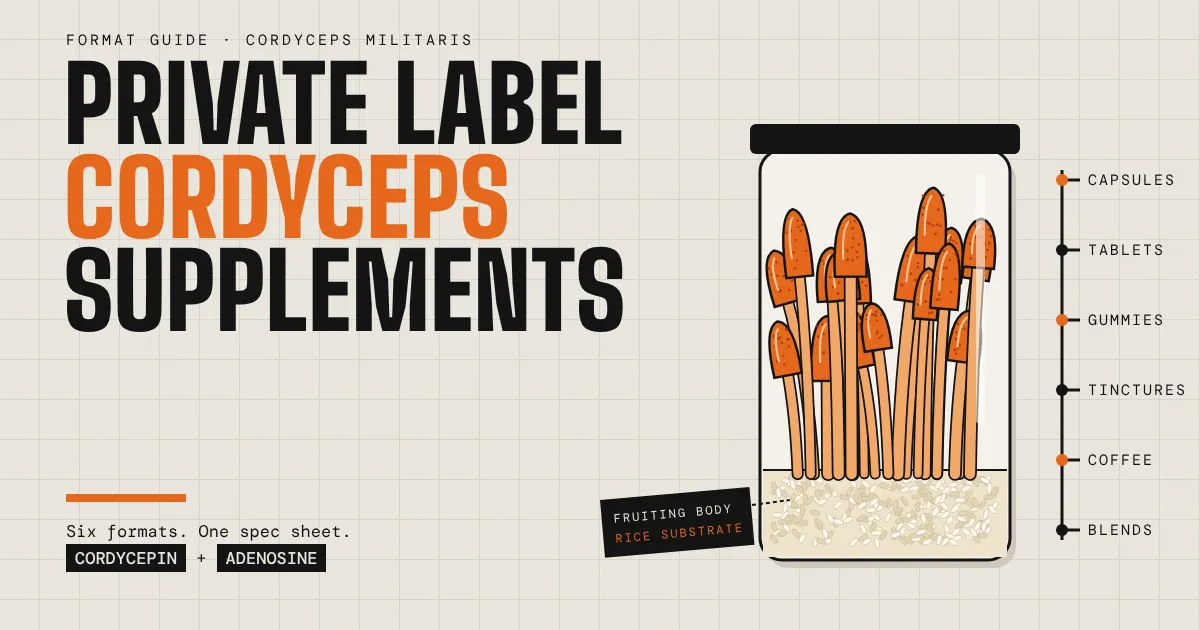
At Herbal Treasure, we can standardize extracts to the specification your product needs, including beta-glucan, cordycepin, adenosine, and triterpene content. A few examples:
- Lion’s mane extract:beta-glucan of 15% or higher
- Capsule products:beta-glucan above 35.5%
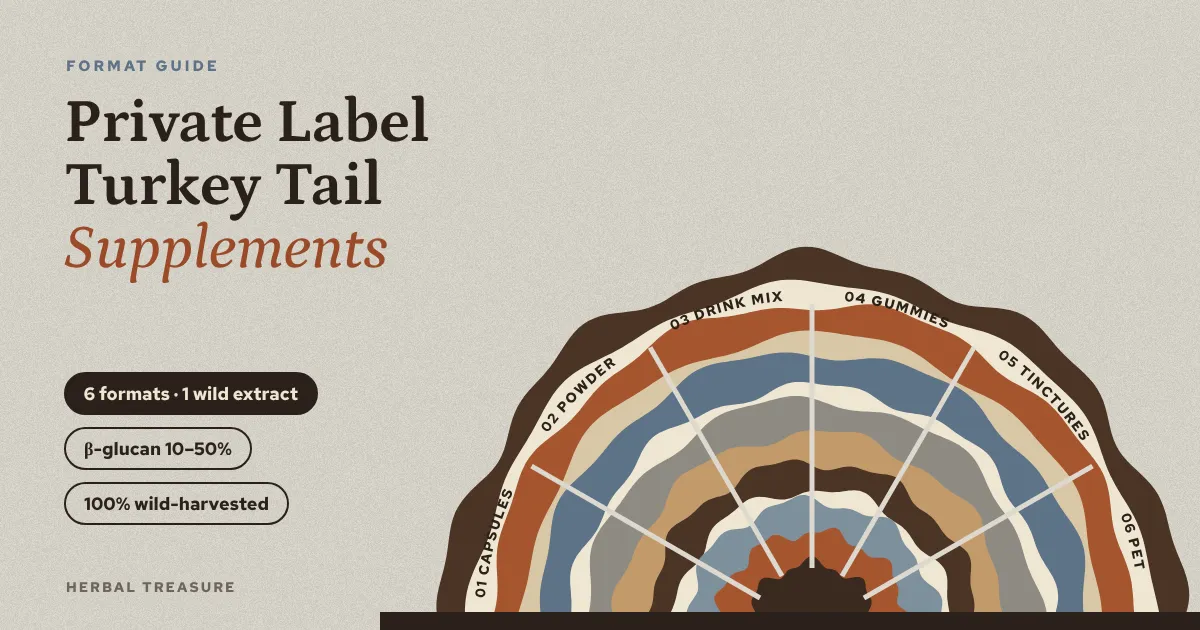
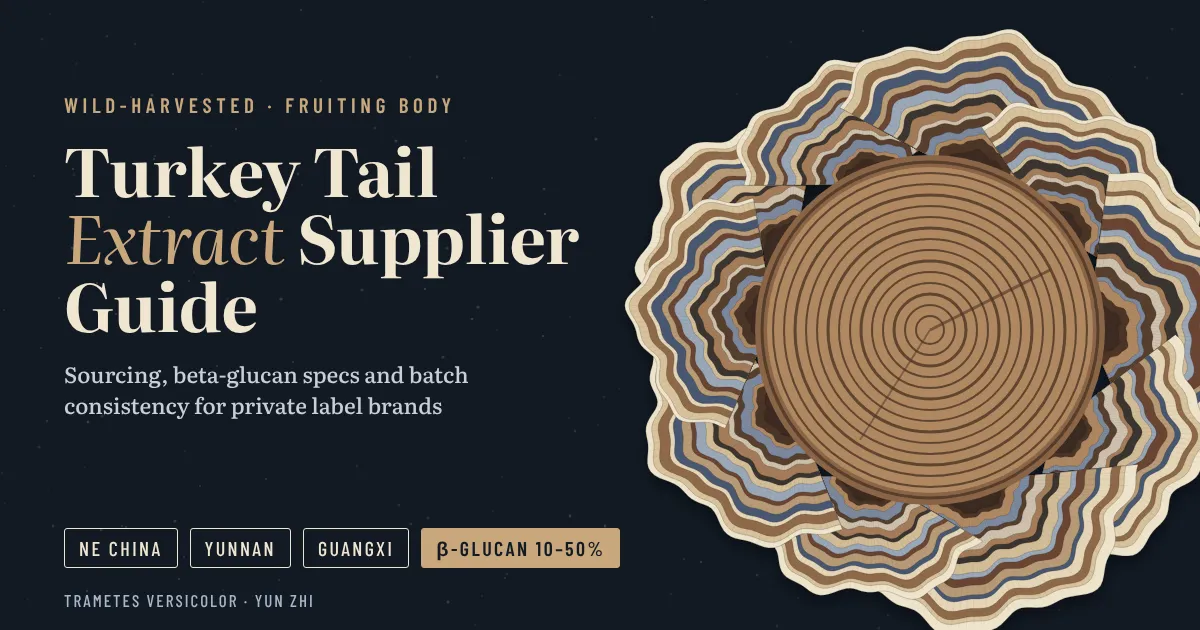
- Turkey tail extract:beta-glucan is the key controlled marker
Every batch can be supplied with a test report, so the documentation is ready when you list your product on Amazon or your own website. Our in-house laboratory also tests for heavy metals, active content, microbiology, and genetic identity, which confirms that each mushroom is the species stated on the label.
The Bottom Line on Beta-Glucan vs Polysaccharides
When you source mushroom extracts for international markets, don’t stop at the polysaccharide figure. Beta-glucan is the number overseas buyers look at, so make sure it is in your spec sheet, your contract, and every COA.
Frequently Asked Questions
Is beta-glucan the same as polysaccharides?
No. Beta-glucan is one type of polysaccharide. A total polysaccharide test measures many carbohydrates together, including starch and dextrin, while a beta-glucan test measures only beta-glucans.
Which is more important in a mushroom extract, beta-glucan or polysaccharides?
For most mushroom extracts, beta-glucan is the more meaningful marker. It is the figure that overseas buyers and third-party labs generally focus on, so it should always appear on your specification and COA.
How is beta-glucan tested in mushroom extracts?
Beta-glucan is usually measured with an enzymatic method, while total polysaccharides are commonly measured with the phenol-sulfuric acid method. Write the method for each into your contract so results can be compared.
Does a 10:1 extract mean it is stronger?
Not necessarily. An extraction ratio shows how much raw material was used, not how much active content the extract holds. Ask for measured beta-glucan or other compound data instead.