Halal mushroom supplements in four formats: a capsule bottle, a gummy jar, a dropper bottle and a coffee pouch, each set inside an arch, with reishi and lion’s mane illustrations
Same mushrooms, different details: halal depends on everything that goes around the extract.
Halal mushroom supplements start from an easy base: mushrooms such as reishi, lion’s mane and cordyceps are not animal-derived, so the raw material is rarely the problem. What decides whether a finished product can be certified halal is everything around the mushroom: the capsule shell, the gelling agent, the liquid base, the creamer, the flavors, and how the product is made and documented.
That is why two products with the same mushroom extract can have very different halal status. This guide walks through each common format, the markets where halal certification matters most, and the documents to ask your manufacturer for before you launch.
What Makes a Mushroom Supplement Halal?
A mushroom supplement is halal when every ingredient, processing aid and production step meets halal requirements, and a halal certification body has certified the product or its production. In practice, the risks sit in the non-mushroom ingredients: gelatin, alcohol, dairy, flavors and colors, plus contact with non-halal materials during production.
Halal is not a single global standard. Each certification body applies its own rules, and importing countries decide which bodies they recognize. So “halal” on a label only helps you if the certificate behind it is accepted in the market where you sell.
Halal Mushroom Supplements by Format
Each format has its own checkpoints. The checklist below sums them up, and the sections that follow explain each one.
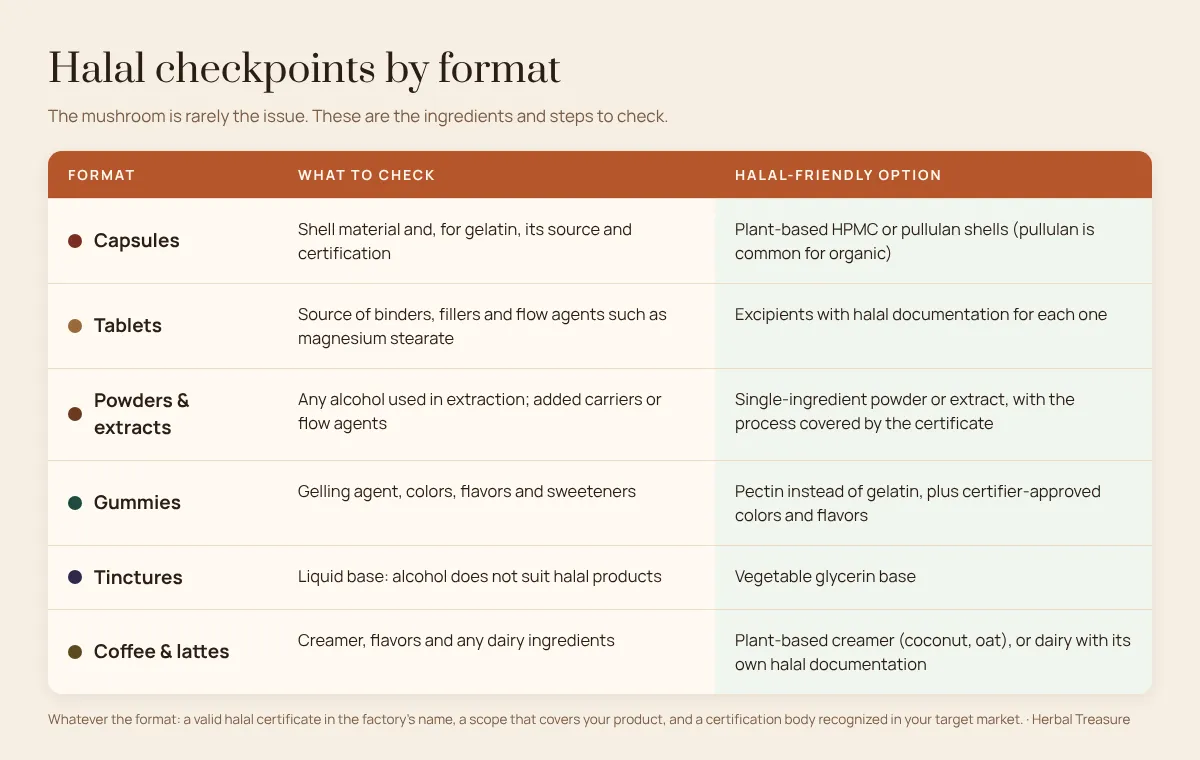
Halal mushroom supplements checklist by format: what to check for capsules, tablets, powders and extracts, gummies, tinctures and mushroom coffee or lattes
Six formats, six sets of checks. The mushroom is rarely the issue.
Capsules: Choose the Shell First
The capsule shell is often the first question halal buyers ask. Gelatin shells can come from animal sources, so their halal status depends entirely on where the gelatin comes from and how it is certified.
Plant-based shells avoid the question. We offer two:
- HPMC (hydroxypropyl methylcellulose) capsules, the most common vegetarian capsule
- Pullulan capsules, a polysaccharide made by fermenting starch, which is what we usually use for organic products
Both suit vegetarian and vegan positioning as well, which helps when one product is sold in several markets.
Tablets: Check the Excipients
Tablets contain more than the active ingredient. Binders, fillers and flow agents such as magnesium stearate can be made from plant or animal sources. Ask your manufacturer to confirm the source of each excipient, and make sure each one is covered by halal documentation.
Powders and Extracts: The Simplest Starting Point
A single-ingredient mushroom powder or extract is usually the easiest product to certify, because there is little in it besides the mushroom. Two points still deserve a question: whether alcohol is used at any stage of extraction, and whether any carrier or flow agent has been added. If alcohol is part of the process, ask how the halal certificate addresses it.
Gummies: Pectin Instead of Gelatin
Traditional gummies are set with gelatin. Our mushroom gummies are made with pectin only, a plant-derived gelling agent, so they are gelatin-free and vegan. That removes the biggest halal hurdle in this format.
The rest of the recipe still counts. Colors, flavors and sweeteners each need to be acceptable to your halal certifier, so choose them with certification in mind from the start. Our mushroom gummies and tinctures guide covers gummy recipes in more detail.
Tinctures: A Glycerin Base
Most mushroom tinctures are made with an alcohol base, which does not suit halal products. The alternative is vegetable glycerin, which gives an alcohol-free tincture with a milder, slightly sweet taste. Our halal tinctures are made with a glycerin base. Our mushroom tincture manufacturer guide compares the two bases side by side.
Mushroom Coffee and Lattes: Watch the Creamer
Drink mixes have the longest ingredient lists, so they need the most checking. The creamer is the main point. Plant-based creamers made from coconut or oat are simpler, while a dairy creamer needs its own halal documentation. Flavors such as vanilla or caramel should be checked the same way.
Where Halal Certification Matters: Southeast Asia and the Gulf
Halal certification matters most in markets with large Muslim populations, especially in Southeast Asia and the Gulf. The rules differ from country to country and change often, so treat this as an overview and confirm the current requirements with your importer or a regulatory consultant before you ship.
- Indonesiais phasing in mandatory halal certification under Law No. 33 of 2014, overseen by the halal product assurance agency BPJPH. Imported products can rely on a foreign halal certificate only if the issuing body is recognized by BPJPH and the certificate is registered in Indonesia. Deadlines for different product categories have been adjusted several times, so check the current status for supplements.
- Malaysiarecognizes halal certificates from foreign certification bodies on a list kept by JAKIM, the Department of Islamic Development Malaysia. Imported products labeled halal need a certificate from a body on that list.
- The United Arab Emiratesrecognizes halal certificates issued by certification bodies registered with the Ministry of Industry and Advanced Technology (MoIAT), under the UAE halal products control system.
The pattern is the same everywhere: the certificate is only as useful as the body that issued it. Before you commit to a supplier, check that its halal certification body is recognized in each country on your launch plan. Our mushroom supplement compliance guide covers the requirements for the US, Canada and the EU.
Kosher Certification: A Similar Check With Different Rules
Kosher certification works on the same principle. A kosher certifier reviews the ingredients, their sources and the production process, and lists the approved products. The rules are different from halal, so a halal certificate does not make a product kosher, or the other way around.
If you sell to kosher-observant consumers in North America, Europe or elsewhere, ask for both certificates and check that each one lists your product. Many of the same choices help with both: plant-based capsule shells, pectin gummies and plant-based creamers.
5 Documents to Request Before You Launch Halal Mushroom Supplements
Ask your manufacturer for these before you approve the final formula:
- A valid halal certificate in the factory’s own name.A certificate held by another company does not cover the factory that makes your product.
- The certificate’s scope.Check that your product, or its category, is covered. A new product may need to be added to the scope before it can be sold as halal.
- Halal documentation for each ingredient.This includes the capsule shell, excipients, flavors, colors and creamer, not just the mushroom.
- A certificate of analysis (COA) for each batch.Halal status does not replace quality testing. Our guide on how to read a mushroom extract COA explains what to look for.
- Country-specific documents.Some importers and registration agencies ask for extra paperwork. Confirm the list with your importer early.
How Herbal Treasure Makes Halal Mushroom Supplements
Herbal Treasure has worked with medicinal mushrooms in Fujian, China, since 2003, and supplies brands in more than 40 countries and regions. We hold Halal and Kosher certification alongside NSF cGMP, ISO 22000, FSSC 22000, HACCP, USDA Organic, EU Organic and Canada Organic.
- Capsulesin HPMC or pullulan shells, with pullulan usually used for organic products
- Gummiesmade with pectin only, gelatin-free and vegan
- Tinctureswith a glycerin base for halal versions
- Powders, extracts and drink mixes, with plant-based creamer options such as coconut and oat
- Documents:halal certificate, COA for each batch, and factory certificates, with country-specific documents prepared as far as possible
- MOQ from 500 units per SKU, with standard production in 15–20 days and deep customization in 4–6 weeks. Adding a new product to the halal certificate’s scope may take extra time.
Tell us which markets you plan to sell in, and we will check the formula, format and documents against each one. Request a manufacturing quote.
Frequently Asked Questions
Are mushroom supplements halal?
Mushrooms themselves are not animal-derived, so the raw material is generally acceptable. Whether a finished supplement is halal depends on its other ingredients, such as the capsule shell, gelling agent, liquid base or creamer, and on how it is produced. Look for a recognized halal certificate that covers the product.
Are capsules halal?
It depends on the shell. Gelatin capsules can come from animal sources, so their status depends on the gelatin’s origin and certification. Plant-based HPMC and pullulan capsules avoid this issue and also suit vegetarian and vegan products.
Can a mushroom tincture be halal?
Yes, if it is made without alcohol. Halal mushroom tinctures typically use a vegetable glycerin base instead. Herbal Treasure makes its halal tinctures with a glycerin base.
Is a halal certificate accepted in every country?
No. Each importing country decides which halal certification bodies it recognizes. Indonesia, Malaysia and the UAE each keep their own systems, so check that your manufacturer’s certification body is recognized in every market you plan to sell in.
Sources
- “Keeping Up with Indonesia’s Halal Regulation Updates: A Focus on Food & Health Supplements”, ChemLinked, updated October 2026
- “Malaysia’s List of Recognized Foreign Halal Certification Bodies”, ChemLinked, August 2026
- Registration of Halal Certification Bodies, UAE Ministry of Industry and Advanced Technology (MoIAT)