
Mushroom tincture manufacturer graphic: 30 ml, 60 ml and 120 ml amber dropper bottles with a blank brand label, a dropper, reishi and cordyceps
From mushroom to dropper: base, strength and bottle are the three decisions that shape every tincture.
A good mushroom tincture manufacturer does more than fill bottles. It extracts the mushroom, chooses the right liquid base with you, states the strength clearly on the label, and fills and tests every batch in a dedicated liquid workshop. Those are the questions to ask before you sign off on a private label tincture.
This guide walks through each decision, from dual extraction and alcohol-free bases to bottle sizes, so your spec sheet is ready before you ask for a quote.
What Is a Mushroom Tincture?
A mushroom tincture is a concentrated liquid made from mushroom extract and a liquid base, usually alcohol or vegetable glycerin, sold in a glass dropper bottle. People take it from the dropper or add a few drops to water, tea, coffee or a smoothie, which makes the serving easy to adjust.
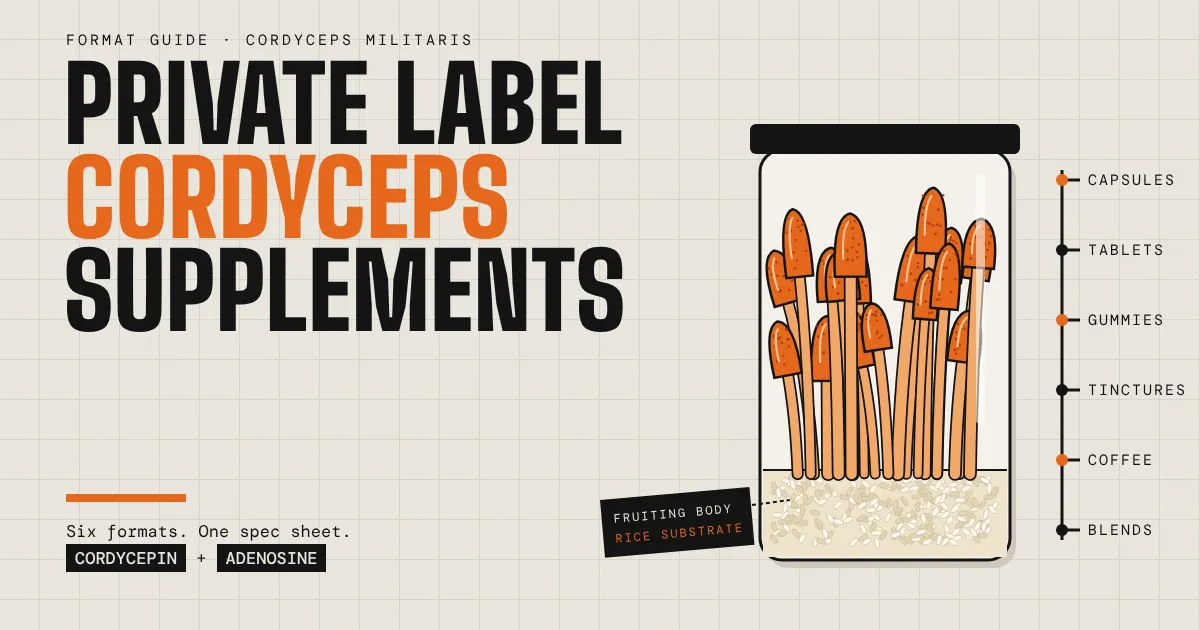
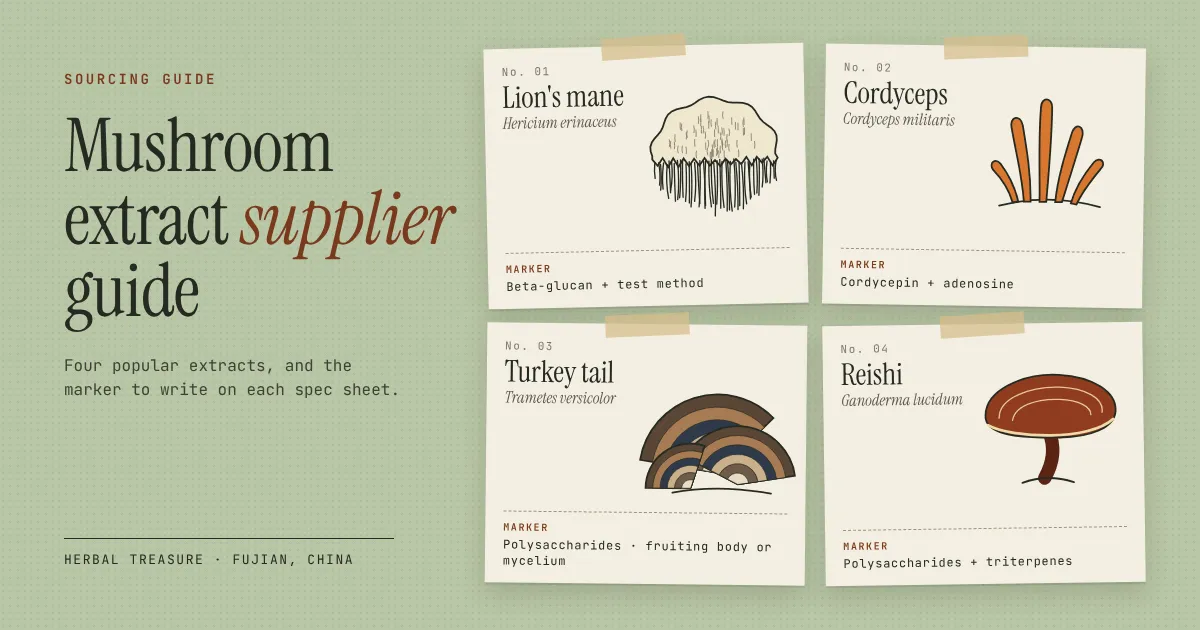
Common choices include reishi (ling zhi, Ganoderma lucidum), lion’s mane (hou tou gu, Hericium erinaceus), cordyceps (Cordyceps militaris) and chaga (bai hua rong, Inonotus obliquus), alone or as multi-mushroom blends.
Why Supplement Brands Add Mushroom Tinctures
Tinctures reach a different shopper from capsules. Some people simply do not like swallowing pills. Others already use herbal drops and prefer a format they can mix into the drinks they have every day.
For brands, a tincture is a practical way to extend a mushroom line:
- A new format for an existing extract.If you already sell lion’s mane or reishi capsules, the same extract can go into a tincture.
- A good fit for direct-to-consumer (DTC) stores.Tinctures are a familiar product on brand websites that sell natural health products to experienced buyers.
- A flexible serving.The shopper decides whether to take it straight or in a drink.
Tinctures are still not as simple as they look. Not every supplement factory has a liquid workshop, and a capsule line cannot be switched over to make drops. Before you choose a partner, ask to see where the liquid products are made.
Dual Extraction: How Mushroom Tinctures Are Made
Dual extraction means the mushroom goes through two extraction steps: one in hot water and one in alcohol. The two liquids are then combined. The aim is to draw out a broader range of compounds than either solvent would on its own, since some dissolve more readily in water and others in alcohol.
At Herbal Treasure, we can make mushroom tinctures with dual extraction. Because we run our own extraction workshop, the extract that goes into your tincture is made in the same facility that fills the bottle. That keeps the chain short and makes each batch easier to trace.
Not every tincture needs dual extraction. A glycerin-based or alcohol-free product, for example, is usually built from a finished mushroom extract instead. Tell us how you want the label to read, and we will recommend the route that fits.
Alcohol vs Glycerin: Choosing the Base for Your Mushroom Tincture
The base is the biggest decision in a tincture. Alcohol-based tinctures are the classic herbal format. Glycerin-based tinctures, sometimes called glycerites, are alcohol-free and taste naturally sweet. Your target market, your label claims and any certification you need will usually decide which one is right.
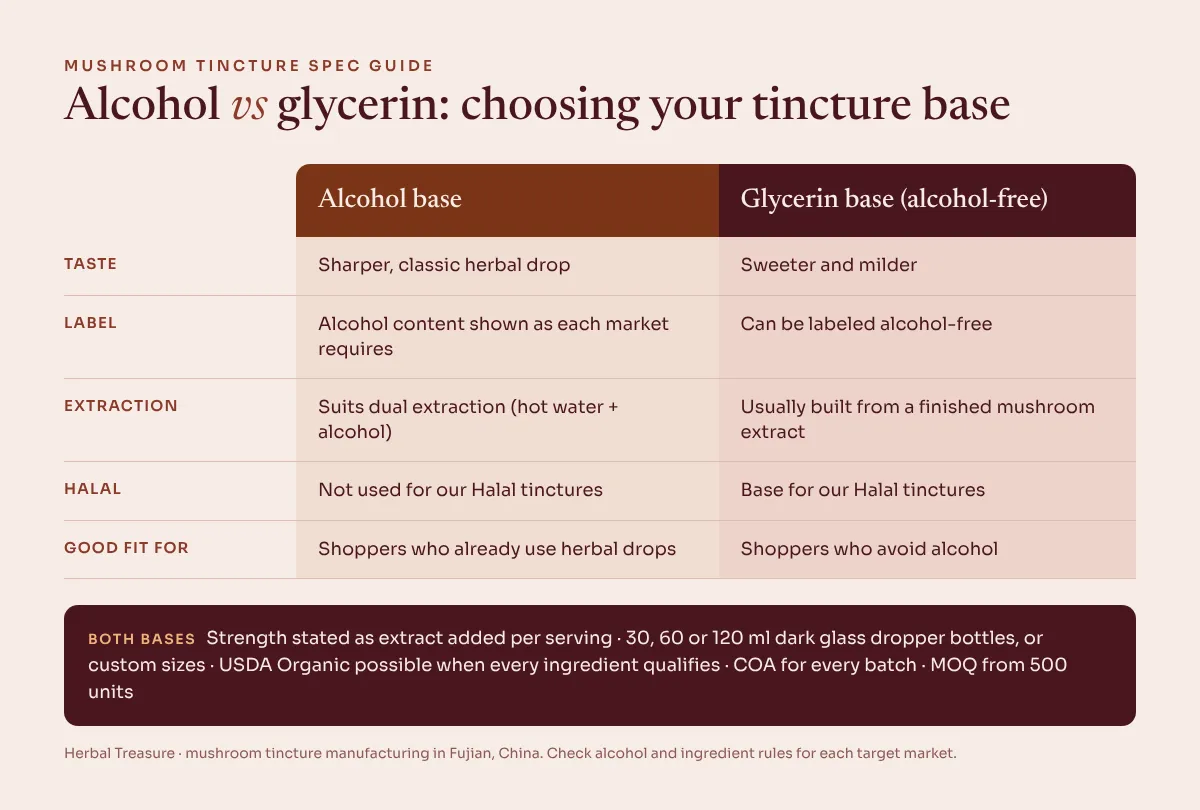
Mushroom tincture alcohol vs glycerin base comparison: taste, label, extraction, Halal and best fit, plus bottle sizes and MOQ
Alcohol or glycerin: how the base changes your label, certification and extraction options.
Alcohol-Based Mushroom Tinctures
Alcohol is the traditional choice for herbal tinctures, and it is the solvent used in the second step of dual extraction. It suits brands that sell to shoppers who already know herbal drops. Rules on alcohol content and how it must appear on the label differ between countries, so confirm them for each market you sell in.
Glycerin-Based (Alcohol-Free) Mushroom Tinctures
Vegetable glycerin gives you an alcohol-free product with a sweeter, milder taste. It is the natural choice if you want “alcohol-free” on the label, or if your customers avoid alcohol for personal or religious reasons. Our Halal tinctures are made with a glycerin base.
How Tincture Strength Is Stated on the Label
Mushroom tincture strength is usually stated as the amount of mushroom extract added per serving, for example a set number of milligrams in each full dropper. This is how we state strength on Herbal Treasure tinctures. It gives shoppers a number they can compare and gives you a clear target to check on the certificate of analysis (COA).
When you write your spec, include:
- The mushroom extract used and the amount added per serving
- The serving size, such as one full dropper
- The marker you want reported on the COA, such as polysaccharides or beta-glucan
For more on choosing a marker, see our guide to beta-glucan vs polysaccharides.
Tincture Bottle Sizes, Droppers and Packaging
Herbal Treasure fills mushroom tinctures in 30 ml (1 fl oz), 60 ml (2 fl oz) and 120 ml (4 fl oz) dropper bottles, and other sizes can be made to order. The 60 ml bottle is a common size for mushroom tinctures. A 30 ml bottle works well as a trial or travel size, and a 120 ml bottle suits regular users.
- Bottle color:you can choose the glass color. We recommend dark or amber glass, because it protects the liquid from light.
- Filling:our automatic filling lines fill 30,000 to 50,000 bottles a day.
- Packaging design:we can help design the bottle label, the outer box or a gift set.
Mushroom and Functional Tincture Formulas
Most of the tinctures we make are mushroom formulas: single-mushroom drops of reishi, lion’s mane, cordyceps or chaga, and multi-mushroom blends. In September 2026 we added 8 new ready tincture formulas to our library of more than 5,000 proven formulas, so you can start from a tested recipe and adjust it, or bring your own.
Our liquid workshop also makes functional formulas beyond mushrooms. These include ashwagandha, saffron, berberine, creatine monohydrate and shilajit, along with many other ingredients. Some brands use these to build a wider range around a mushroom core.
Ingredient rules vary from market to market, and some of these botanicals are restricted or need approval in certain countries. Check each ingredient for every market you plan to sell in. Our mushroom supplement compliance guide covers the main differences between the US, Canada and the EU.
Private Label Mushroom Tinctures: Your Spec Sheet Checklist
A clear spec sheet makes quotes comparable and samples easier to judge. Before you ask for a quote, decide on:
- Mushroom or formula:single mushroom, blend, or one of our ready formulas
- Extraction:dual extraction or a finished extract
- Base:alcohol or glycerin (alcohol-free)
- Strength:extract added per serving and the serving size
- COA marker:for example polysaccharides or beta-glucan
- Bottle:30, 60, 120 ml or a custom size, plus glass color and dropper type
- Certifications:USDA Organic, Halal, Kosher or others
- Target markets:so the formula and label can be checked against local rules
If you are also considering gummies, our mushroom gummies manufacturer guide compares the two formats side by side.
Why Work With Herbal Treasure as Your Mushroom Tincture Manufacturer
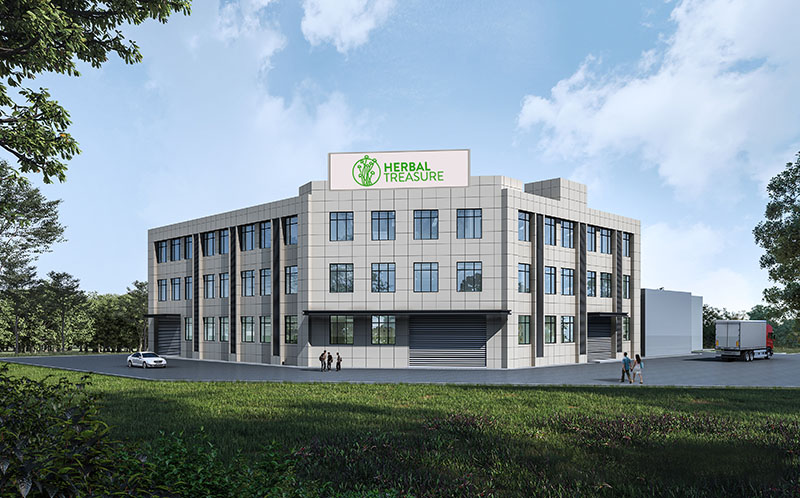
Herbal Treasure is a mushroom ingredient and supplement manufacturer in Fujian, China, with more than 20 years in medicinal mushrooms. We grow reishi at our own forest base, run our own extraction workshop, and make finished products under one roof.
- Dedicated liquid workshopwith automatic filling lines, alongside our capsule, tablet, powder and gummy workshops.
- Dual extractionin our own extraction workshop.
- Choice of base:alcohol or glycerin, with glycerin-based Halal versions.
- OEM or ODM:bring your own formula and we source the raw materials, or start from one of our ready formulas.
- Testing:an in-house lab for active content, heavy metals, microbiology and species identity, with a COA for every batch.
- Certifications:NSF cGMP, USDA Organic, EU Organic, Canada Organic, FSSC 22000, ISO 22000, HACCP, Halal and Kosher. USDA Organic tinctures are possible when every ingredient in the formula qualifies. Our facility is FDA-registered and holds a Health Canada Foreign Site Reference Number (FSRN).
- Orders:minimum order from 500 units per product; samples in 5–7 days for standard formulas or 7–14 days for custom ones; production in 15–20 days for standard orders or 4–6 weeks for deep customization.
To plan your launch dates, see our supplement manufacturing timeline. When you are ready, request a manufacturing quote and tell us your market, base and bottle size.
Frequently Asked Questions
What is a dual extract mushroom tincture?
A dual extract mushroom tincture is made by extracting the mushroom twice, once in hot water and once in alcohol, then combining the two liquids. Herbal Treasure can make mushroom tinctures by dual extraction in its own extraction workshop.
Can mushroom tinctures be alcohol-free?
Yes. Mushroom tinctures can be made with a vegetable glycerin base instead of alcohol. Herbal Treasure makes both alcohol-based and glycerin-based tinctures, and its Halal tinctures use a glycerin base.
What bottle sizes are available for private label mushroom tinctures?
Herbal Treasure fills mushroom tinctures in 30 ml (1 fl oz), 60 ml (2 fl oz) and 120 ml (4 fl oz) dropper bottles, and can make other sizes to order. Dark or amber glass is recommended to protect the liquid from light.
What is the minimum order for private label mushroom tinctures?
At Herbal Treasure, minimum orders start from 500 units per product. The exact quantity depends on the formula, bottle and packaging you choose.