
Low-temperature mushroom extraction draws water-soluble actives out of medicinal mushrooms without the prolonged high heat used in conventional processing, so that less of what you paid for in the raw material is lost along the way. In November 2026, a Fujian provincial research project led by Herbal Treasure on exactly this technology passed its official acceptance review, after meeting every target it had committed to.
This article reports what the project set out to do, what it delivered, and what the results mean, and do not mean, for brands that buy mushroom extracts or finished mushroom products.
Our Provincial Science and Technology Project Passes Acceptance
The project was funded under the Fujian Provincial Science and Technology Plan as a regional development project (project no. 2023N3004). Its full title translates as Key Technologies for the Low-Temperature Green Preparation of Active Substances from Juncao Edible and Medicinal Mushrooms, and the Development and Industrialization of Nutritional Functional Foods.
Herbal Treasure was the lead company. Our research partner was the College of Food Science at Fujian Agriculture and Forestry University.
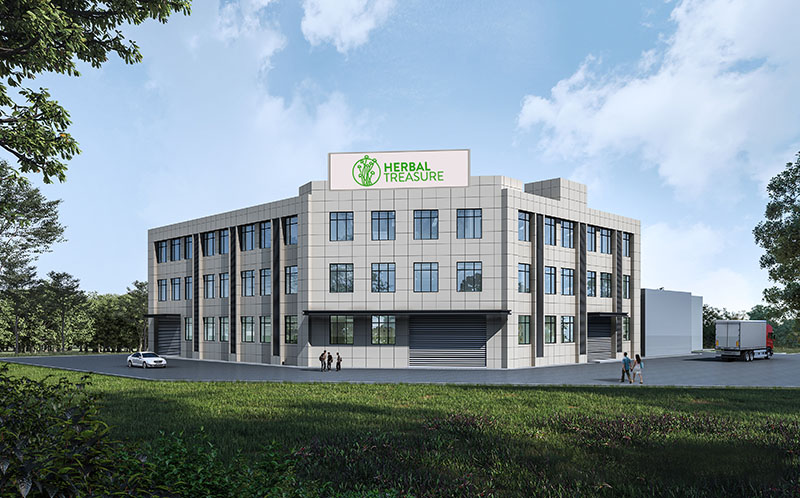
The acceptance review took place in Jiangle County, Sanming, where our facility and growing base are located. It was organized by the Fujian Provincial Department of Science and Technology. The expert panel included specialists from universities, research institutes and finance, and representatives of the provincial department, the Sanming Municipal Science and Technology Bureau and the Jiangle County Bureau of Industry and Information Technology attended.
The review followed the standard procedure for provincial projects:
- The panel examined the complete project archive.
- It heard a report on how the project had been carried out.
- It inspected two demonstration production lines at our site: one for the low-temperature preparation of mushroom actives, and one for reishi coffee.
- It questioned the project team, discussed the results, and checked each performance indicator against the project’s task document.
The panel concluded that the project had met all of its assessment indicators and agreed unanimously that it passed.
What Is Low-Temperature Mushroom Extraction?
Low-temperature mushroom extraction is a way of separating the water-soluble active substances in mushrooms, such as polysaccharides, while limiting the time the material spends at high temperature. The aim is to reduce the breakdown of heat-sensitive compounds during processing, so the finished extract keeps more of what the raw mushroom contained.
Hot-water extraction has long been the standard way to make mushroom extracts, and it works. The project built on northwest Fujian’s forest-grown and Juncao-grown mushroom resources, and started from three problems that are common in the industry:
- High loss of actives.Conventional heat processing can break down part of the active substances.
- Too little deep processing.Too few products go beyond basic processing.
- Low added value.As a result, much of the value of the raw material is never realized.
Our team and the university focused on the water-soluble actives of three mushrooms: lion’s mane (Hericium erinaceus), reishi (Ganoderma) and sanghuang (sang huang), a woody bracket mushroom. The work covered mushrooms from Juncao (jun cao, literally “fungus grass”) cultivation, which uses grasses as part of the growing substrate, as well as forest-grown mushrooms.
The Results: Extraction Yields for Three Mushrooms
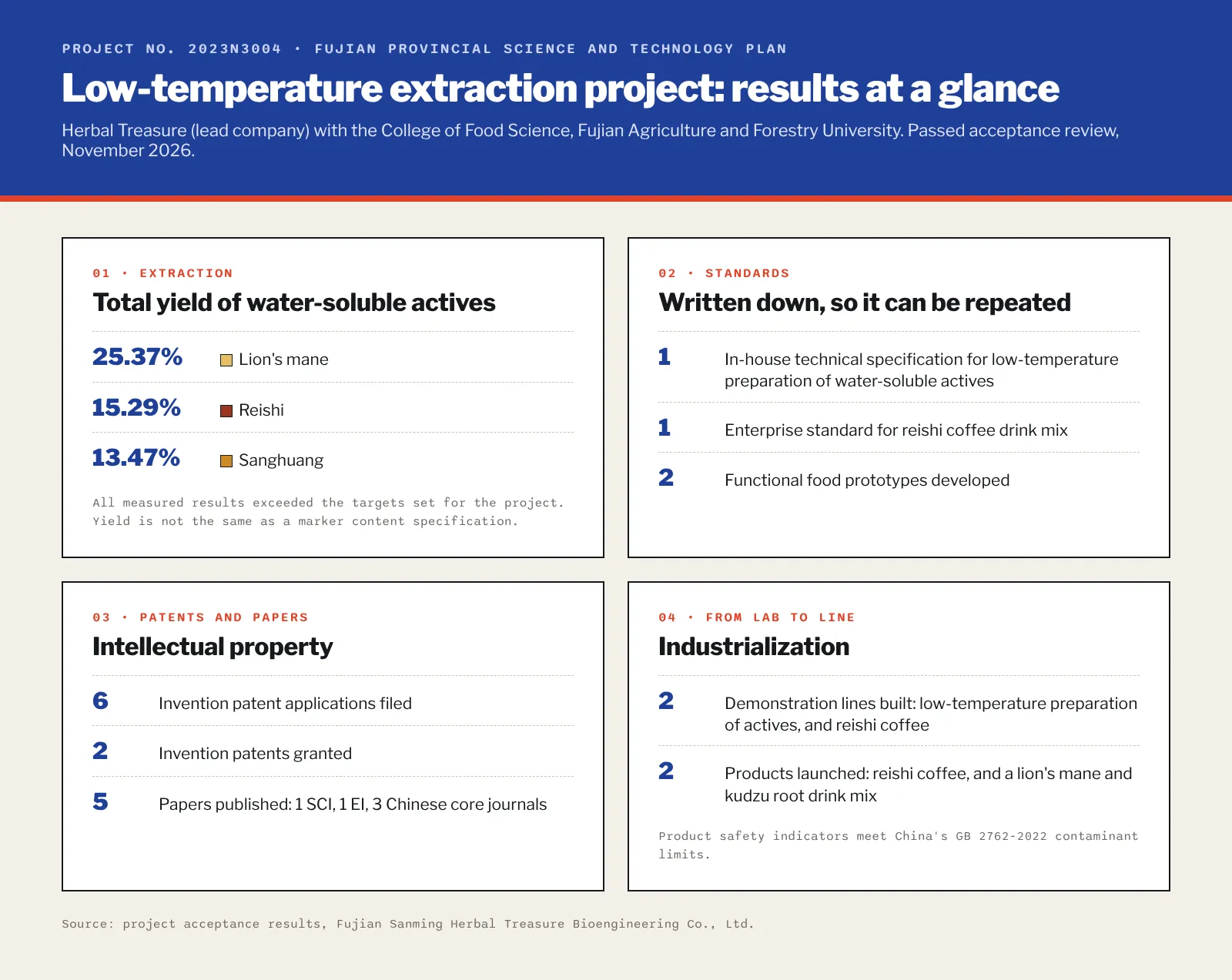
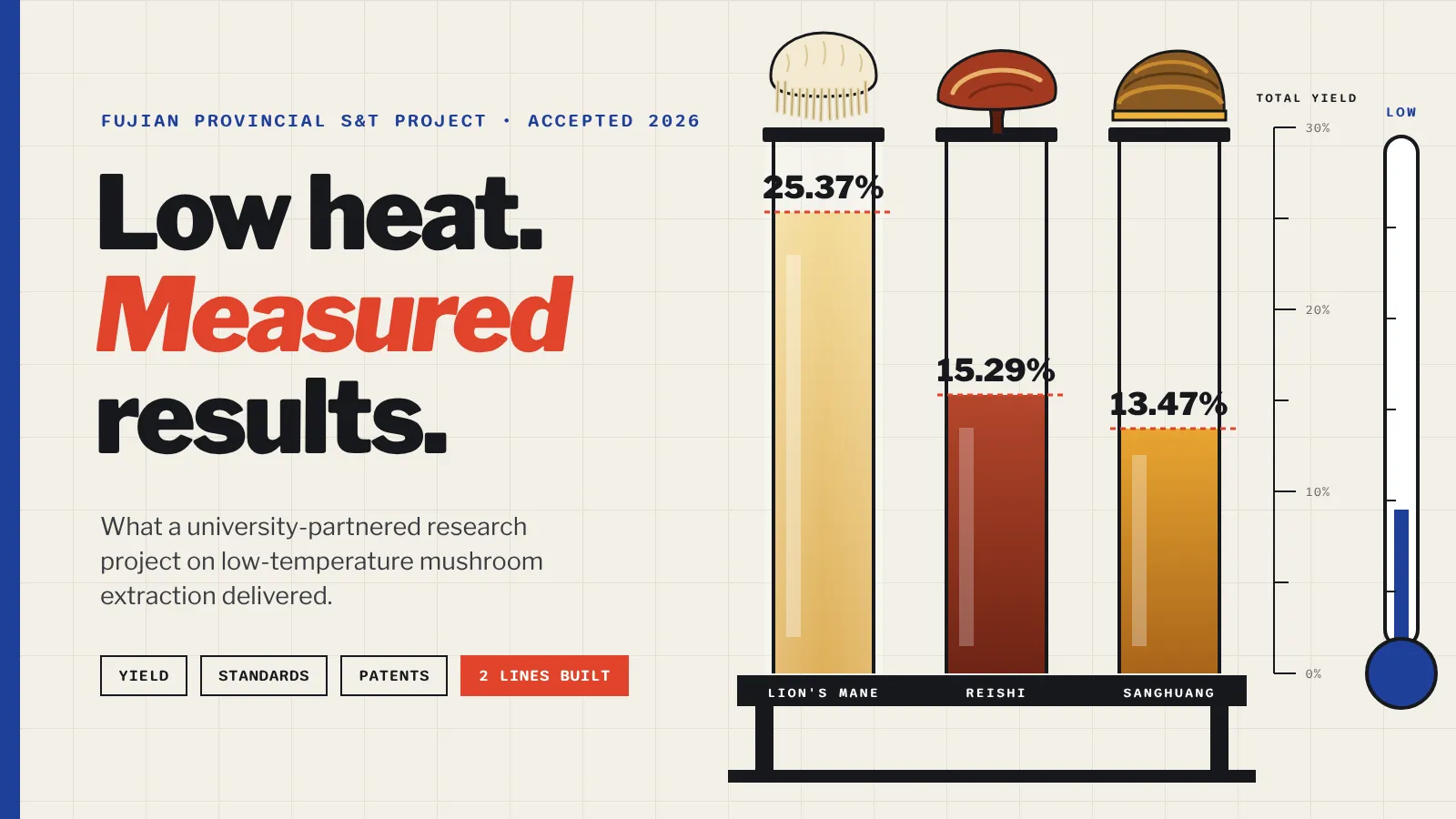
The headline results are the total yields of water-soluble actives achieved with the low-temperature process:
| Mushroom | Total yield of water-soluble actives |
| Lion’s mane | 25.37% |
| Reishi | 15.29% |
| Sanghuang | 13.47% |
Every measured result was better than the target set in the project’s task document.
What an extraction yield tells you, and what it does not
A yield describes how much water-soluble material the process recovers from the dried mushroom. A higher yield means the process gets more out of the same raw material, which matters for cost and for how efficiently raw material is used.
A yield is not a content specification. It does not tell you how much polysaccharide, beta-glucan or triterpene is in the extract you buy. Those are separate figures, set in your specification and confirmed on the certificate of analysis (COA) with a named test method. When you compare extracts from different suppliers, compare the specification and the COA, not a yield figure.
Standards, Patents and Publications
A process only helps buyers if it can be repeated, batch after batch. During the project, we wrote the work down and protected it:
- Standards:an in-house technical specification for the low-temperature preparation of water-soluble actives from Juncao edible and medicinal mushrooms, and an enterprise standard for reishi coffee drink mix.
- Patents:six invention patent applications filed, two of which have been granted as invention patents.
- Publications:five academic papers, including one in a journal indexed in the Science Citation Index (SCI), one indexed in the Engineering Index (EI) and three in Chinese core journals.
- New product prototypes:two nutritional functional food prototypes.
From the Lab to the Production Line
The project was designed to end in production, not only in reports. Two demonstration lines are now built and running at our site in Jiangle:
- A low-temperature preparation linefor mushroom actives.
- A reishi coffee line.
Two new products came out of the project and have been put into production: a reishi coffee and a lion’s mane and kudzu root drink mix. Kudzu root (ge gen) is a root traditionally used in Chinese food and herbal practice. The safety indicators of both products comply with GB 2762-2022, China’s national food safety standard for contaminant limits.
The project also supported people. Two master’s students were trained jointly with the university, eight new jobs were created, and three technical training sessions reached 38 participants.
What the Expert Panel Said
In its written opinion, the expert panel highlighted four points:
- The project addressed real needs of Fujian’s Juncao edible and medicinal mushroom industry and tackled its technical weak spots systematically.
- The partnership between the company and the university worked well, and the research results were turned into production efficiently.
- The project’s approach to processing can provide technical support for upgrading deep processing of edible and medicinal mushrooms in the province.
- It can serve as a model for the health industry in Jiangle County.
What This Means for Brands Sourcing Mushroom Extracts
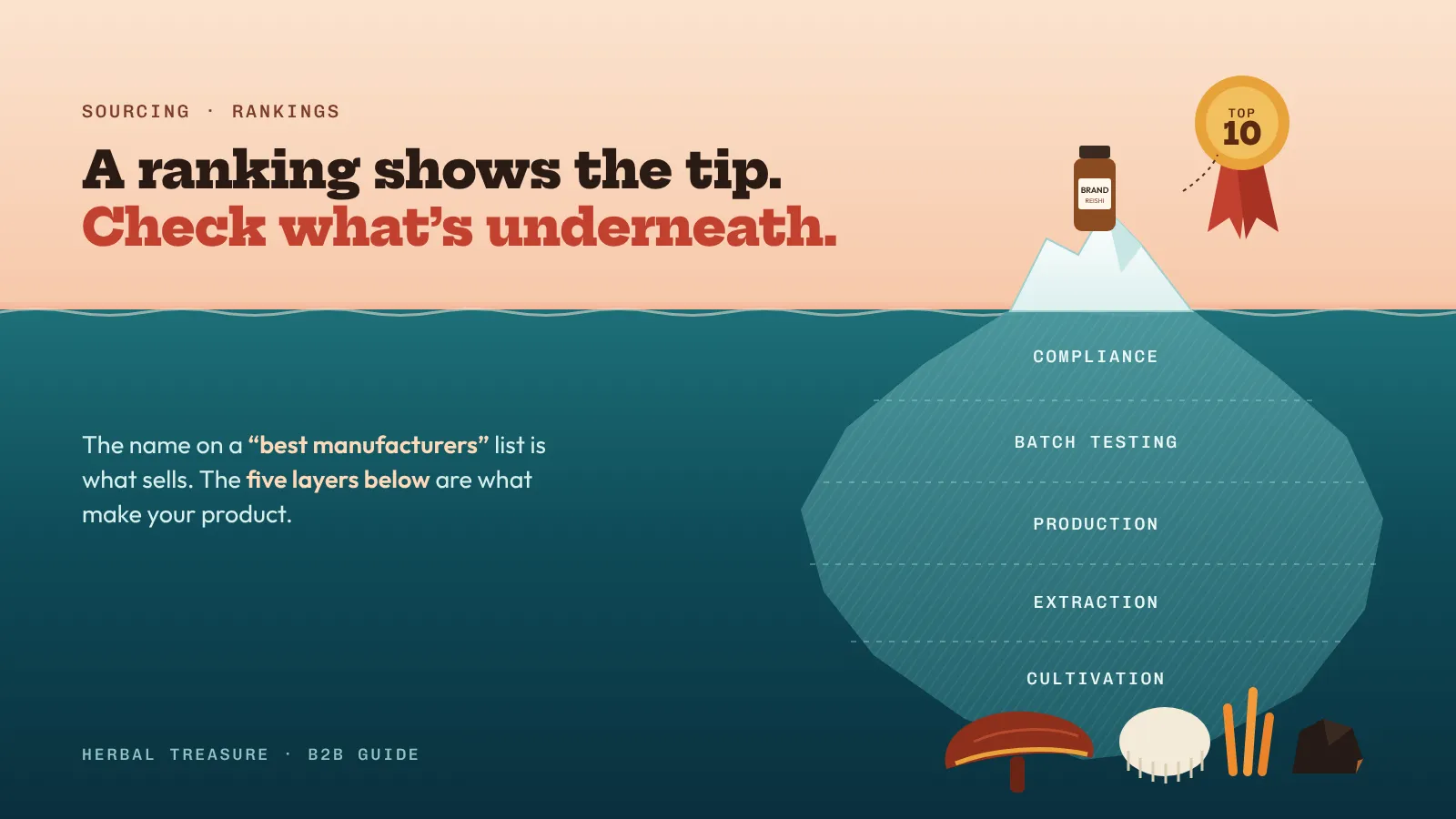
For brands, a government acceptance review is useful mainly as an independent check: outside experts looked at the archive, the lines and the numbers, and confirmed the targets were met. It does not replace your own checks on the product you buy.
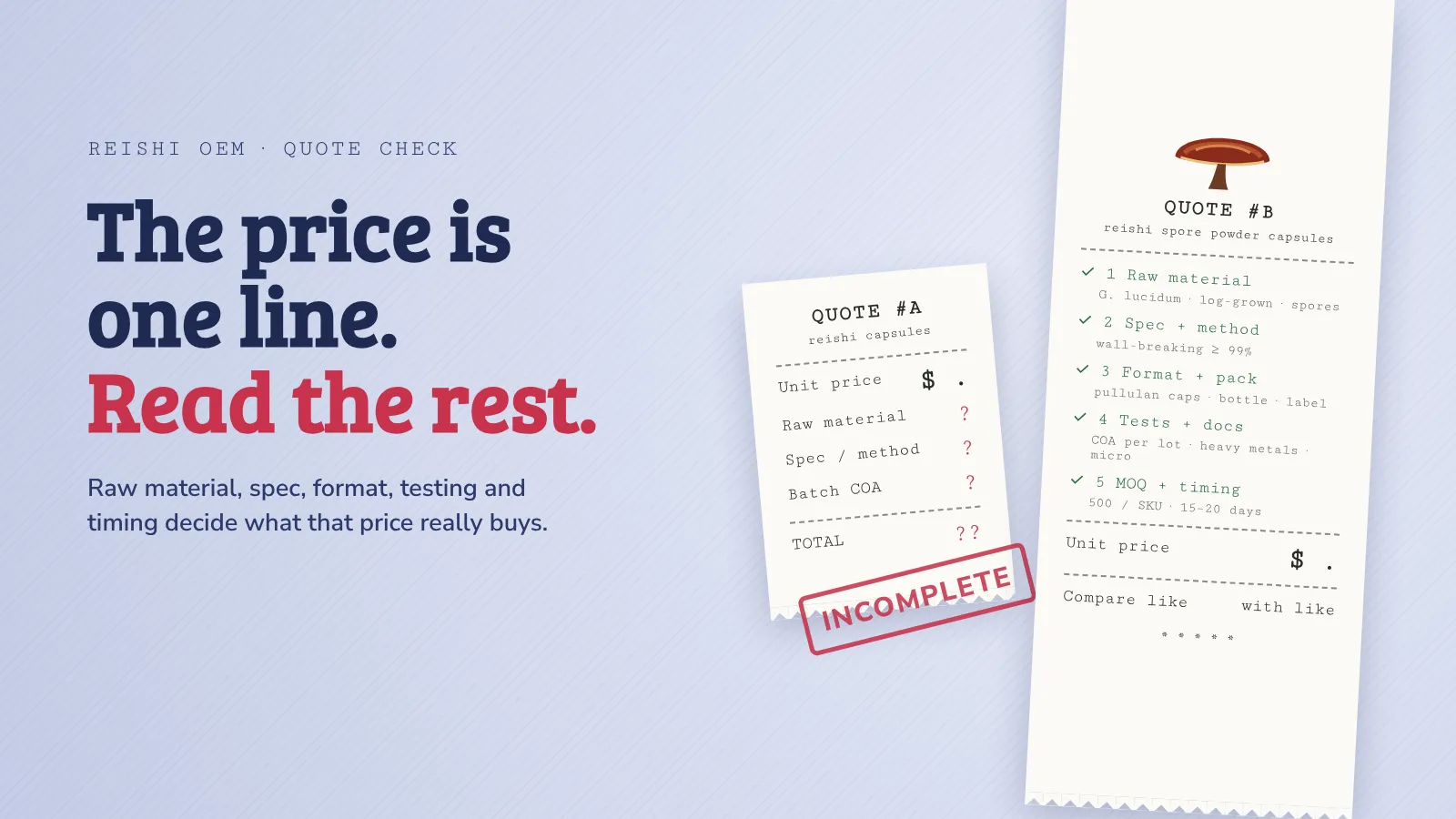
Whichever supplier you work with, these questions tell you more about an extract than any process name:
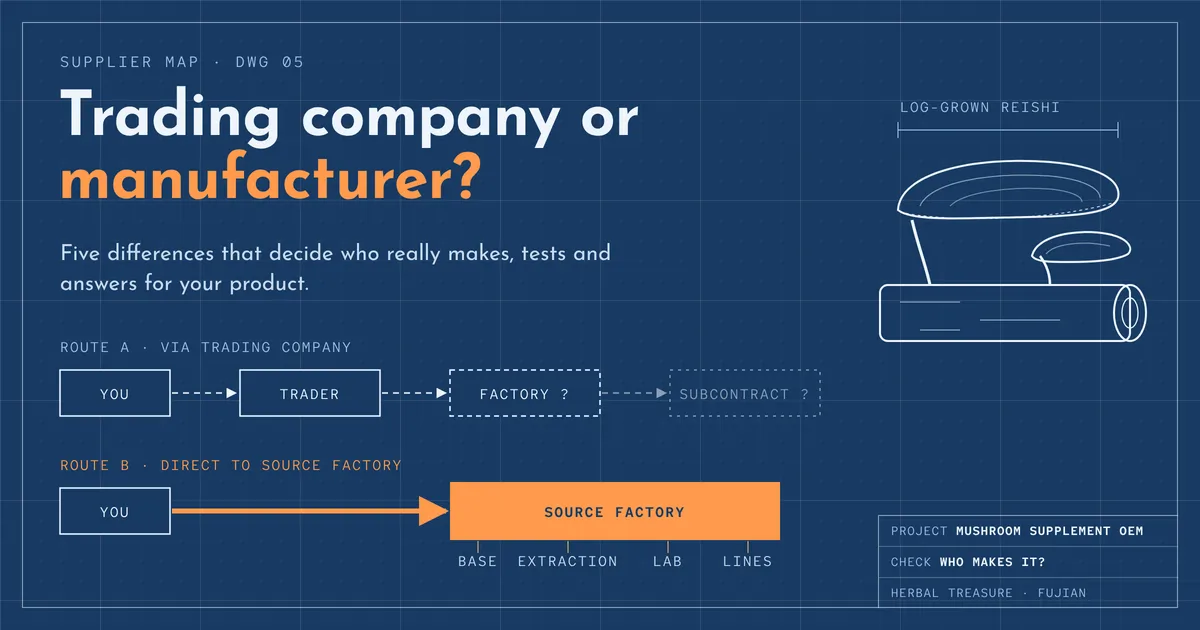
- Where is the extract made?In the manufacturer’s own workshop, or bought in from another company?
- What process is used?Ask for the solvent, whether hot water, alcohol or both, and how heat exposure is controlled.
- What is the specification?The marker, its minimum level and the test method, such as polysaccharides, beta-glucan or, for Cordyceps militaris, cordycepin.
- Is the finished product tested too?Gummies, drink powders and tinctures add their own processing steps, so ask whether marker content is checked after manufacturing.
- Can you see several COAs?Results from three or four past lots show more about consistency than one sample report.
Going forward, we will apply the low-temperature technology, patents and process standards from this project to keep improving our tablets, drink powders and extracts. We will also continue working with universities and research institutes to develop more mushroom ingredients and products.
About Herbal Treasure
Herbal Treasure’s history goes back to 2003, when it began as a family business growing reishi. In 2017 our founder returned to China to take the business further, and Fujian Sanming Herbal Treasure Bioengineering Co., Ltd. was formally registered in 2018.
Based in Jiangle County, Fujian, at the southern foot of the Wuyi Mountains, we grow reishi and lion’s mane on our own log-grown forest base of more than 200 mu (about 13 hectares or 33 acres). Our extracts come from our own 1,000 m² (about 10,800 sq ft) extraction workshop, and our facility of more than 10,000 m² (about 108,000 sq ft) makes capsules, tablets, powders, mushroom coffee and drink mixes, gummies and tinctures. Every batch is tested in our in-house laboratory and ships with a COA. Our certifications include NSF cGMP, ISO 22000, FSSC 22000, HACCP, USDA Organic, EU Organic, Canada Organic, Halal and Kosher, each as stated on the certificate, and our facility has been FDA-registered since 2018.
We offer OEM and ODM manufacturing from 500 units per SKU, with more than 5,000 proven formulas to start from. Factory visits, video tours and client audits are welcome.
Frequently Asked Questions
What is low-temperature mushroom extraction?
It is a way of drawing water-soluble actives, such as polysaccharides, out of medicinal mushrooms while limiting exposure to prolonged high heat. The goal is to reduce the breakdown of heat-sensitive compounds during processing, so more of what the raw mushroom contained ends up in the extract.
Is a higher extraction yield the same as a stronger extract?
No. Extraction yield shows how much water-soluble material a process recovers from the dried mushroom. The strength of an extract is set by its specification, such as a minimum polysaccharide or beta-glucan content, and confirmed on the COA with a named test method.
Which mushrooms did the project cover?
The project focused on the water-soluble actives of lion’s mane, reishi and sanghuang. The total yields achieved were 25.37% for lion’s mane, 15.29% for reishi and 13.47% for sanghuang, all above the project’s targets.
How can I check how a supplier makes its mushroom extract?
Ask whether the extract is made in the supplier’s own workshop, which solvent is used and how heat is controlled. Then ask for the specification with test methods, COAs from several past lots, and, if you want an independent view, a third-party retest of one lot.