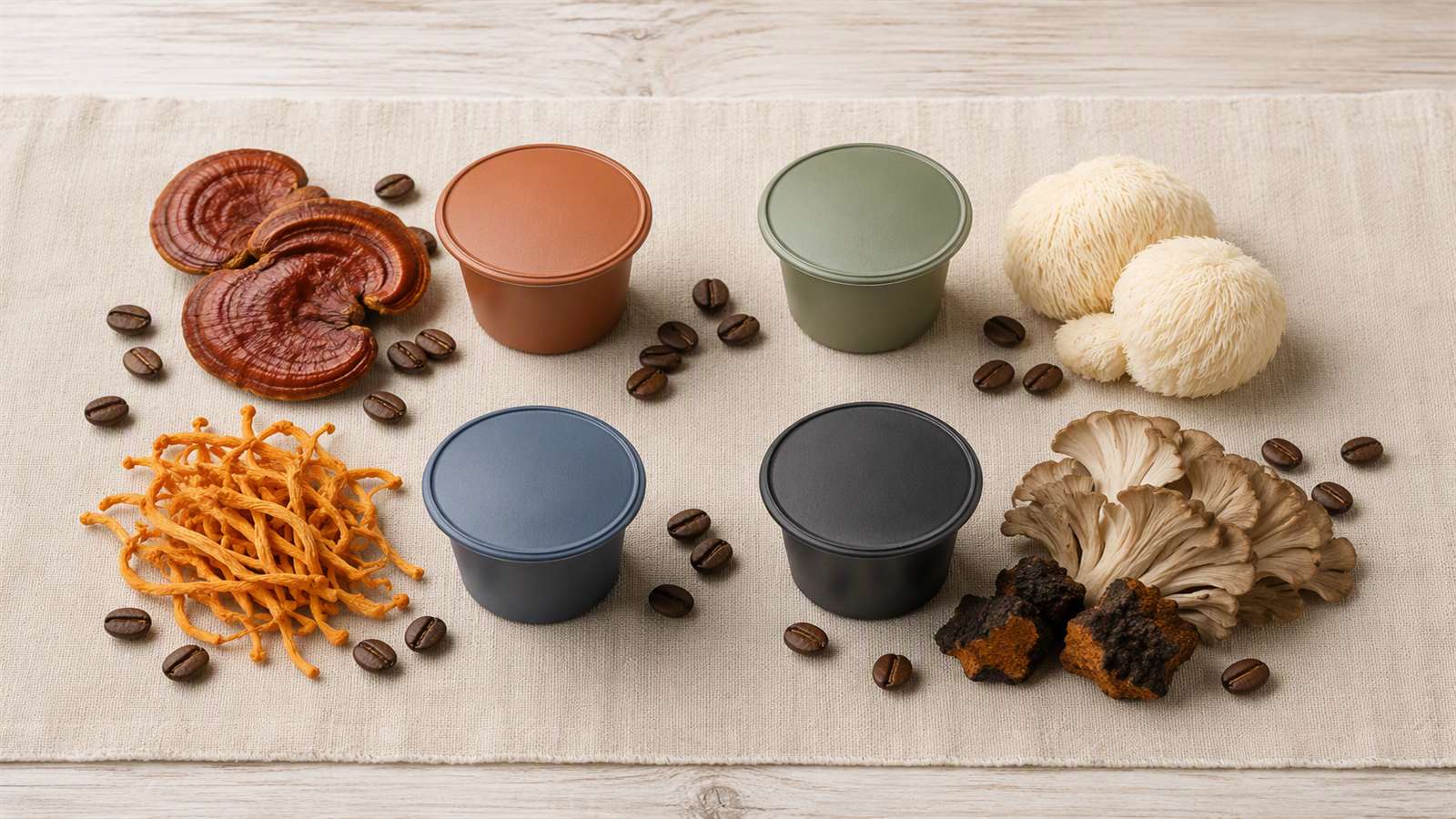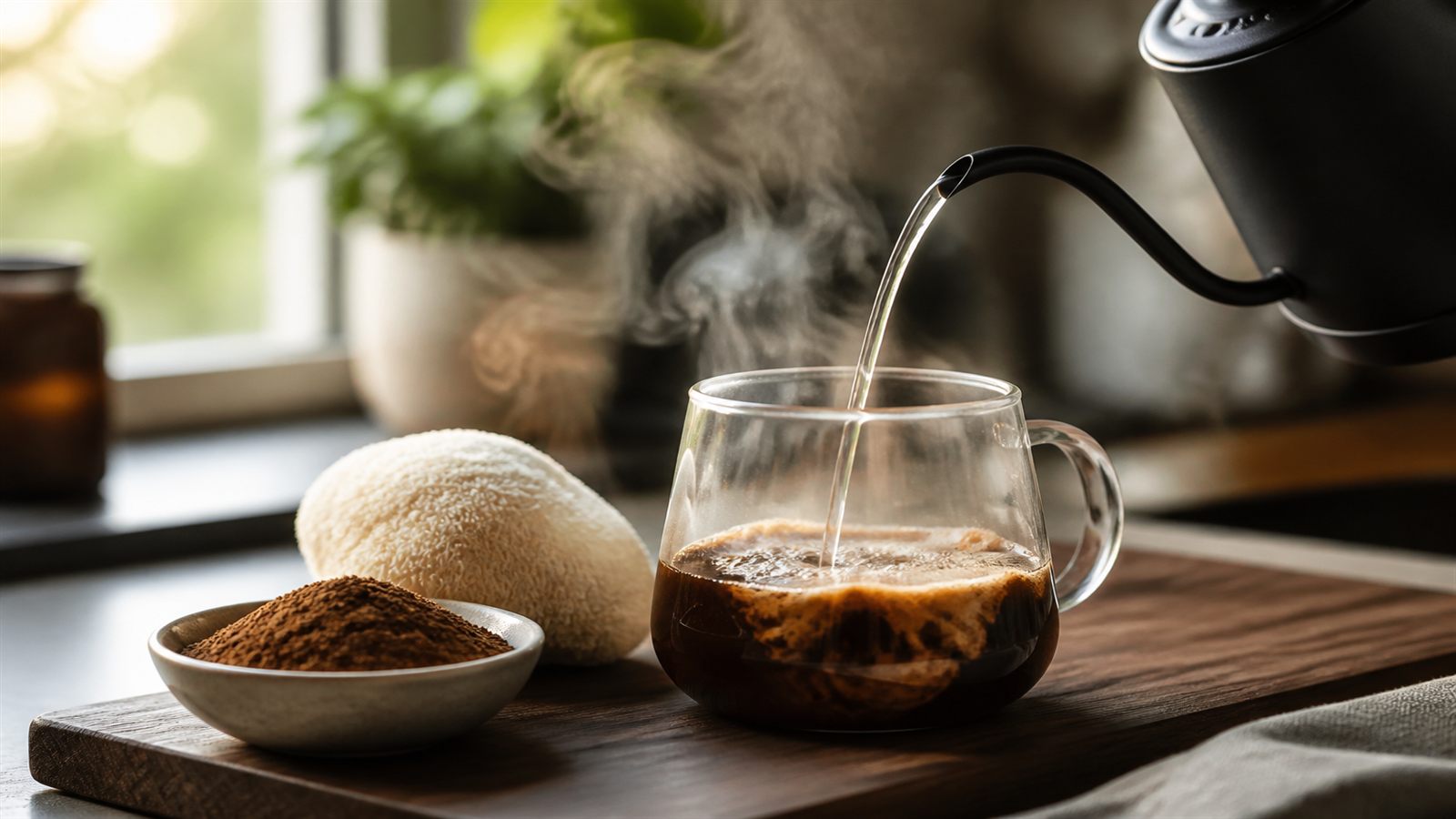


Mushroom coffee has become increasingly common on store shelves, but the name can make the product sound more unusual than it really is. If you have ever wondered how mushroom coffee is made, the answer usually starts with two separately processed ingredients: coffee and mushrooms.
Commercial mushroom coffee is generally not made by roasting fresh mushrooms together with coffee beans. Instead, mushrooms are dried and processed into a powder or extract, while the coffee is roasted and prepared separately. The ingredients are then combined according to a specific formulation before the finished product is packaged.
The exact process depends on whether the product is ground coffee, instant coffee, or a single-serve pod. Understanding these steps can make it easier to read an ingredient label and compare different mushroom coffee products.

What Is Mushroom Coffee Made Of?
Most mushroom coffee contains a coffee component, one or more mushroom ingredients, and sometimes additional ingredients used to adjust flavor, texture, or solubility.
Coffee
The coffee portion may be made from Arabica, Robusta, or a blend of coffee beans. After the beans are selected, they are roasted to develop the aroma and flavor associated with coffee.
Depending on the finished product, the roasted coffee may remain as ground coffee or be further processed into soluble instant coffee.
Mushroom Ingredients
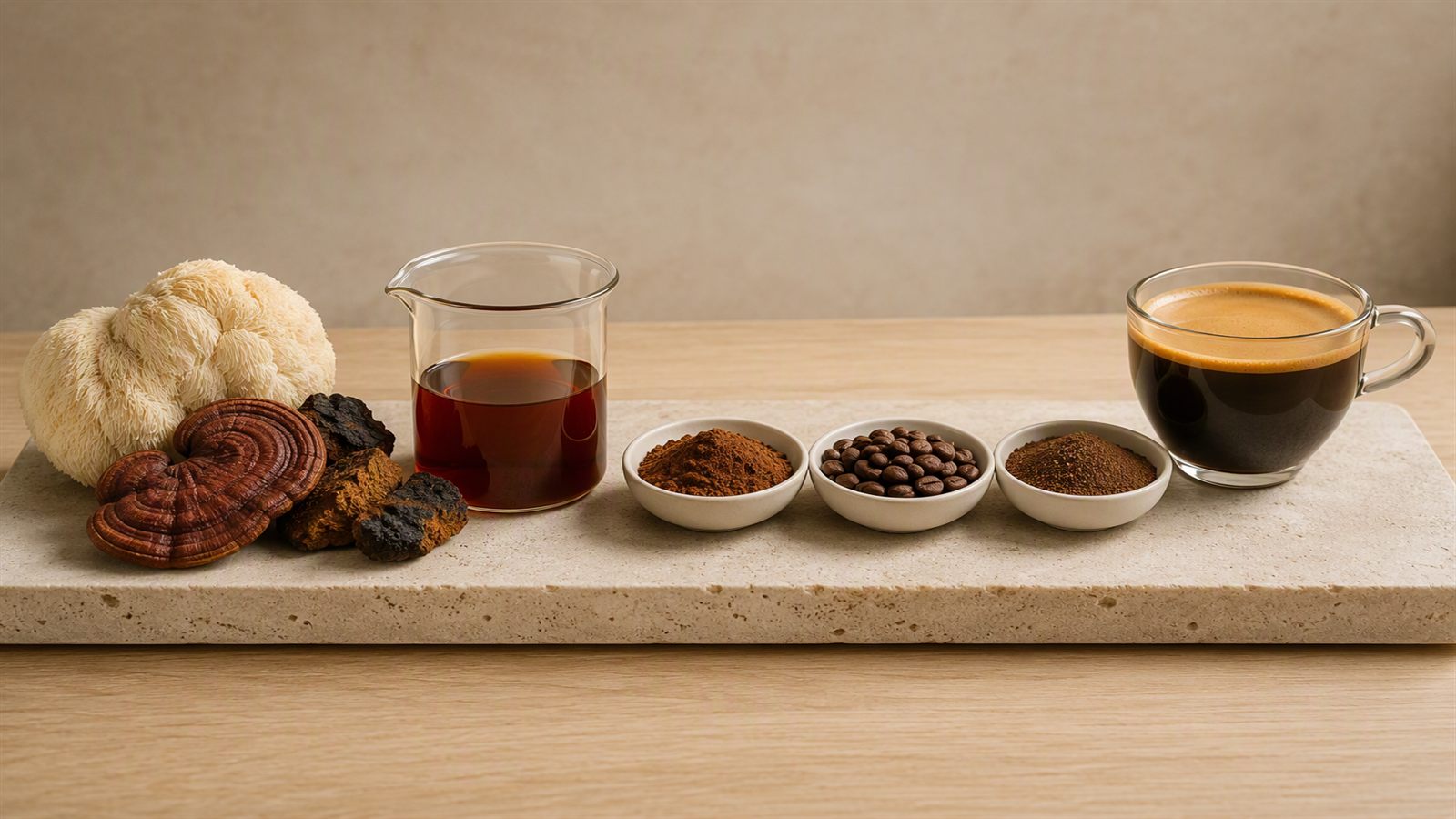
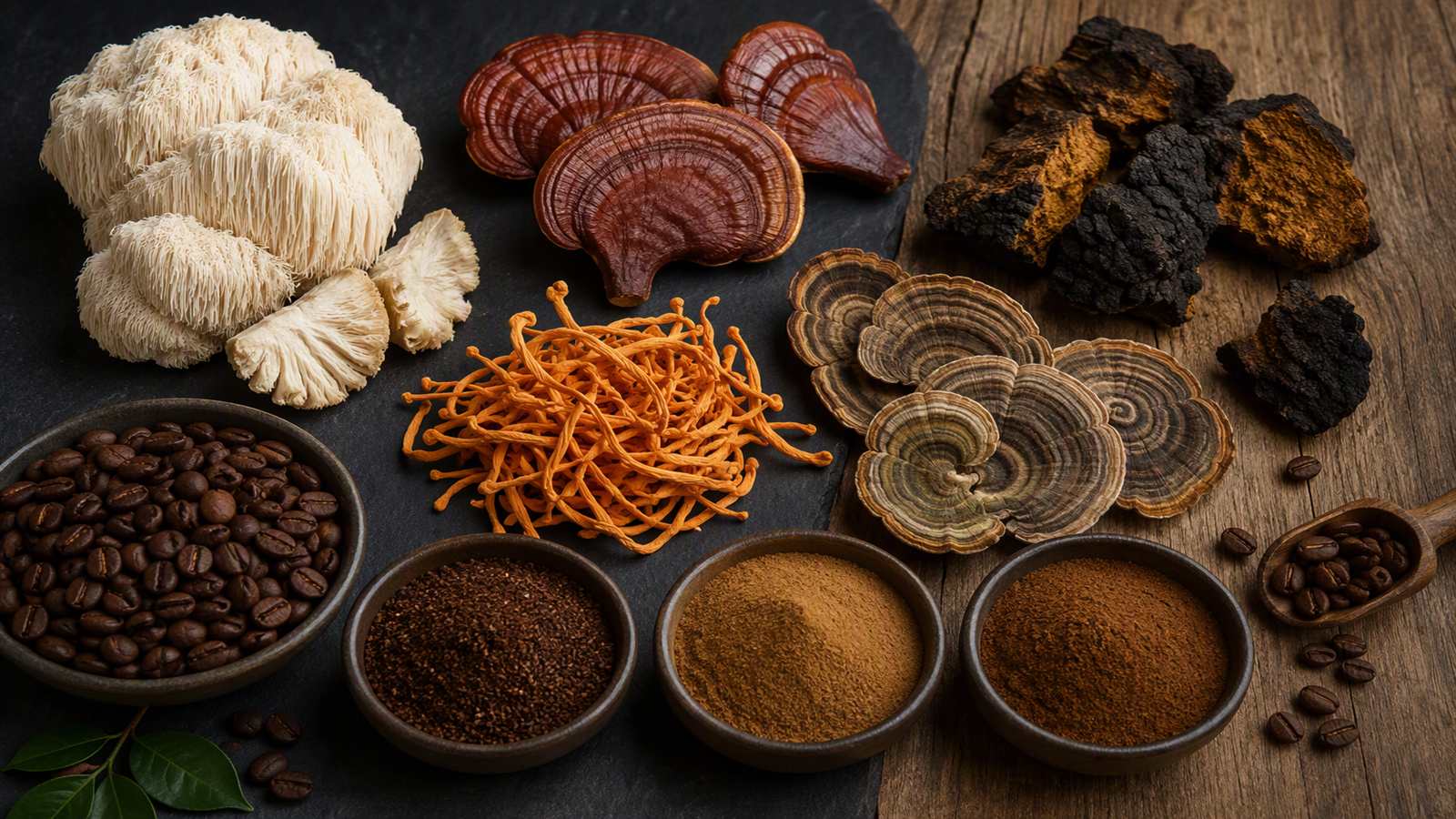
Common mushrooms used in these products include:
- Lion’s Mane
- Reishi
- Chaga
- Cordyceps
Some products use a single mushroom, while others combine several varieties.
The mushroom ingredient may appear on the label as mushroom powder, mushroom extract, or another standardized mushroom-derived ingredient. These terms describe different forms of processing rather than interchangeable ingredients.
Other Ingredients
Some mushroom coffee blends contain ingredients such as creamer, cocoa, natural flavors, sweeteners, or other plant-based components. These are formulation choices and are not present in every product.
For that reason, checking the complete ingredient list is more useful than assuming that every mushroom coffee has the same recipe.
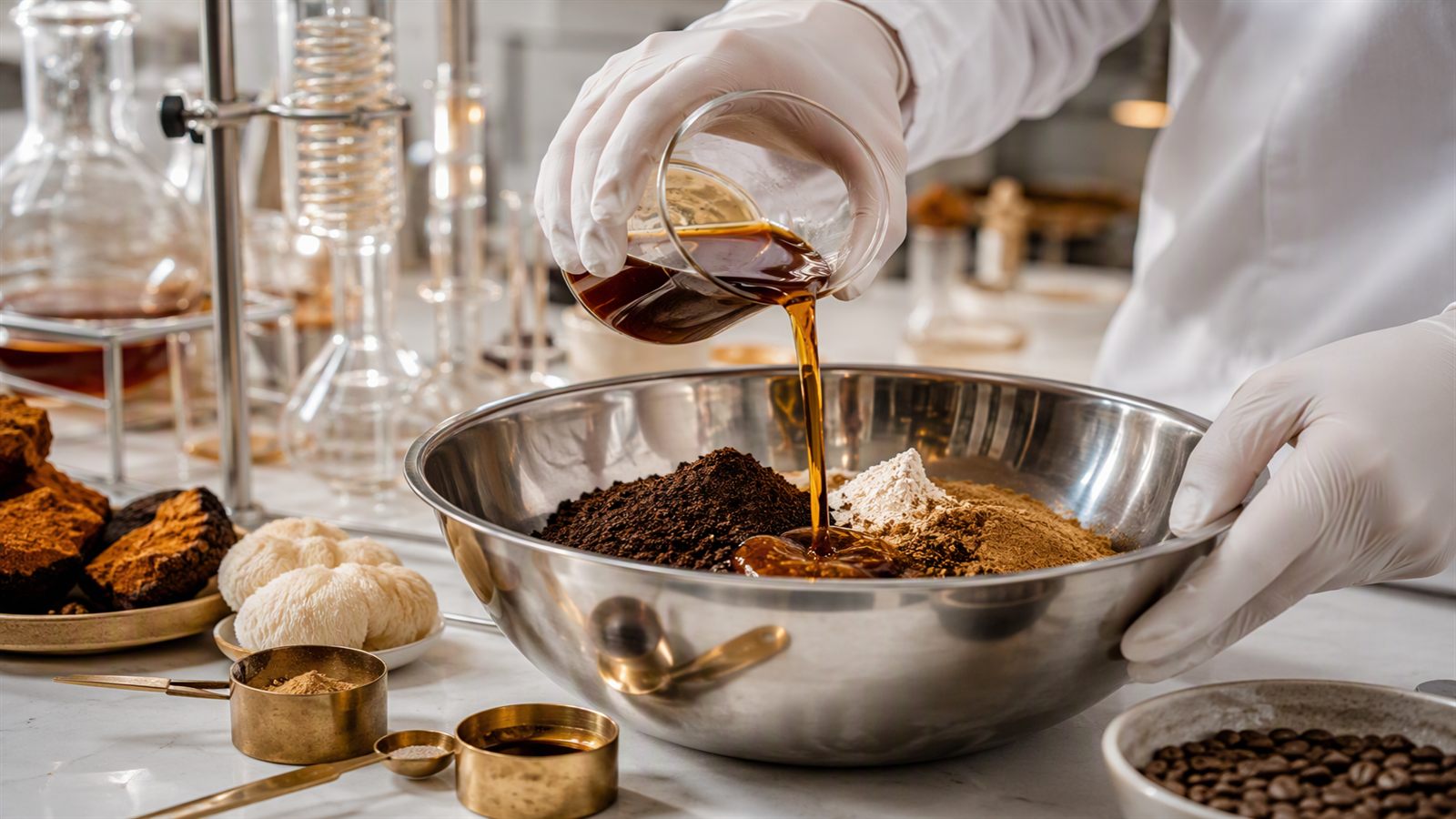
How Are Mushrooms Prepared for Mushroom Coffee?
Fresh mushrooms generally need to undergo several processing steps before they can be incorporated into a shelf-stable coffee product.
The basic sequence may involve selection, cleaning, drying, milling, or extraction, depending on the desired ingredient.
Mushroom Selection and Preparation
The process begins with mushroom raw materials that meet the specifications required for the finished product. Factors such as mushroom species, growing conditions, moisture content, and ingredient specifications can affect the material used for further processing.
After harvesting and initial preparation, mushrooms are dried to reduce moisture. Proper moisture control is important because excessive moisture can affect stability and storage.
Once dried, the material can be processed into a powder or used to produce an extract.
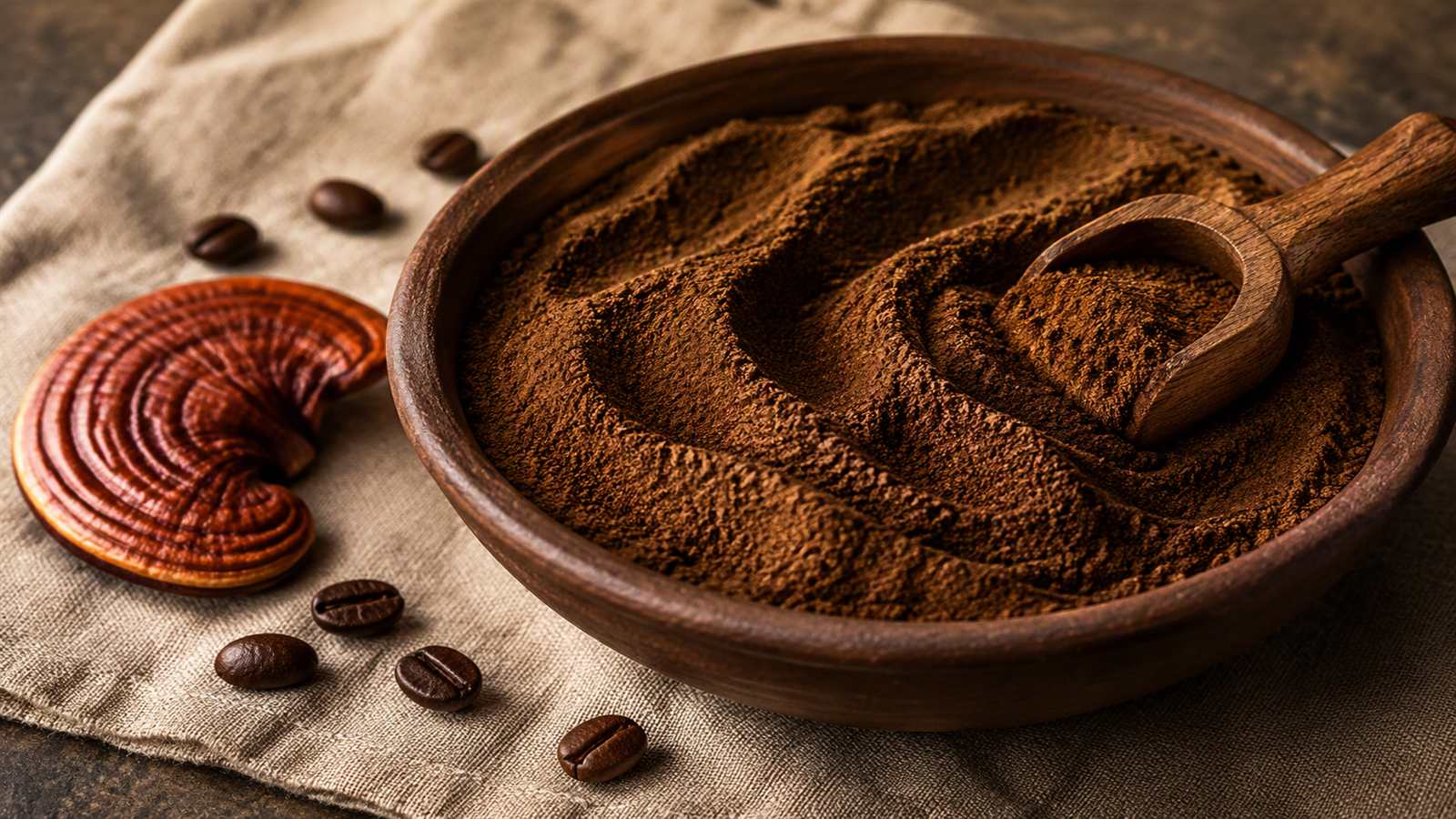
Mushroom Powder
Mushroom powder is generally produced by drying mushrooms and mechanically reducing the dried material into a fine powder.
A simplified process looks like this:
Mushrooms → Drying → Milling → Mushroom Powder
The resulting powder can then be incorporated into a coffee formulation.
Because mushroom powder contains the processed mushroom material itself, its flavor can be more noticeable in some formulations. The final taste also depends on the mushroom variety and the amount used.
Mushroom Extract
Mushroom extract follows a different processing route.
Rather than simply grinding dried mushrooms, extraction uses a controlled process to obtain particular compounds from the mushroom material. The resulting liquid or concentrated extract may then be dried into an extract powder.
A simplified sequence is:
Mushrooms → Extraction → Concentration → Drying → Extract Powder
Mushroom powder and mushroom extract should therefore not be treated as identical ingredients. They have different processing characteristics and can behave differently when used in a beverage formulation.
Research on medicinal mushrooms has investigated a range of naturally occurring compounds, including polysaccharides and other bioactive constituents. However, findings from studies on individual mushroom extracts should not automatically be interpreted as evidence that a particular finished mushroom coffee product produces the same effects.
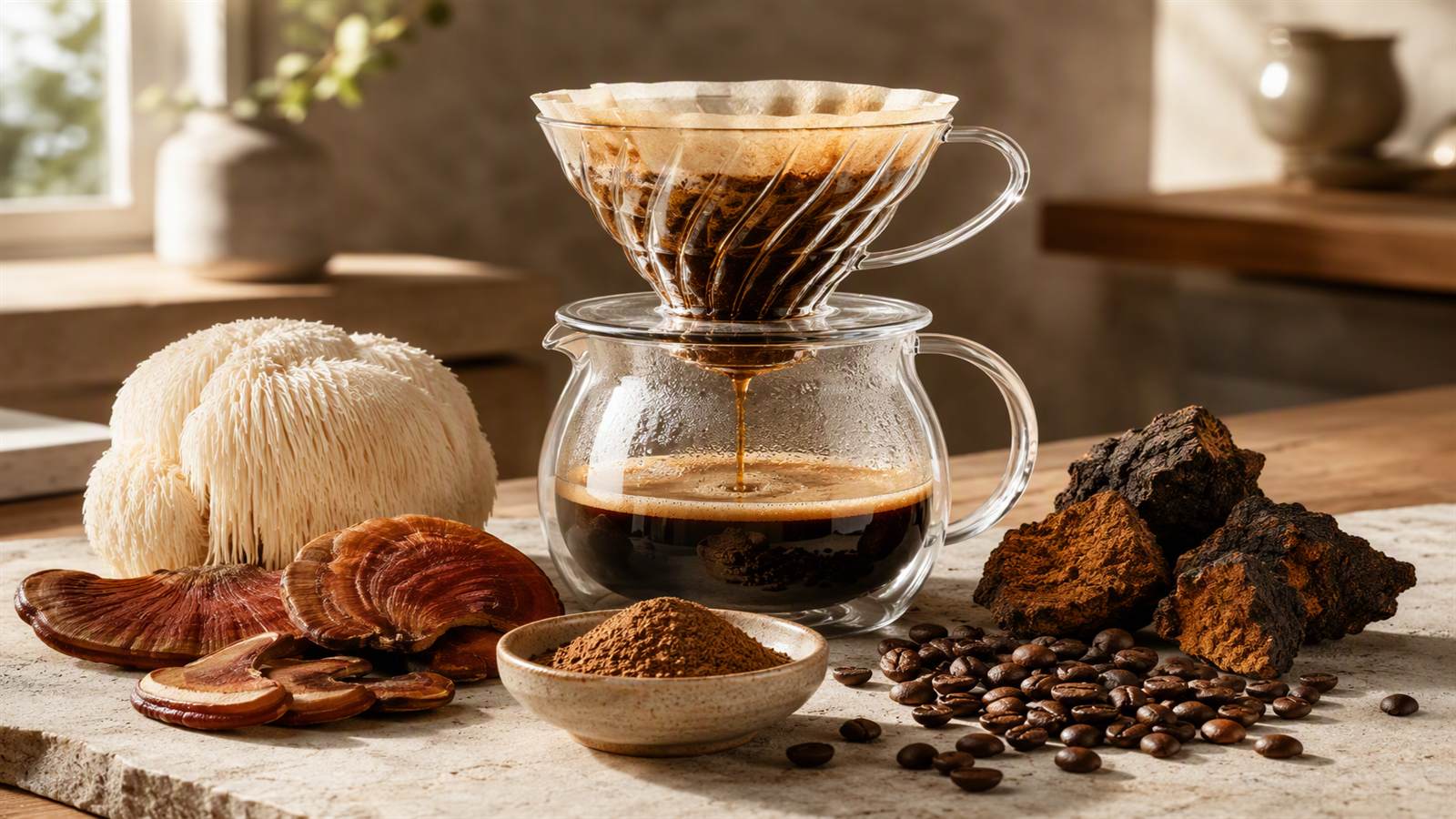
How Is the Coffee Processed?
While the mushroom ingredient is being prepared, the coffee component follows its own production process.
Coffee Bean Selection
Coffee beans can differ considerably in origin, variety, processing method, and flavor profile. Manufacturers select beans according to the characteristics they want in the finished blend.
For mushroom coffee, the coffee needs to remain balanced with the earthy or roasted notes that may come from mushroom ingredients.
Roasting
Roasting transforms green coffee beans into the familiar brown beans used for brewing.
During roasting, chemical reactions produce many of the volatile compounds responsible for coffee’s aroma and flavor. Roast level can therefore have a noticeable effect on the final sensory profile.
A darker roast may provide stronger roasted notes, while lighter roasting can preserve different characteristics of the original coffee.
Grinding
After roasting, coffee intended for a ground product is milled to the appropriate particle size.
The grind size matters because it affects how water passes through the coffee during brewing. Coffee intended for different brewing methods may therefore require different grind specifications.
For instant mushroom coffee, the coffee undergoes additional processing to create a soluble form that can dissolve in hot water.
How Are Mushroom Ingredients Added to Coffee?
One of the most common misconceptions about mushroom coffee is that fresh mushrooms and coffee beans are roasted together.
Commercial products are generally formulated differently.
The coffee and mushroom ingredients are usually processed separately and combined during the formulation and blending stage. A simplified process is:
Coffee Processing → Mushroom Ingredient Processing → Formulation → Blending → Packaging
The exact order can vary depending on the product format and manufacturing method.
Why Formulation Matters
The formulation determines how much mushroom ingredient is included and how it interacts with the coffee and any other ingredients.
Several factors need to be considered, including:
- Mushroom ingredient type
- Coffee roast profile
- Ingredient ratio
- Flavor balance
- Solubility
- Serving size
- Moisture control
- Mixing consistency
A formulation that contains several mushroom ingredients may require particularly careful blending so that each serving has a consistent distribution of ingredients.
This is one reason commercial mushroom coffee involves more than simply adding mushroom powder to ground coffee.

How Is Instant Mushroom Coffee Made?
Instant mushroom coffee uses a different production approach from traditional ground coffee.
The coffee component is processed into a soluble form that can be dissolved in water. Mushroom powder or extract can then be incorporated into the formulation, depending on the product design.
A simplified process may look like:
Coffee Preparation → Soluble Coffee Processing → Mushroom Ingredient Addition → Blending → Packaging
Instant products can also contain additional ingredients such as creamer or flavoring. The finished powder needs to disperse properly in water and maintain a consistent texture and flavor.
For consumers, the main difference is straightforward: ground mushroom coffee needs to be brewed, while instant mushroom coffee is formulated to dissolve or disperse directly in hot water.
How Is Mushroom Coffee Made for Single-Serve Pods?
Single-serve mushroom coffee pods require additional considerations because the coffee must interact properly with brewing equipment.
The formulation may involve ground coffee combined with a mushroom ingredient before the mixture is filled into individual pods.
The manufacturing sequence can include:
- Preparing the coffee and mushroom formulation
- Blending the ingredients
- Controlling the fill weight
- Filling the pod
- Sealing the package
- Inspecting the finished product
Grind size, fill weight, airflow, and brewing characteristics can all affect how water moves through the pod.
Products designed for specific brewing systems therefore need to be evaluated for compatibility rather than assuming that every coffee pod will work identically in every machine.
How Is Mushroom Coffee Packaged?
Packaging is an important part of protecting the finished product.
Ground mushroom coffee may be sold in bags, jars, or pouches. Instant products are commonly found in jars, sachets, or stick packs, while single-serve products use individual sealed pods.
Coffee is sensitive to environmental conditions, particularly oxygen and moisture. Appropriate packaging helps maintain product quality during storage and transportation.
The packaging format also affects convenience. A jar may be suitable for repeated preparation at home, while individual sachets or pods are designed for portioned use.
Quality Control in Mushroom Coffee Manufacturing
A finished mushroom coffee product involves more than selecting ingredients and mixing them together. Quality control can take place at several stages of production.
Ingredient Verification
Raw materials may be checked against specifications for identity, quality, moisture, and other relevant characteristics.
For mushroom ingredients, documentation can also help verify the species and ingredient form.
Microbiological Testing
Depending on the ingredient and product requirements, testing may include microbiological parameters such as yeast, mold, or specific pathogens.
The exact testing program varies according to the product, ingredients, manufacturing process, and applicable regulations.
Contaminant Testing
Some products may also be evaluated for contaminants such as heavy metals or pesticide residues, depending on the raw materials and applicable requirements.
These checks are particularly relevant when botanical and mushroom ingredients are used as part of a finished food or beverage.
Batch Consistency
Manufacturers also need to control consistency from one production batch to another.
This can involve checking factors such as:
- Ingredient ratios
- Fill weight
- Moisture
- Appearance
- Flavor
- Packaging integrity
Consistent formulation is important because consumers expect the product they purchase repeatedly to perform in a similar way.

Homemade vs. Commercial Mushroom Coffee
Making mushroom coffee at home is much simpler than producing a commercial product.
At home, someone might brew regular coffee and add a measured amount of mushroom powder or extract. Commercial production, however, requires controlled ingredient specifications, formulation, blending, packaging, and quality checks.
The difference can be summarized as follows:
| Homemade Mushroom Coffee | Commercial Mushroom Coffee |
|---|---|
| Ingredients measured individually | Controlled formulation |
| Small-batch preparation | Production-scale blending |
| Limited process control | Defined manufacturing procedures |
| Usually consumed shortly after preparation | Designed for packaged storage |
| No routine batch testing | Quality control may include multiple testing stages |
Neither approach changes the basic concept: mushroom ingredients and coffee are brought together to create the final beverage.
How to Choose a Quality Mushroom Coffee
If you are comparing mushroom coffee products, start with the ingredient label rather than the front of the package.
Look for the specific mushroom species, whether the ingredient is a powder or extract, and the amount provided per serving when that information is available.
It is also useful to check the coffee ingredients, serving size, caffeine information, and any additional ingredients.
For products that provide quality documentation, information such as third-party testing or a certificate of analysis can provide additional insight into how the product is evaluated.
Most importantly, remember that mushroom coffee is not a single standardized product category. Formulas, mushroom species, processing methods, and serving sizes can vary significantly between products.
Frequently Asked Questions
How is mushroom coffee made?
Mushroom coffee is generally made by processing coffee and mushroom ingredients separately and then combining them during formulation. The mushroom component is typically a powder or extract rather than fresh mushrooms.
Is mushroom coffee made from fresh mushrooms?
Usually, no. Commercial mushroom coffee generally uses mushrooms that have been dried and processed into powder or extract before they are incorporated into the coffee product.
Are mushrooms roasted with coffee beans?
Generally, coffee beans and mushroom ingredients are processed separately. The mushroom ingredient is usually added during formulation rather than roasted together with the coffee beans.
What mushrooms are used in mushroom coffee?
Lion’s Mane, Reishi, Chaga, and Cordyceps are among the mushrooms commonly used in mushroom coffee products. Some formulas contain a single mushroom, while others use a blend.
Is mushroom powder the same as mushroom extract?
No. Mushroom powder is generally made by drying and milling mushroom material, while an extract is produced through an extraction process and may subsequently be concentrated and dried.
How is instant mushroom coffee made?
Instant mushroom coffee combines soluble coffee with processed mushroom ingredients and, depending on the formula, other ingredients. The final blend is designed to dissolve or disperse in hot water.
Research and Sources
- Mori K, Inatomi S, Ouchi K, Azumi Y, Tuchida T. Improving effects of the mushroom Yamabushitake (Hericium erinaceus) on mild cognitive impairment: a double-blind placebo-controlled clinical trial. Phytotherapy Research. 2009;23(3):367–372.
- Poole R, et al. Coffee consumption and health: umbrella review of meta-analyses of multiple health outcomes. BMJ. 2017;359.
- EFSA Panel on Dietetic Products, Nutrition and Allergies. Scientific Opinion on the safety of caffeine. EFSA Journal. 2015;13(5):4102.
- U.S. Food and Drug Administration (FDA). Food safety and food manufacturing guidance and resources.
- International Coffee Organization (ICO). Resources on coffee production and processing.